
 Asger Risom
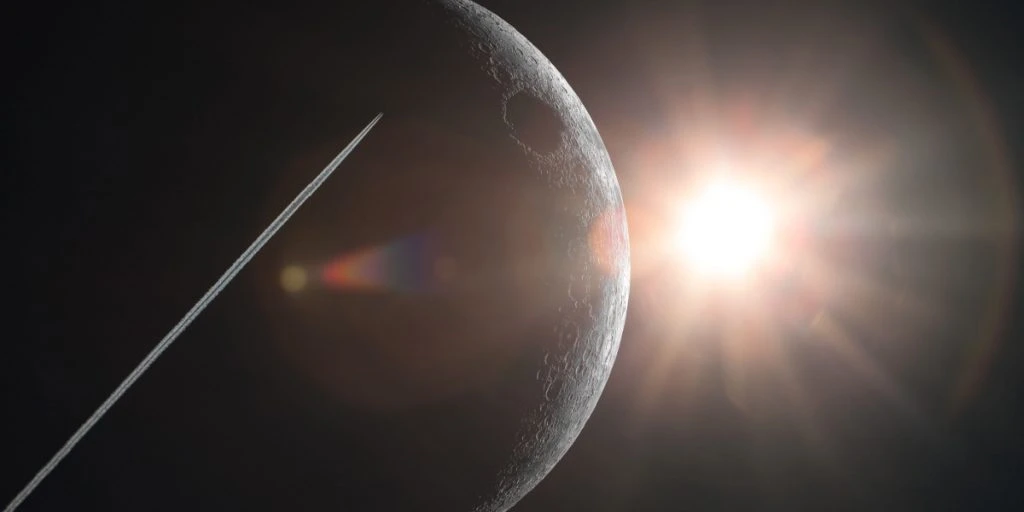
Six billion kilometers from Earth, a tiny frozen world is hiding a massive secret that challenges decades of space research.


People worldwide enjoy looking up at the starry night sky when darkness falls over their neighborhoods.
The vast universe hides countless secrets that scientists constantly try to decode using advanced telescopes.
Now astronomical observations have shed light on a distant corner of the dark void, and the new result surprises the experts immensely.
Far Into The Cold
Way out at the edge of our solar system floats a freezing celestial body that has lived a very quiet life in the distant shadows. The sphere is located a staggering six billion kilometers away from Earth where the sun barely penetrates the darkness.


Researchers always believed that such incredibly small spheres measuring only five hundred kilometers in diameter were completely dead and permanently frozen. New research from Japan suggests that the little object most likely hides a thin atmosphere which breaks with decades of firm assumptions.
It was an incredibly lucky coincidence when Japanese researchers working closely with a dedicated amateur astronomer watched the celestial body glide past a distant star. The images from the observation have just been analyzed deeply by the scientists which led to the remarkable results.
Need For More Proof
The light of the star did not return immediately after the passage which according to the experts strongly indicates that a layer of gas effectively blocked the radiation. According to the journal Nature Astronomy the atmosphere is up to ten million times thinner than the atmosphere down on Earth.
The discovery is highly remarkable since until today only the dwarf planet Pluto was known to carry a real atmosphere in the freezing area. Researcher Ko Arimatsu states to AFP, “This discovery calls into question the generally accepted idea that the small, icy objects of the outer Solar System are mostly inactive and immutable”.
Professionals are currently working on theories to explain the phenomenon that has created a huge stir in astronomical circles worldwide in record time. One suggestion is that underground ice volcanoes spew gases from the interior of the globe while another scenario points to a violent collision with a comet.
Not all professionals are fully convinced by the conclusions yet as the Spanish astronomer Jose Luis Ortiz strongly urges patience according to the news agency AFP. “I still doubt it’s an atmosphere. We need more data,” the astronomer states and adds that the James Webb space telescope can provide more precise measurements in the future.
Sources: Nature Astronomy



