
 Kathrine Frich

Relations between Armenia and Russia stretch back decades.
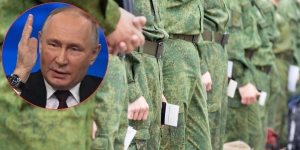
They are shaped by their shared past in the Soviet Union and continued political and military ties after its collapse.
Moscow has long been seen as a key ally and security partner for Yerevan, particularly in a volatile region.
But despite this close cooperation, recent developments suggest the relationship is becoming more complex and at times, more openly strained.
Tense exchange
Armenian Prime Minister Nikol Pashinyan delivered a pointed message during talks with Vladimir Putin, highlighting democratic values and political freedoms in Armenia.


According to LA.LV, Pashinyan stressed that Armenia operates as a democratic state with regular elections and active political competition.
He noted that even local elections are highly politicised, with voters backing or rejecting parties, drawing an implicit contrast with Russia’s system.
Freedom concerns
The Armenian leader also addressed internet freedom, underlining that social media platforms operate freely in his country.
He contrasted this with Russia, where authorities have tightened restrictions in recent years, blocking foreign platforms and promoting state-controlled alternatives.
The remarks were seen as unusually direct given the setting of the Kremlin meeting.
Visible reaction
Observers focused closely on Putin’s response during the exchange.
Reports described signs of discomfort, including avoiding eye contact and appearing restless while Pashinyan spoke.
Such visible reactions are rarely highlighted in official meetings involving the Russian president.
Pashinyan also raised Armenia’s decision to freeze its participation in the Collective Security Treaty Organization (CSTO).
He said it has been difficult to explain domestically why the alliance failed to intervene during the conflict in Nagorno-Karabakh.
Sources: LA.LV



