
 Mikkel Christensen
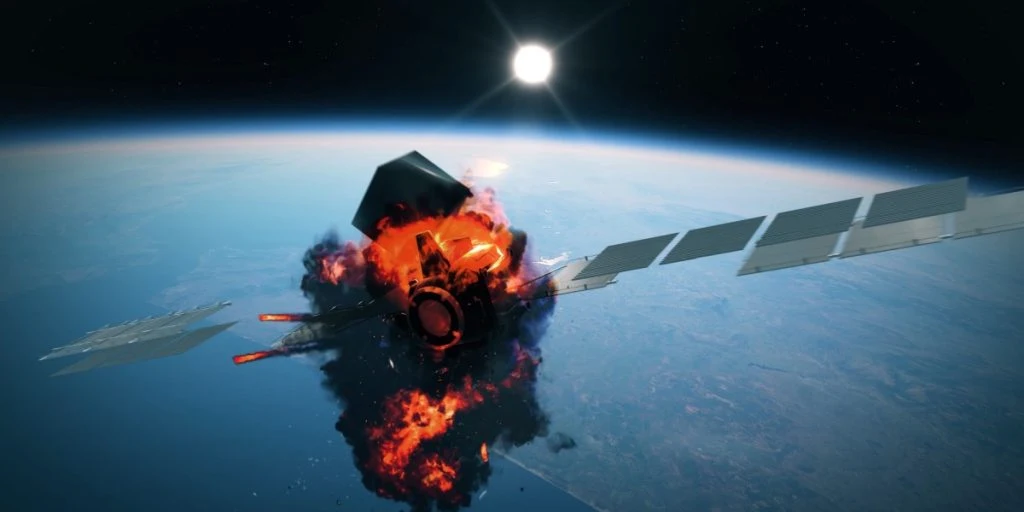
Astronauts aboard the International Space Station were briefly placed on alert after a defunct Russian satellite fragmented in low Earth orbit.


Astronauts aboard the International Space Station were briefly placed on alert after a defunct Russian satellite fragmented in low Earth orbit.
More than 180 pieces of debris have been detected so far, raising fresh concerns about the growing congestion in Earth’s orbital environment.
According to the Pentagon’s Space Command, the breakup of the Russian Earth observation satellite Resurs P1 was detected on June 26.
Tracking company LeoLabs reported that the fragmentation occurred between 3:05 p.m. and 2:51 a.m. French time, spanning June 26 into June 27.


Initial monitoring identified over 100 debris fragments, but updated assessments now confirm more than 180 objects. Surveillance efforts are continuing as agencies evaluate potential risks.
Brief ISS alert
Resurs P1 was launched in 2013 and operated by Russia’s civilian space agency, Roscosmos. The satellite was deactivated in 2021 and had been gradually losing altitude, with expectations it would reenter Earth’s atmosphere later this year.
The breakup occurred at roughly 355 kilometers above Earth. The International Space Station orbits at around 400 kilometers, close enough for precautionary measures to be taken.
Crew members were instructed to move into their docked spacecraft in case evacuation became necessary. Among them were NASA astronaut Sunita Williams and Barry Wilmore, a test pilot for Boeing’s Starliner capsule, which remains attached to the station. After about an hour, operations returned to normal once the immediate threat appeared limited.
Cause under review
The reason for the fragmentation remains unclear. One leading possibility is an internal battery failure. Experts have noted that if stored energy is not properly discharged when satellites are retired, explosions can occur later in orbit.
Such “passivation” procedures are increasingly viewed as essential to limiting debris generation. Improper handling of residual energy has become a significant contributor to orbital fragmentation events.
Another potential explanation is a collision with a small piece of debris. Even tiny objects traveling at orbital velocity can inflict serious structural damage.
Speculation that the satellite was deliberately destroyed in a weapons test has so far been dismissed. However, Russia is among the major space powers that has not ratified an agreement banning anti-satellite missile demonstration tests.
The incident underscores ongoing concerns about space traffic management. Each new debris fragment increases the risk to satellites, spacecraft and astronauts operating in low Earth orbit.
Sources: Futura-sciences



