
 Asger Risom
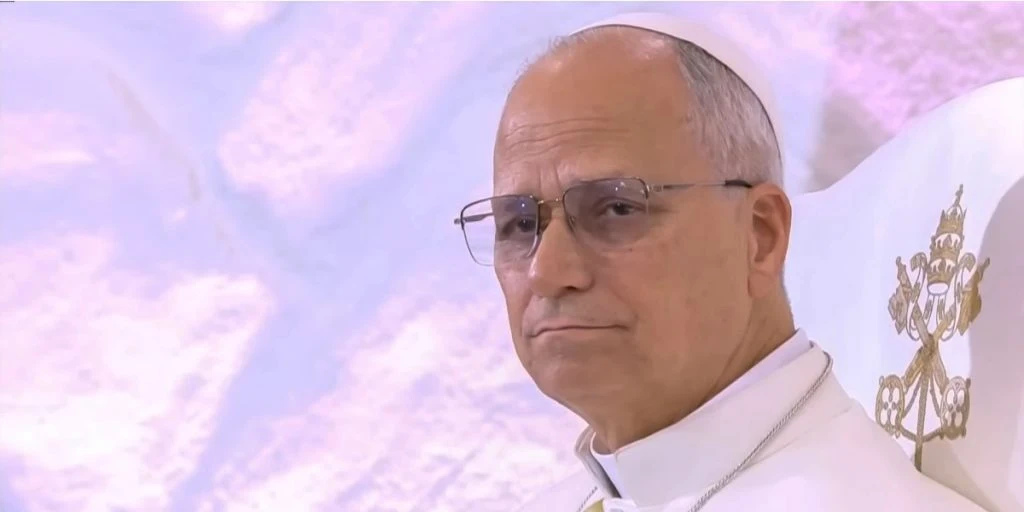
The Vatican has launched its first centralized AI commission just days before Pope Leo XIV is expected to release a major papal letter warning about artificial intelligence’s impact on labor, human dignity and society.


The Vatican is formally expanding its involvement in the global AI debate after Pope Leo XIV approved the creation of the Catholic Church’s first centralized commission dedicated entirely to artificial intelligence.
The move comes just days before the pope is expected to release a major papal letter on AI alongside Anthropic cofounder Christopher Olah, signaling that the Church intends to play a far more active role in shaping the ethical and societal conversation around the technology.
The Church enters the AI debate
According to Fortune, the new commission was approved on May 16 and will coordinate AI policy, research and oversight efforts across multiple Vatican institutions.
The body includes representatives from seven Vatican organizations, including the Pontifical Academy of Sciences and the Dicastery for the Doctrine of the Faith.


Cardinal Michael Czerny said the goal is to help the Church address the growing impact of AI “for the whole Church, and the whole world.”
While the Vatican has discussed AI ethics for years — including meetings with executives from Google, Microsoft and Cisco — this marks the first time those efforts have been consolidated under a single structure.
The Vatican had already introduced internal AI guidelines earlier in 2025 requiring disclosure of AI-generated content and restricting uses viewed as conflicting with Church principles.
A papal letter on AI
The commission’s launch comes ahead of Pope Leo’s first papal encyclical, reportedly titled Magnifica Humanitas.
According to Fortune, the document will focus heavily on AI’s impact on labor, human dignity and working life.
The Vatican appears to be deliberately framing AI as a modern equivalent to the Industrial Revolution.
Leo has repeatedly referenced Rerum Novarum, the landmark 1891 encyclical that addressed labor rights during industrialization, suggesting the Church sees artificial intelligence as a similarly transformative force reshaping society and work.
“In our own day,” Leo said shortly after his election, “the Church offers to everyone the treasury of her social teaching in response to another industrial revolution and to developments in the field of artificial intelligence.”
Why the Vatican is worried
Pope Leo, the first American pontiff, studied mathematics before entering the priesthood and has rapidly positioned AI as one of the defining issues of his papacy.
He has repeatedly warned about AI’s effects on workers, children and human decision-making.
In previous speeches, Leo argued AI must never undermine “human dignity, justice, and labor,” while also cautioning younger generations against becoming overly dependent on chatbots and automated systems.
Unlike governments focusing primarily on regulation, competition and market access, the Vatican is approaching AI through a moral and social lens.
That includes concerns over automation replacing workers, the concentration of technological power and the psychological effects of increasingly human-like AI systems.
A different kind of AI governance
The Vatican’s approach also highlights the growing fragmentation of global AI governance.
While the European Union has focused on legal enforcement through the AI Act, and the United States remains divided over regulation, the Church is attempting to position itself as an ethical authority on the societal consequences of AI.
The commission itself does not hold regulatory power.
But by institutionalizing its AI strategy and releasing formal guidance at the highest level of Catholic teaching, the Vatican is signaling that it believes artificial intelligence is no longer simply a technological issue.
It is becoming a question about human identity, labor and power in the digital age.
Sources: Fortune



