
 Nicolai Haugsted

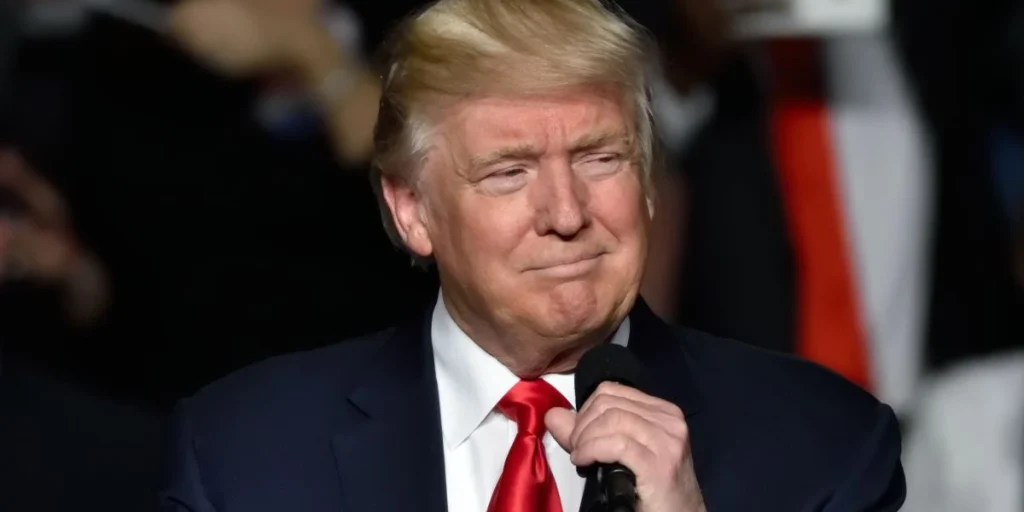
Donald Trump secures a diplomatic victory as dozens of countries change their position on the US embargo against Cuba.

For more than three decades, the United States has faced a familiar diplomatic challenge at the United Nations. Year after year, countries from across the world have overwhelmingly supported calls for Washington to end its longstanding economic embargo against Cuba.
American administrations have largely watched those votes come and go without changing their position.
But Donald Trump’s latest effort to defend the controversial restrictions has produced a noticeably different response from the international community.
According to Reuters, during Wednesday’s vote at the UN General Assembly, dozens of countries that previously supported ending the embargo either changed their position or stayed out of the vote altogether.


The resolution still passed comfortably, but the numbers revealed a substantial shift in Washington’s favor.
For the Trump administration, that was reason enough to celebrate.
Dozens of countries change their position
The UN General Assembly voted on October 28 to renew its call for an end to the American economic, commercial and financial embargo against Cuba.
A total of 130 countries supported the resolution, while 17 opposed it and another 25 abstained.
The result marked a significant departure from the previous year’s vote, when 165 countries supported ending the embargo, seven opposed the resolution and 12 abstained.
In other words, support for the resolution fell by 35 votes within a year.
The latest result represents the weakest backing for the annual resolution in two decades, according to the United Nations.
Several countries that have traditionally criticized the American embargo declined to support the resolution this time.
Germany and Italy were among the Western nations that abstained after years of voting in favor of lifting the restrictions.
South Korea also changed its position.
Although most countries still opposed the embargo, the shift suggested that Washington’s diplomatic campaign had persuaded several governments to reconsider their approach.
Trump administration celebrates the result
US Ambassador to the United Nations Mike Waltz welcomed the outcome, highlighting the number of countries that had moved away from their previous positions.
“I’m satisfied that so many countries now, including major economies like Korea, like Germany, and others have shifted their position,” Waltz told reporters following the vote.
He also suggested that Washington expected further changes in future votes.
“Diplomacy takes time, but now that we’ve had a tripling of countries that have shifted, we expect that to only continue to grow,” he said.
The result followed an American lobbying effort aimed at reducing international support for Cuba’s annual resolution.
Washington has argued that its economic restrictions are necessary to pressure Cuba’s communist government, which American officials accuse of political repression and undermining democratic freedoms.
Cuban authorities reject that characterization and maintain that the embargo primarily harms ordinary citizens.
The vote did not amount to international approval of Trump’s Cuba policy. A clear majority still supported ending the embargo.
Nevertheless, the reduction in support for the resolution provided the White House with a measurable diplomatic gain.
A shouting match breaks out at the United Nations
The political disagreement was not confined to speeches and voting figures.
Tensions between American and Cuban representatives had already escalated in the days leading up to Wednesday’s decision.
Diplomats from both countries engaged in heated exchanges, including confrontations during proceedings at the General Assembly.
Tuesday’s debate reportedly featured shouting and physical jostling between representatives.
The following day, Waltz accused a Cuban diplomat of assaulting an American official during the confrontation.
He announced that Richard Tur de la Concepcion, a first secretary at Cuba’s UN mission, would be expelled from the United States.
“That Cuban first secretary will be on a plane out of the country back to Havana today,” Waltz told reporters.
Cuba subsequently lodged a complaint with UN Secretary-General António Guterres concerning the conduct of an American diplomat involved in the incident.
The confrontation illustrated how strained relations between Washington and Havana have become under Trump’s administration.
Cuba accuses Washington of punishing its population
Cuban Foreign Minister Bruno Rodríguez responded to the vote by accusing the United States of attempting to isolate and economically suffocate the island.
Writing on X, Rodríguez claimed that the American government remained internationally isolated despite the changes in voting patterns.
He accused Washington of trying to subject Cubans to “an act of collective punishment and genocide.”
The foreign minister also rejected the arguments used by the Trump administration to defend its restrictions.
“Neither its most insane pretexts nor its pressures nor media circus will prevail over the force of facts and truth,” Rodríguez wrote.
Cuban officials have repeatedly blamed American sanctions for worsening the country’s economic difficulties.
The island is experiencing severe shortages of fuel, food and other essential supplies, alongside inflation and deteriorating infrastructure.
Its electricity system has also struggled to meet demand, with prolonged blackouts affecting millions of residents.
A nationwide collapse of the electrical grid last month left large parts of Cuba without power.
Washington maintains that Cuba’s economic problems are primarily the responsibility of its own government, while Cuban authorities argue that American restrictions have severely limited the country’s ability to recover.
Trump’s pressure campaign goes beyond diplomacy
The latest UN vote comes amid a broader American effort to increase pressure on Cuba.
Trump has strengthened economic restrictions against the island and targeted its access to imported fuel.
The measures followed major political developments in Venezuela earlier this year, when American forces removed President Nicolás Maduro from power.
Venezuela had previously been an important supplier of oil to Cuba.
Restrictions affecting fuel shipments have contributed to worsening energy shortages across the island, according to international reporting and UN experts.
American officials argue that their policies are intended to pressure Cuba’s government into political change.
UN human rights experts, however, have criticized the restrictions and warned about their consequences for ordinary Cubans.
During an appearance at the United Nations last month, Trump described Cuba as a failed state and suggested that political freedom would eventually reach the country.
The administration’s approach represents a sharp contrast with the diplomatic opening pursued during Barack Obama’s presidency.
Obama’s approach was very different
Relations between Washington and Havana briefly improved during Obama’s second term.
His administration restored diplomatic ties with Cuba and pursued measures intended to ease decades of hostility.
That change was reflected at the United Nations in 2016, when the United States abstained from the annual vote condemning the embargo for the first time.
Washington had previously voted against the resolution every year since the General Assembly began considering it in 1992.
Trump has taken a different approach, favoring economic pressure and diplomatic isolation over normalization.
Wednesday’s result suggests that his administration has persuaded a larger group of countries to distance themselves from Cuba’s position.
However, the practical consequences of the vote remain limited.
General Assembly resolutions are not legally binding, and only the US Congress can fully repeal the longstanding embargo.
The restrictions therefore remain in place regardless of how individual countries voted.



