
 Nicolai Haugsted

rump claims voters don’t understand a basic word as his administration challenges Alaska’s election process.

American elections have produced their fair share of unusual ballot controversies, particularly when candidates share names or voters encounter unfamiliar terminology.
With the November 3 midterm elections approaching, officials and campaigns are paying close attention to anything that might affect how ballots are understood.
Alaska has become the latest state to face such a dispute, with a Senate race attracting attention from the White House and the Justice Department.
But President Donald Trump’s explanation for why the federal government has intervened has sparked a separate controversy.


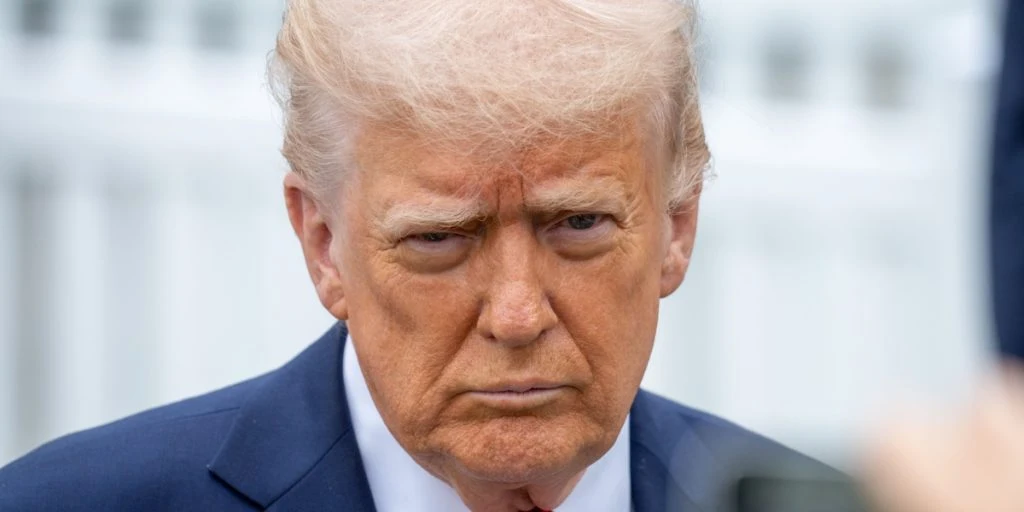
Speaking to reporters on Sunday, the 80-year-old president suggested that many Americans do not understand a common word used to describe elected officials.
His comments quickly prompted criticism from political commentators, some of whom accused him of insulting the very voters his administration claims to be protecting.
Trump questions whether voters understand a basic political term
The controversy began at Joint Base Andrews, where Trump spoke with reporters before departing for a campaign rally in Michigan.
The president was asked about his administration’s legal challenge involving Alaska’s Senate election.
At the heart of the dispute is an unusual coincidence involving two candidates named Dan Sullivan.
One is the sitting Republican senator seeking reelection.
The other is a different candidate with the same name.
Trump argued that the similarity could confuse voters, particularly when identifying which candidate currently holds the Senate seat.
“A lot of people don’t know what incumbent means,” the president told reporters.
The word incumbent refers to someone who currently holds a particular elected office.
Trump continued by claiming that “people are totally confused” about the situation.
He described the ballot controversy as “very unfair” and even accused those responsible of “outright cheating.”
The president also confirmed that his administration was pursuing the matter through the courts.
According to Trump, the government is “before the court to see what you can do.”
His comments presented the dispute as a question of electoral fairness, although the accusation of cheating has not been established by the information provided.
Critics turn Trump’s explanation against him
The president’s remarks soon circulated on social media, where several commentators offered a considerably less sympathetic interpretation.
Former MSNBC and ESPN presenter Keith Olbermann suggested that Trump’s explanation might reveal something about his own familiarity with political terminology.
“Translation: HE just found out what ‘incumbent’ means,” Olbermann wrote.
The progressive media account MeidasTouch offered a similar assessment.
“Always telling when Trump just learns what something means,” the account commented.
The responses reflected a recurring criticism of Trump’s public speaking style, particularly his habit of suggesting that widely understood information is unfamiliar to most people.
Rather than accepting his claim that voters were confused, critics questioned whether he was underestimating their knowledge.
An old Trump remark returns to haunt him
The discussion also revived a statement Trump made back in 2017.
At the time, the president attracted attention after claiming that many people did not realize the word dumb contained the letter B.
That earlier remark became fresh material for commentators responding to his comments about Alaska.
Political commentator Molly Jong-Fast referenced the old statement directly.
“The same people who don’t know that dumb has a B,” she wrote.
Criminal defense attorney and legal blogger Scott Greenfield also revisited Trump’s previous observation.
“Most people don’t know that ‘dumb’ is spelled with a ‘b.’ –DJT,” he commented.
Daily Kos contributing editor Greg Dworkin took the joke further.
“Trump: it probably ends with a B. A lot of people don’t know that,” Dworkin wrote.
“He didn’t say that yet, but it’s coming.”
The comments were satirical responses to the president’s language, rather than evidence about whether Alaska voters actually understand the term incumbent.
A journalist accuses Trump of insulting Alaska voters
Other critics focused less on Trump’s vocabulary and more on what his comments implied about the electorate.
Clara Jeffery, editor-in-chief of Mother Jones, argued that the president’s remarks were disrespectful toward the people of Alaska.
“Way to insult the good people of Alaska,” she wrote.
Independent journalist Aaron Rupar, who shared video of Trump’s remarks, offered a pointed summary of the president’s position.
According to Rupar’s characterization, Alaska’s ballot was “illegal because people don’t know what ‘incumbent’ means.”
That description was a critical interpretation of Trump’s argument, not a legal finding that the ballot itself was unlawful.
The dispute nevertheless raised a broader question about how much confusion can reasonably be attributed to voters when candidates share identical names.
Click to display external content from x,
- You can always enable and disable third-party content.

You agree to display external third-party content. Personal data may be sent to the provider of the content and other third-party services.
The Justice Department takes the dispute to court
Behind the online criticism lies an actual legal challenge involving Alaska’s Senate election.
The Justice Department has filed a lawsuit concerning the possibility that voters could confuse Republican Senator Dan Sullivan with another candidate of the same name.
Trump has said that he personally ordered the lawsuit to be filed.
According to the report, the department is asking a federal court to prevent certification of any election result “that may be impacted by voter confusion.”
The request goes beyond simply expressing concern about the ballot.
It seeks judicial intervention in the process of finalizing election results if the court determines that confusion could have affected the outcome.
However, the existence of two candidates with the same name does not by itself demonstrate electoral misconduct.
The legal dispute concerns whether the circumstances create a sufficient basis for the relief requested by the Justice Department.
No court ruling establishing Trump’s allegations of cheating was identified in the source material.



