
 Nicolai Haugsted

Republicans are scrambling to protect Congress’ spending power after Trump cancels another $810 million.
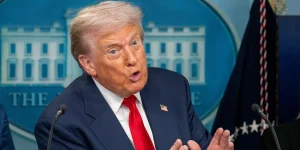

Donald Trump has managed to irritate a group of Republicans who usually prefer having him on their side.
Money is the reason.
Congress approved hundreds of millions of dollars for federal programs, but Trump moved Friday to cancel $810 million of that spending through a controversial maneuver known as a “pocket rescission.” Timing the move just days before the fiscal year ends leaves lawmakers with virtually no opportunity to rescue the money before it expires.
Republicans who oversee government spending are now discussing ways to make sure he cannot simply do it again.


Senate Appropriations Committee Chair Susan Collins is among those looking for a legislative roadblock that could be inserted into upcoming spending bills.
“We’re already looking at whether there’s language we can put in the next set of appropriations bills that would prohibit this from happening,” Collins told reporters Monday evening.
“But it’s going to take some legal work.”
Trump found the calendar rather useful
Normally, a president who wants Congress to cancel previously approved spending can submit a rescission request.
The Impoundment Control Act gives lawmakers a 45-day period to consider such a proposal. Unless Congress approves it, the administration ordinarily has to release the money.
Trump’s administration interprets the law differently when the fiscal calendar is about to run out.
By submitting a request shortly before September 30 and withholding the money during the review period, the White House argues that the funds can expire before Congress gets the chance to force their release.
The Government Accountability Office has rejected that interpretation and considers pocket rescissions unlawful. Republicans including Collins have likewise accused the administration of violating Congress’ spending authority.
Trump’s latest package covers 11 rescissions across several departments. By far the largest is $567 million connected to Health and Human Services programs serving refugees, asylum seekers and other noncitizens.
Murkowski has a less technical word for it
Alaska Republican Lisa Murkowski did not need much budget jargon to describe the maneuver.
She called it “sneaky.”
According to Murkowski, the tactic is “designed to go around Congress … where you basically just run the clock out.”
Her concern reaches beyond the $810 million currently disappearing from the books.
“I think Congress needs to save ourselves,” Murkowski told reporters.
“I don’t think that our strategy should be just hoping for a good decision out of the courts. I think we have a role here, and it’s up to us to exercise it.”
Then came her considerably shorter assessment of the political challenge.
“Easier said than done.”
Democrats have heard this idea before
Republican interest creates an awkward wrinkle because Democrats have already tried to erect similar barriers.
Washington Sen. Patty Murray, the ranking Democrat on the Senate Appropriations Committee, said previous attempts to put protections into spending legislation went nowhere because Republicans opposed them.
“I have been trying to get that language in there. … The Republicans objected,” Murray said Monday.
Trump used a pocket rescission last year to withhold roughly $4.9 billion in foreign aid.
The Supreme Court allowed that money to remain frozen while litigation continued, meaning it expired before Congress could force its release. Importantly, the court’s emergency ruling did not definitively settle the broader legality of pocket rescissions, and the dispute involved foreign aid, where the president has particularly broad authority.
Friday’s action pushes the confrontation much further into domestic spending, including health, education, housing and Justice Department programs.
Stopping Trump could require Republican votes
Writing a prohibition into legislation is only part of the problem.
Trump would still have the power to veto legislation containing restrictions he opposes, potentially forcing lawmakers to assemble two-thirds majorities in both chambers to override him.
South Dakota Republican Mike Rounds is already doing that arithmetic.
“How many votes does it take to bar him?” Rounds asked.
“Depending upon the strategy that you’re talking about, it’s going to be a vetoable item. If that’s the case, then you’ve got to have two-thirds in the House and the Senate. So we have to talk about things we can actually get done.”
One proposal under discussion would prevent presidents from submitting rescission requests during the final quarter of a fiscal year.
Such a restriction would attack the timing mechanism that makes a pocket rescission possible rather than trying to prohibit Trump’s individual spending decisions.
Congress has another government-funding deadline on December 11, giving lawmakers a possible vehicle for inserting new restrictions.
Some Republicans think another law misses the point
Not everyone in the GOP is convinced Congress can fix the problem by writing more legislation.
North Dakota Sen. John Hoeven argues that lawmakers already passed a law designed to protect their authority over federal spending.
“So if we pass another law that basically says the same thing, then that’s going to change it?” Hoeven asked.
“The Impoundment Control Act was set up to make sure that Congress had the power of the purse and the funds were expended. The executive is interpreting it differently,” he continued.
“That’s why I don’t know how you resolve it without the court stepping in.”
Senate Majority Leader John Thune similarly expects judges to remain part of the fight.
“There’s that argument, for sure,” Thune said when asked about Collins’ position that Trump’s action is unlawful.
“And I think as an appropriator she feels strongly that these are decisions made by appropriators and that the administration doesn’t have this authority. But again, that is probably something the courts probably decide.”
Friday’s $810 million package is unlikely to give Congress enough time for a legislative rescue before the fiscal year expires.
Republicans are consequently looking past the money Trump has already targeted.
Their problem now is figuring out how to stop their own president from reaching for the same trick a third time.



