
 Nicolai Haugsted
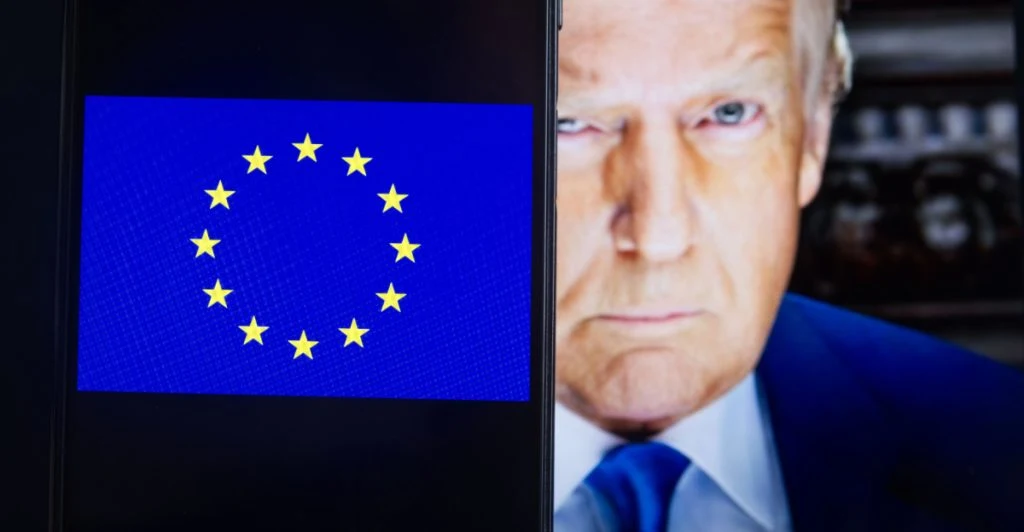
Trump wants Americans to pay less for medicine but Europe could be left with the bill.


Donald Trump has spent much of his second term arguing that Americans should no longer pay far more for prescription drugs than patients in other wealthy countries.
His administration has now made considerable progress toward that goal, striking agreements with major pharmaceutical companies and tying American prices more closely to those charged abroad. Washington says the strategy is already saving patients and taxpayers billions of dollars.
Lower prices in the United States, however, do not necessarily mean pharmaceutical companies will happily accept smaller revenues.
New research highlighted by Digi24 via. The Lancet points to another possibility: companies could respond by charging more elsewhere or simply making some countries wait longer for new treatments.


Europe may therefore discover that America’s cheaper medicine comes with a bill attached – and that bill could land on the other side of the Atlantic.
Trump wants to rewrite the pharmaceutical price tag
Trump’s policy revolves around what Washington calls “most-favored-nation” pricing.
Rather than accepting significantly higher American prices, the administration wants drugmakers to offer US patients prices comparable with those available in other developed economies.
Trump signed an executive order launching that push in May 2025, declaring that Americans should no longer subsidize lower prices abroad.
Washington has since turned the idea into agreements with major pharmaceutical companies. By August 2026, the White House said 26 manufacturers covering roughly 89 percent of America’s branded drug market had reached MFN deals with the administration.
Trump’s government makes no secret of wanting prices outside America to move in the opposite direction.
Its own May analysis said the policy was designed to combine lower US prices with “upward pressure” on prices paid by other wealthy countries.
Low European prices could suddenly become very expensive for drugmakers
Research reported by Spanish newspaper El País illustrates why pharmaceutical companies could have a powerful incentive to rethink their international pricing.
Researchers examined 195 patented medicines accounting for roughly $87.9 billion in annual Medicare spending under the programs studied.
Their calculations suggest linking American prices to those abroad could initially reduce that spending by around 16 to 18 percent, with considerably larger savings possible after five years.
Great news for Washington’s spreadsheet.
Potentially less wonderful news for countries whose comparatively low prices help determine what American programs pay.
Researchers found that, for around three-quarters of the medicines examined, manufacturers could be forced to return substantially more money to Medicare than they earned selling the same drugs in the relevant reference markets.
Average repayments would amount to roughly 3.8 times the revenue generated in those countries, according to the study as reported by El País.
Keeping medicine cheap in a relatively small European market could therefore become a very expensive favor if doing so simultaneously reduces revenue from America’s vastly larger market.
Europe could wait longer for tomorrow’s treatments
Drugmakers have several ways to respond.
Higher prices are the obvious one.
Delaying the introduction of new medicines in countries with particularly low prices is another.
Kerstin Noelle Vokinger of the University of Zurich, one of the researchers behind the study, warned that American decisions could have consequences far beyond America’s borders.
“US policies can affect access to drugs globally,” Vokinger said. “Politicians should ensure that the availability of important medicines is not delayed because of this.”
Economist Jaume Puig-Junoy described the commercial calculation facing manufacturers in similarly straightforward terms.
“When a low price tag in a small market causes a big loss for a drugmaker in the US, it is all the more motivated to delay the launch of new therapies, raise prices or provide confidential discounts,” he said.
Such incentives could leave European health systems facing an uncomfortable choice between paying more and risking later access to innovative medicines.
Europe is hardly powerless in the equation.
Governments could redesign their own pricing arrangements to make direct international comparisons more difficult.
Beatriz González López-Valcárcel, a professor at the University of Las Palmas de Gran Canaria, suggested authorities could alter packaging or product presentations so medicines were no longer directly comparable with their American equivalents.
Confidential rebates offer another possible escape route.
Official sticker prices could remain high enough to avoid dragging down US prices while pharmaceutical companies quietly negotiate discounts with individual healthcare systems.
Such arrangements would make the real price of medicine considerably harder to see from Washington.
“There is a risk that the industry will try to prevent the situation in which European prices influence those obtained in the US,” pharmaceutical executive César Hernández said.
Trump’s argument starts from a genuine and longstanding difference between American and international drug prices.
His administration argues that pharmaceutical companies have accepted lower prices abroad while compensating with much higher prices in the United States.
Trump’s 2025 executive order described that arrangement as other wealthy countries effectively benefiting from American spending on pharmaceutical innovation.
White House policy has since become even more explicit.
Washington’s own economic analysis says MFN pricing is intended not merely to reduce American prices but also to strengthen manufacturers’ bargaining position when negotiating with wealthy foreign governments.
Recent agreements show that pressure is no longer theoretical. A US-UK pharmaceutical agreement announced in late 2025 included a commitment that increased the net price of new prescription drugs in Britain by 25 percent, according to the White House.
Europe rejects the idea that it simply gets a free ride
European experts dispute the administration’s characterization of the international pharmaceutical market.
Hernández called the argument that “Europe pays too little for medicines” overly simplistic.
European healthcare systems contribute to medical innovation through more than the price appearing on a box of tablets, he argued.
“European health systems contribute significantly to innovation through drug funding, public research, clinical studies, scientific infrastructure and sample generation,” Hernández said.
Differences between healthcare systems complicate attempts to treat pharmaceutical prices as though countries were buying identical products from the same supermarket shelf.
“The domestic characteristics and issues of the US market cannot automatically be transferred to European systems,” Hernández said.
Trump’s policy has already moved well beyond a campaign slogan.
His administration says all 50 state Medicaid programs now have access to lower prices through its MFN agreements, while 26 pharmaceutical manufacturers representing about 90 percent of the branded US market have signed deals.
Washington presents those agreements as evidence that America’s bargaining power can finally be used to force pharmaceutical prices downward.
Researchers looking beyond America’s borders see a more complicated experiment.
Drugmakers operate globally, and a price imposed in Oslo, London or another relatively small market can suddenly matter far more if Washington uses it to determine the revenue available from tens of millions of American patients.



