
 Nicolai Haugsted

Trump’s diplomatic offensive produced plenty of tough rhetoric but considerably fewer major breakthroughs.
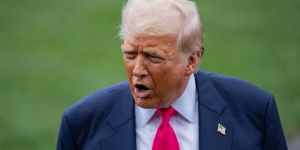
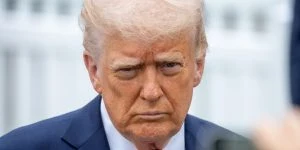
Donald Trump entered one of the busiest diplomatic weeks of his second presidency with no shortage of opportunities to demonstrate American influence.
World leaders gathered at the United Nations. Chinese President Xi Jinping arrived for a high-profile White House visit. Wars involving Iran and Ukraine offered Trump opportunities to present himself as the dealmaker he has long claimed to be.
By the end of the week, however, another theme had emerged.
Foreign governments appeared increasingly willing to resist Washington, while several of Trump’s biggest international ambitions remained unresolved. Even the carefully staged meeting with Xi produced relatively modest public results.


Trump certainly sounded powerful.
Getting everybody else to follow along proved more complicated, has Reuters concluded.
Trump arrived at the UN ready to throw his weight around
Trump used his UN General Assembly address Tuesday to present an unapologetically muscular version of American foreign policy.
Iran received perhaps the starkest warning.
Trump threatened to “annihilate” the country unless Tehran agreed to a deal, while defending the war launched by the United States and Israel on February 28.
Venezuela provided another example of the president’s worldview.
“To the victor belong the spoils,” Trump declared while defending his coercive approach toward the oil-rich South American country.
Such rhetoric fitted neatly with Trump’s declaration that “America is back.”
Yet the week also illustrated the difference between possessing enormous military and economic power and successfully converting it into political agreement.
Xi arrives with leverage of his own
Thursday’s summit with Xi gave Trump perhaps his biggest test.
Ceremony was plentiful. Major breakthroughs were harder to find.
According to the source material, the clearest outcome was a two-month extension of the existing US-China trade truce, buying the world’s two largest economies more time before another potential escalation.
Several far bigger disputes remain unresolved, including Taiwan, artificial intelligence and trade.
Chinese state media reported that Xi privately urged Trump to oppose Taiwanese independence. Taiwan, which Beijing claims as its territory, remains among the most sensitive issues separating China and the United States.
Trump avoided publicly emphasizing disagreements with his guest.
Brett Bruen, a former foreign policy adviser in the Obama administration who now heads the Global Situation Room consultancy, saw a striking contrast between Trump’s broader rhetoric and his treatment of Xi.
“Trump sees himself taking us back to a world where might makes right,” Bruen said.
“But it’s noteworthy that he goes all wobbly when it comes to Xi Jinping and ascendant Chinese power.”
That is Bruen’s assessment rather than an established conclusion about Trump’s motives or negotiating position.
Beijing nevertheless possesses considerable economic leverage of its own, particularly through China’s dominant position in rare earth minerals used by technology and automobile manufacturers.
White House rejects the idea that Trump has hit a wall
Trump’s administration disputes the broader suggestion that his international agenda has stalled.
A White House official told Reuters that the president’s UN address highlighted “his various wins in advancing US interests around the world,” including preventing Iran from obtaining a nuclear weapon.
Iran has consistently maintained that its nuclear program is peaceful.
The administration can also point to foreign-policy successes cited in the source material, including a Gaza ceasefire and the capture of Venezuela’s leader.
Iran presents a considerably more stubborn challenge.
Nearly seven months after the United States and Israel launched their attack, the conflict continues. Fighting has disrupted energy supplies and spread elsewhere in the region, including Yemen and the Red Sea shipping corridor.
Trump defended his decision at the UN while insisting that America’s position had grown stronger.
Political consequences back home are harder to ignore, however, as higher fuel prices and public dissatisfaction with the conflict arrive shortly before November’s midterm elections.
Allies are getting more comfortable saying no
Resistance has not come exclusively from American adversaries.
European and Asian allies have largely declined Trump’s demands for assistance with the Iran conflict, according to the source material.
Some leaders also used the UN gathering to criticize the kind of international order they believe Trump’s approach encourages.
French President Emmanuel Macron warned against a “return to the law of the jungle.”
Countries, Macron argued, faced a choice between an international system dominated by coercion and power or a “civilized international society.”
Brazilian President Luiz Inacio Lula da Silva delivered his own pointed message while criticizing foreign interference ahead of Brazil’s October election.
“We do not need aircraft carriers patrolling our waters, we need cooperation to stem the flow of weapons and money that fuel crime,” Lula said.
Neither statement by itself establishes that the leaders were rejecting American leadership wholesale, but both illustrated the public resistance confronting Trump during a week designed partly to showcase his international influence.
The White House pushed back on that interpretation.
According to an administration official quoted in the source, Trump was “not concerned with posturing but about results.”
The official also argued that some leaders sounded considerably different during private conversations with Trump than they did in public.
Ukraine refuses to provide the easy deal
Trump’s problems extend to the war between Russia and Ukraine.
His effort to persuade both sides to accept even a limited ceasefire covering energy infrastructure failed to produce significant progress, according to the source material.
Greenland offers another example where Trump’s original ambitions met practical limits.
Trump has secured an agreement with Denmark and Greenland allowing an expanded US military presence on the Arctic island.
Such an arrangement falls far short of his earlier insistence that America should “own” Greenland, including his refusal at one stage to rule out using force to obtain territory belonging to a fellow NATO member.
Eurasia Group president Ian Bremmer believes other countries have noticed that gap between Trump’s demands and eventual outcomes.
“A year ago, few countries dared cross Trump,” Bremmer wrote.
“Now Canada, Europe, China, Iran, Russia and others are all more willing to say no.”
Bremmer’s observation is an analytical judgment rather than a measurable finding, but several confrontations during Trump’s diplomatic week provided examples of governments declining to give Washington everything it wanted.
Midterms add another clock
Foreign leaders are also dealing with a president approaching a consequential domestic election.
Republicans face voters on November 3 with control of Congress at stake. A loss of either chamber could place additional constraints on Trump’s remaining presidency.
More than two years would still remain in his term after the election, but foreign governments have their own political calendars and reasons to calculate how much leverage Washington can exercise.
Iran remains at war despite Trump’s military campaign. Russia and Ukraine remain far apart. Allies have declined to join the Iran conflict. China arrived in Washington carrying economic leverage that limited Trump’s room for maneuver.
None of that makes the United States powerless.
Rather, the week demonstrated something less dramatic and perhaps more consequential: American power does not guarantee American compliance from everyone else.



