
 Kenneth Glad
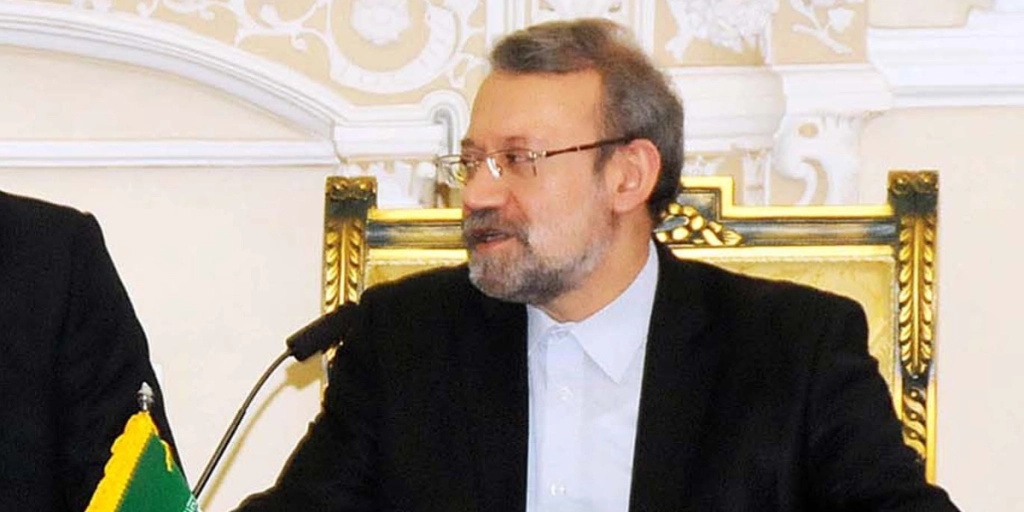
Iran’s leadership crisis is likely to trigger a broader struggle inside the Islamic Republic’s power structure. The death of Supreme Leader Ali Khamenei has left rival institutions, political families and security networks maneuvering for influence. In that unsettled landscape, one veteran insider is drawing renewed scrutiny: Ali Larijani, a long-time figure within Iran’s ruling elite who now sits close to the country’s most sensitive decision-making bodies.


Iran has no automatic mechanism for replacing a supreme leader. The Assembly of Experts formally selects the successor, but the outcome is typically shaped by negotiations among clerics, political factions and the powerful Revolutionary Guards.
That context helps explain why Larijani’s position matters. As reported by 20 Minutes France, he was appointed in August to head Iran’s Supreme National Security Council, a body that helps shape national security and nuclear policy.
The newspaper also wrote that Khamenei had tasked him with helping prepare for a future succession. After the leader’s death on February 28, that assignment has taken on new importance.
He is not widely viewed as the obvious successor. But Larijani sits unusually close to the system’s levers of power.


Larijani’s long career
His name keeps resurfacing largely because of his political résumé. Larijani is a former Revolutionary Guards commander who later served as culture minister and spent a decade running the country’s state broadcasting organization.
He then moved into parliamentary politics, winning election in the clerical city of Qom and eventually serving as speaker of parliament from 2008 to 2020. In the 2012 parliamentary election, he secured about 65 percent of the vote in his district.
Larijani has also attempted to climb higher through elections. He ran for president in 2005, finishing sixth, and later tried to stand again in 2021 and 2024 before being disqualified.
Politically, he has long been linked to Iran’s conservative or principlist camp, though some analysts describe him as more pragmatic than other hardliners.
Why some see a negotiator
That reputation is central to speculation about his potential role internationally. Larijani previously served as Iran’s chief nuclear negotiator between 2005 and 2007, dealing directly with Western officials.
More recently, 20 Minutes France reported that Larijani represented Tehran in what it described as last-ditch negotiations in Oman. Sociologist Azadeh Kian said his continued prominence may reflect his usefulness as someone “with whom they can precisely discuss and negotiate.”
His public rhetoric, however, remains sharply confrontational. Speaking on Iranian television, he said of the United States and Israel: “They have burned the heart of the Iranian nation, and we in turn will burn their hearts.”
On X he added: “We will fiercely defend our six-thousand-year-old civilization, whatever the cost, and we will make our enemies regret their miscalculation.”
Political scientist Mahnaz Shirali described him as “hated by Iranians,” while his influence within the Revolutionary Guards is seen as uncertain.
Much will depend on how Iran’s clerical leadership, security institutions and political factions align in the months ahead. For now, no single figure clearly dominates the field. Still, Larijani appears positioned close to the center of whatever comes next.
Sources: 20 Minutes France



