
 Kenneth Glad
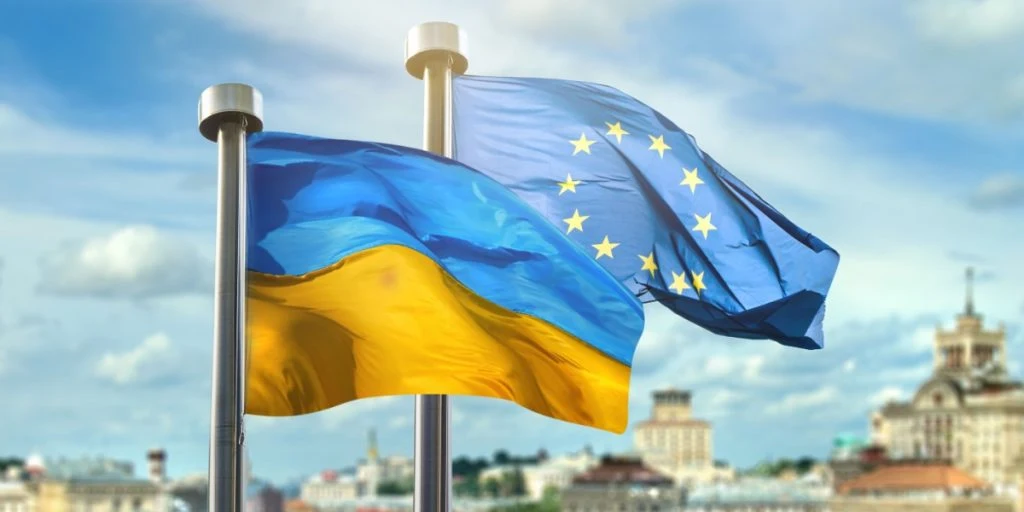
A new proposal outlines a gradual step toward deeper integration, stopping short of full membership. The approach reflects broader caution over expansion while keeping long-term accession on the table.


Germany and France are promoting a revised path for Ukraine’s European Union ambitions, offering closer alignment without immediate membership.
The proposal, outlined in documents reviewed by the Financial Times, comes as several EU governments push back against fast-tracking enlargement.
It reflects a broader debate inside the bloc over how far and how quickly it can expand.
The two countries want to introduce a new category that would give Ukraine a more formal role in EU structures while stopping short of full rights. The New Voice of Ukraine reported that the initiative is being framed as a bridge between candidate status and accession.
This rethink follows resistance among member states to earlier proposals from the European Commission, which had suggested allowing countries to join before completing all reforms.


Institutional rethink
Germany’s plan centers on “associate membership,” which would open the door for Ukraine to take part in high-level EU meetings, including gatherings of ministers and leaders.
Voting rights, however, would remain reserved for full members.
France has put forward a parallel idea, calling it “integrated state status.” While similar in structure, Paris stresses that key financial tools, such as agricultural subsidies, should only become available after accession.
Together, the proposals reflect concern among larger EU economies about decision-making balance and the strain that early membership could place on common institutions.
Funding and reforms
A central feature of the plan is linking deeper access to EU systems with measurable reform progress.
Rather than granting full benefits upfront, Ukraine would move step by step into specific programs.
According to the Financial Times, this approach replaces the Commission’s earlier “staged enlargement” concept, which many governments rejected.
Under that model, membership would have come first, with benefits following later.
The new framework flips that logic. Participation in funding schemes and policy areas would expand gradually, tied directly to progress in aligning Ukrainian law with EU standards.
Security and politics
One notable element under discussion is the possible extension of aspects of the EU’s mutual defense clause. This could be done through political commitments rather than formal treaty changes.
For Kyiv, this carries weight at a time when NATO membership remains uncertain. Still, the proposal stops well short of offering full security guarantees.
European Commissioner for Enlargement Marta Kos has said Ukraine is unlikely to meet accession criteria by 2027, while President Volodymyr Zelenskyy continues to aim for that timeline.
German Chancellor Friedrich Merz has also stressed that meeting the Copenhagen criteria remains a prerequisite.
The plan leaves Ukraine more closely tied to the EU than before, but still outside its core decision-making system.
It also raises a broader question for the bloc: whether this model could become the template for future candidates waiting at the door.
Sources: Financial Times, The New Voice of Ukraine



