
 Kenneth Glad
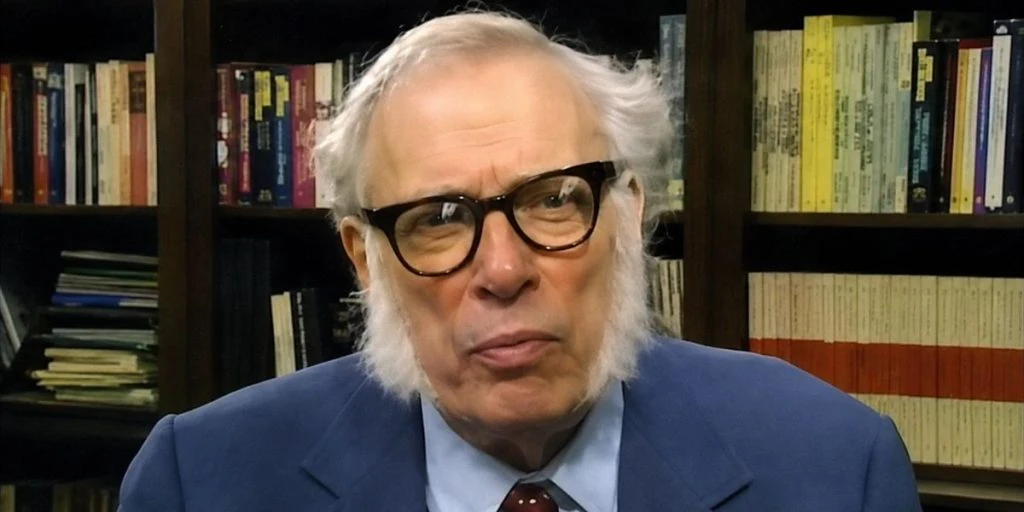
An old argument about public judgment has returned to view as information becomes easier to obtain and harder to assess. The dispute is not only about schooling, but also about the place of evidence in civic life.

On January 21, 1980, Newsweek gave Isaac Asimov a single page to make a sweeping accusation about the United States.
“There is a cult of ignorance in the United States, and there always has been,” the science fiction author and biochemistry professor wrote. His essay was brief, direct and aimed less at people who had missed educational opportunities than at a culture he believed had learned to treat ignorance as a democratic entitlement.
Asimov’s complaint rested on a distinction that political argument often blurs. Citizens may possess equal rights, but that does not mean every factual claim deserves equal weight. He described anti-intellectualism as “a constant thread winding its way through our political and cultural life,” sustained by the belief that “my ignorance is just as good as your knowledge.”
The essay appeared during an election year, with Ronald Reagan preparing to challenge President Jimmy Carter and conservative politics gathering strength. Yet Asimov did not build his argument around the candidates of 1980. He reached instead for older examples, including former President Dwight D. Eisenhower and Alabama politician George Wallace, because he regarded contempt for intellectual life as a recurring American habit rather than the property of one party or moment.


When experts became suspect
One slogan especially bothered Isaac Asimov: “Don’t trust the experts!”
In the 1980 essay, he attributed the phrase not to a named politician or party but to what he called “the obscurantists.” The term refers to people who resist the spread of knowledge, make difficult subjects deliberately unclear or encourage distrust of those with specialist understanding. In Asimov’s argument, obscurantism was not simple ignorance. It was the active treatment of learning as suspicious and informed judgment as socially or politically dangerous.
That distinction mattered. Asimov was not claiming that scientists, academics or policy specialists were incapable of error. Expertise does not guarantee honesty, wisdom or agreement. His objection was to a style of argument in which a person’s qualifications became evidence against them before their claims had even been examined.
Once that attitude takes hold, disagreement no longer turns on facts or reasoning. A specialist may be dismissed as detached, arrogant or self-interested simply because the subject requires knowledge that most people do not possess. Complexity itself can then be portrayed as deception, while confidence and familiarity are mistaken for competence.
Asimov also saw a contradiction in the way such rhetoric was used. Public figures who had attended prestigious schools, held powerful positions or moved within elite institutions could accuse others of elitism while presenting themselves as natural representatives of ordinary citizens. They were, he wrote, “feeling guilty about having gone to school.”
The performance allowed education to be treated as both an advantage and an embarrassment. Credentials remained useful for reaching positions of influence, but intellectual seriousness could become politically inconvenient once office had been attained. A leader might rely on experts privately while mocking them in public, gaining authority from institutions while encouraging resentment toward the people those institutions had trained.
The older pattern
That tension did not begin with Asimov. Historian Richard Hofstadter traced similar attitudes through American political culture in his book, Anti-intellectualism in American Life. His opening chapters examined the 1950s, when intellectual distinction could be converted into a political liability and the language used against academics, scientists and specialists entered national debate.
In 1954, President Dwight D. Eisenhower repeated a dismissive definition of an intellectual as “a man who takes more words than are necessary to tell more than he knows.” Hofstadter used such remarks to illustrate how intellectuals were caricatured as verbose, impractical and removed from ordinary experience. The joke did more than mock long-winded speech. It suggested that intellectual activity itself involved pretension, complication and doubtful usefulness.
The insult “egghead” had already gained political force during the 1952 presidential campaign. Democrat Adlai Stevenson attracted strong support from academics, writers and other intellectuals, while Eisenhower was presented as the more conventional and accessible figure. After Eisenhower’s decisive victory, some observers interpreted the result as evidence of a widening divide between intellectuals and the public.
Hofstadter did not accept that the election had created a new national hostility toward thought. He argued that the resentment was much older and that its intensity changed with political circumstances. At different moments, it appeared through populist suspicion of specialists, religious opposition to secular learning, business hostility toward abstract scholarship or disputes over the purpose of education.
For Hofstadter, anti-intellectualism was therefore not a single doctrine with one organized following. It was a collection of attitudes linked by distrust of intellectual life and by a tendency to diminish its value. He defined its common element as resentment and suspicion toward “the life of the mind” and toward those believed to represent it.
He also separated anti-intellectualism from legitimate criticism of experts. Specialists can become insulated, institutions can protect their own interests and intellectuals can misuse authority. Hofstadter’s concern was different: The habitual assumption that reflection is weakness, that specialized knowledge is inherently undemocratic or that ordinary judgment and professional competence must always be enemies.
Asimov’s slogan captured that broader habit in compressed form. “Don’t trust the experts!” turned a reasonable demand for scrutiny into a general warning against expertise itself. His target was not skepticism, which is essential to serious inquiry, but suspicion detached from evidence. In that climate, the expert does not have to be proven wrong. Being an expert is made sufficient reason not to listen.
A crisis changed the mood
Hofstadter’s account also shows that American attitudes toward expertise could change quickly.
During the McCarthy era, universities, diplomats and scientists were frequent targets of political suspicion. Intellectuals were portrayed as impractical at best and disloyal at worst. Public officials sometimes treated academic independence as a problem requiring supervision rather than a source of national strength.
Then the Soviet Union launched Sputnik in 1957.
The satellite did more than wound American pride. It triggered alarm about the quality of schools, scientific research and technical training. Concerns that had previously belonged mainly to professors and education specialists suddenly entered television broadcasts, political speeches and corporate boardrooms.
Hofstadter noted the irony. A country that had spent years examining teachers for signs of disloyalty began worrying about their low salaries. Scientists who had complained that security restrictions were damaging research found a more receptive audience.
The change was real, but limited. Public enthusiasm often centered on producing more engineers, missiles and satellites rather than encouraging intellectual life for its own sake. Expertise gained status because the Cold War made it useful.
That history complicates Asimov’s argument. Distrust of knowledge was not an unbroken national condition. It could weaken when events made the cost of ignorance impossible to ignore.
Hofstadter approached anti-intellectualism as a historian, tracing its changing forms across American life. Asimov came at the issue differently. His 1980 essay was brief, polemical and aimed directly at the everyday distrust of knowledge he believed had become normalized.
Reading was his real test
Asimov’s harshest criticism was directed not at schools but at what happened after people left them.
“To be sure, the average American can sign his name more or less legibly, and can make out the sports headlines – but how many nonelitist Americans can, without undue difficulty, read as many as a thousand consecutive words of small print, some of which may be trisyllabic?”
The language is deliberately provocative. He was distinguishing basic literacy from sustained attention, arguing that the ability to decode words mattered little if citizens refused to engage with difficult material.
He returned to the same point through magazine circulation. Millions of Americans, he observed, had spent time in classrooms and would say they knew how to read, yet serious periodicals considered a readership of half a million a success.
“There are 200 million Americans who have inhabited schoolrooms at some time in their lives and who will admit that they know how to read… but most decent periodicals believe they are doing amazingly well if they have circulation of half a million. It may be that only 1 per cent or less – of Americans make a stab at exercising their right to know. And if they try to do anything on that basis they are quite likely to be accused of being elitists.”
Asimov saw access to information as only part of the equation. Citizens, he argued, also had to be willing to seek it out, whether the subject was science, mathematics, economics or foreign languages.
That is where the essay becomes easier to challenge. Asimov places much of the burden on individual effort, while giving far less attention to the unequal conditions that shape who has the time, schooling and resources to keep learning.
His optimism had limits
Asimov concluded with a sentence that expressed his faith in self-education: “We can all be members of the intellectual elite.”
The remark rejects the idea that intellectual life belongs only to professors or credentialed professionals. Curiosity, reading and disciplined thought were available, in principle, to anyone.
In practice, the path was not equally open.
Open Culture argues that Asimov gave too little attention to the political and economic forces shaping education. School funding, the cost of higher learning and decisions about public institutions all affect whether people can develop the habits he demanded.
The site also questions some of his supporting examples. His complaint about written road signs being replaced by symbols, for instance, overlooked their usefulness to travelers who speak different languages. His criticism of television advertisements for delivering messages aloud did not fully account for the character of an audiovisual medium.
Those examples weaken parts of Asimov’s case, but they also reflect the limits of what he was trying to do. His essay was a brief intervention about public attitudes toward knowledge, not a detailed examination of how schools, class or institutions shape educational outcomes.
Hofstadter had already treated the subject on a much broader scale. In his book, he moved through religion, politics, business and education to show how distrust of intellectual life had taken different forms across American history. He was also careful not to present the book as a definitive account, describing it instead as a personal and necessarily selective interpretation.
Read alongside Hofstadter, Asimov’s essay looks less like a complete theory than a sharp snapshot of one recurring American habit: The tendency to turn suspicion of expertise into a virtue.
The argument changed shape
The world Asimov wrote about in 1980 had far fewer sources of information. Most people relied on newspapers, magazines, television, books and libraries. Today, anyone with a phone can reach university lectures, scientific papers, archives and specialist commentary within seconds.
That abundance has not ended the problem Asimov described. It has changed it.
The modern difficulty is not simply getting access to information. It is deciding what deserves trust when expert analysis, political messaging, conspiracy theories and fabricated material can appear side by side on the same screen.
That tension has become especially visible in American politics during the rise of Donald Trump and the MAGA movement. Trump has repeatedly built support around hostility toward institutions associated with expertise, including parts of the federal bureaucracy, universities, public-health agencies and the scientific establishment. During his second administration, we have seen large-scale layoffs at federal science agencies, terminated research programs and cuts or threats to university funding, according to Nature.
That pattern became especially clear during and after the Covid-19 pandemic, when Anthony Fauci, the longtime infectious-disease official, became a central target for parts of the Republican right. By 2026, writes The Guardian, disputes over Fauci have moved far beyond disagreements about particular public-health decisions and into a broader political struggle over scientific authority itself.
Asimov’s concern was not simply a lack of information. He was warning about a culture in which distrust could become an identity and expertise could be treated as suspect by default.
Social media and AI have made that easier to spread, but the pattern is older. Hofstadter traced it through earlier periods of American history, and Asimov saw it in his own time. MAGA is the latest political setting in which that distrust has become highly visible.
Sources: Newsweek, Open Culture, Isaac Asimov’s 1980 essay, Richard Hofstadter’s Anti-intellectualism in American Life, Nature, The Guardian



