
 Edith Hejberg

By Friday evening, Trump posted on Truth Social: “It is my Great Honor to have just signed, from the Oval Office, a Global 10% Tariff on all Countries, which will be effective almost immediately.”


Donald Trump lashed out at the supreme court after it blocked his use of tariffs, calling six justices a “disgrace to the nation”.
Within hours, he signed an order imposing a 10% tariff on imports from nearly every country.
The move marked a dramatic escalation in his trade policy and deepened tensions between the White House and the judiciary.
A global 10% duty announced from the Oval Office
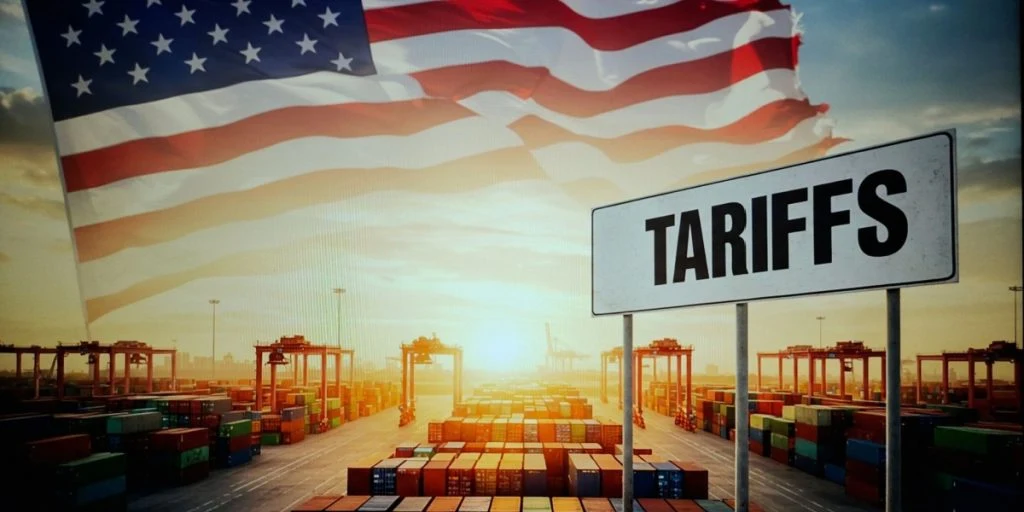
By Friday evening, Trump posted on Truth Social: “It is my Great Honor to have just signed, from the Oval Office, a Global 10% Tariff on all Countries, which will be effective almost immediately.”
The White House confirmed that the temporary import duty will take effect on 24 February at 12.01 ET.
Officials framed the step as both immediate and sweeping.
Invoking a rarely used law

The president said he was acting under section 122 of the Trade Act of 1974.
A White House fact sheet explained that he had signed a proclamation “invoking his authority under section 122 of the Trade Act of 1974” to impose “a temporary import duty”.
It is a provision that has never before been used.
What section 122 allows
The Congressional Research Service noted: “Section 122 of the Trade Act of 1974 directs the President to take measures that may include a temporary import surcharge (tariff) when necessary to address ‘large and serious United States balance-of-payments deficits’ or certain other situations that present ‘fundamental international payments problems.’ Section 122 has never been used, and therefore courts have had no occasion to interpret its language. Some news reports have noted this provision appears to authorize the President to impose across-the-board tariffs on imports in some circumstances.”


The law caps such tariffs at 15% and limits them to 150 days.
Exemptions for neighbors and key goods

Canada and Mexico will be exempt under the North American trade pact, according to the White House.
Certain food products, including beef and tomatoes, will also avoid the temporary duty.
Critical minerals are on the exemption list as well.
Other tariffs remain in place

Trump signaled that existing tariffs will not be rolled back.
He said duties imposed under section 232 of the Trade Expansion Act of 1962 and section 301 of the Trade Act of 1974 will remain “in place and in full force and effect”.
The new measure adds to, rather than replaces, earlier trade penalties.
“I wanted to be a good boy”
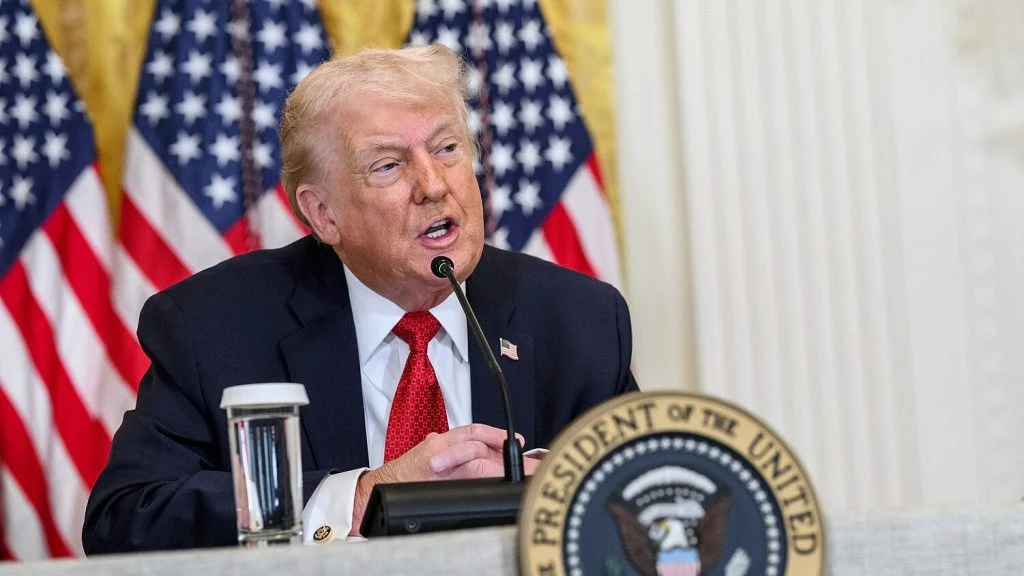
During remarks at the White House, Trump reflected on his approach to executive power.
“I wanted to be a good boy,” he said, describing what he saw as restraint under the International Emergency Economic Powers Act.
He argued that he has authority under current statutes to impose further tariffs without congressional approval.
Sharp criticism of the court

Trump accused the majority of being influenced by outside forces.
“It’s my opinion that the court has been swayed by foreign interests and a political movement that is far smaller than people would ever think,” he said.
“I’m ashamed of certain members of the court. Absolutely ashamed for not having the courage to do what’s right for our country.”
Praise for the dissenters
The president singled out the three justices who dissented: Brett Kavanaugh, Clarence Thomas and Samuel Alito.
Kavanaugh wrote the main dissenting opinion.
The remaining justices, including Trump appointees Amy Coney Barrett and Neil Gorsuch, drew his criticism.
“Fools and lapdogs”

Trump did not hold back in describing the majority.
“They’re just being fools and lapdogs for the Rinos [‘Republicans in name only’] and the radical-left Democrats, and not that they should have anything at all to do with it,” he said.
“They’re very unpatriotic and disloyal to our constitution.”
Personal barbs aimed at two appointees

Referring to Barrett and Gorsuch, Trump described them as “an embarrassment to their families”.
He added that they were “barely” invited to the State of the Union address next week.
The comments marked a rare public rebuke of his own nominees.
Claims of foreign influence

Asked to provide evidence of foreign sway over the court, Trump replied: “You’re going to find out.”
He offered no further details.
The allegation added another layer of controversy to an already heated clash.
Amendment to earlier reporting

The story was amended on 20 February 2026 to clarify that Trump called the justices who voted against his tariffs, not the ruling itself, a “disgrace to our nation”.
Robert Mackey contributed reporting.



