
 Edith Hejberg

According to new calculations, a day on Mars passes about 477 microseconds faster than on Earth.


It may feel like time is a universal constant, but physics tells a different story. Scientists have now measured exactly how much the passage of time on Mars differs from that on Earth and the results are more than just trivia.
They could shape the future of space exploration.
A subtle, measurable difference

According to new calculations, a day on Mars passes about 477 microseconds faster than on Earth.
That may sound tiny, but in scientific terms, it’s significant especially when dealing with precise systems like navigation and communication.


Einstein’s theory helps explain it

Researchers at the National Institute of Standards and Technology (NIST) based their work on Einstein’s general theory of relativity.
Time, it turns out, is influenced by both gravity and motion and those forces behave differently on Mars than they do on Earth.
What causes the time shift?

Several key factors were taken into account: Mars’s weaker gravity, its orbital speed and eccentricity, and the gravitational pull from the Sun, Earth, and Moon.
Together, these affect the rate at which time ticks on Mars compared to here on Earth.
It’s not always the same difference

While the average daily time gain on Mars is 477 microseconds, it isn’t constant. Depending on Mars’s position in its orbit especially in relation to Earth and the Moon that difference can vary by around 226 microseconds either way.
How it feels on Mars vs Earth

If you were standing on Mars, a second would feel like a second, just as it does on Earth.
But from Earth’s perspective, the clocks on Mars would be ticking slightly faster. It’s a matter of relative time, not perception.
Why timing matters so much
Precise timekeeping is essential to modern life from GPS systems to mobile networks. Technologies like 5G rely on accuracy within a tenth of a microsecond.
So when we begin operating in multiple planetary environments, time sync becomes a major challenge.
Relativity at work
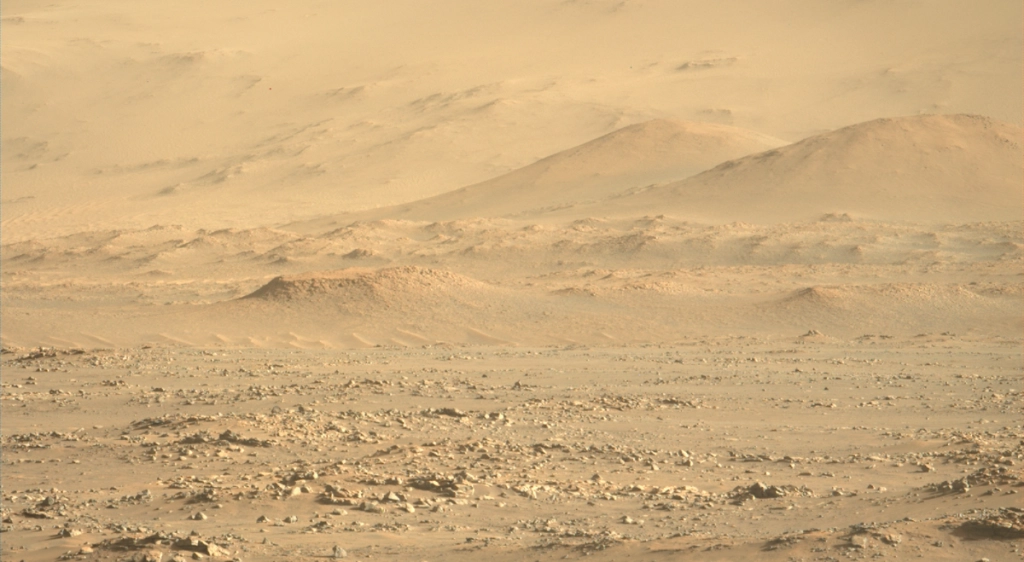
The changes in Mars’s clock speed come from both velocity and gravitational interactions. Mars travels farther from the Sun and more slowly than Earth, but its elliptical orbit means its speed varies, creating fluctuations in how time passes.
Timing shifts across the solar system
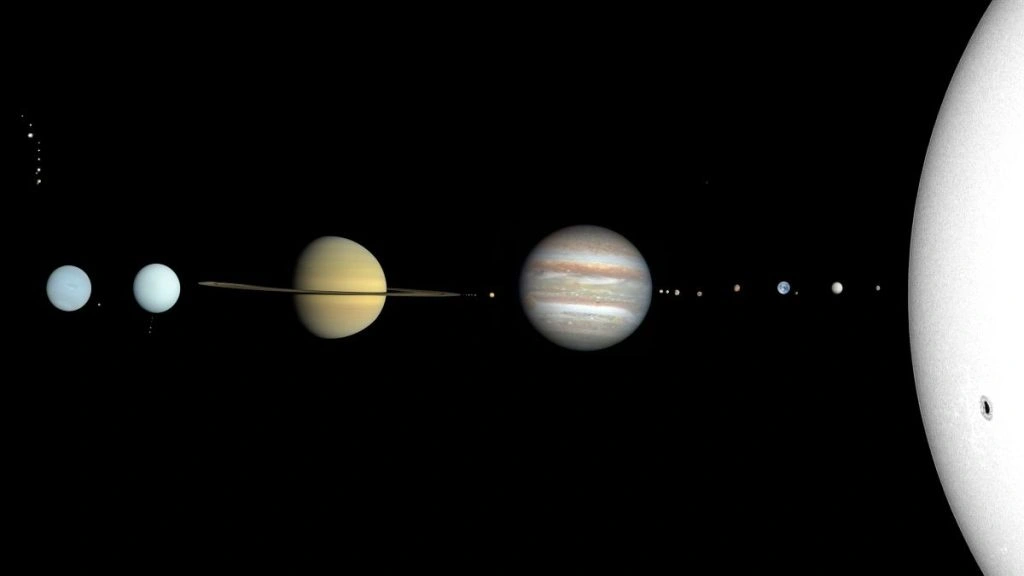
This isn’t the first time scientists have measured planetary time shifts. The same research team previously calculated that clocks on the Moon tick 56 microseconds faster per day than those on Earth.
Every celestial body offers a different time rhythm.
Toward a solar system-wide clock

These findings could pave the way for a larger timing and navigation infrastructure across the inner solar system.
As we explore Mars and beyond, keeping our clocks in sync will be key to safe travel, data transmission, and exploration.
A quiet revolution in science

Though most of us won’t notice a few microseconds here or there, for scientists, engineers, and astronauts, these differences matter.
The tiniest shifts in time could influence space missions, satellite coordination, and interplanetary communication.
The science behind the seconds

At its core, this study reveals how even something as familiar as a second is shaped by the vast forces of the universe. The more we understand those effects, the better prepared we’ll be for life and work beyond Earth.
A step closer to interplanetary precision

As we move toward living and working on other planets, building precise, shared time systems will be crucial. This research is a foundational step toward that future, a small difference in microseconds, with giant implications for space travel.



