
 Kenneth Glad
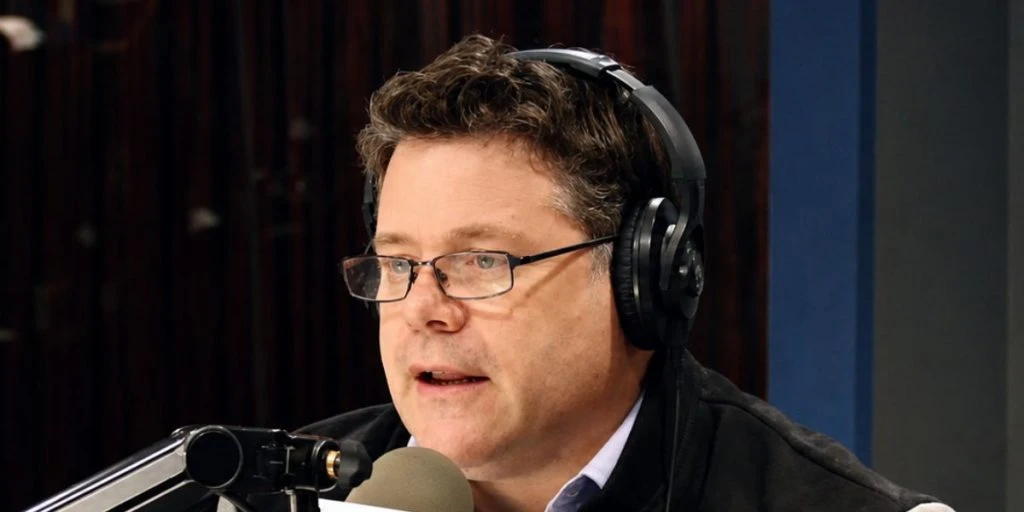
New technology is changing how creative work can be recorded, reproduced and sold. The dispute is increasingly focused on consent, compensation and control.


Actor Sean Astin, best known for playing Samwise Gamgee in The Lord of the Rings, Mikey in The Goonies and the title character in Rudy, has spent decades portraying loyal companions and determined outsiders.
He now serves as president of SAG-AFTRA, the United States labor union that represents approximately 160,000 actors, broadcasters, dancers, stunt performers, singers, voice artists and other media professionals.
In that role, he is confronting a question with consequences across the entertainment industry: Who controls a performer’s face, voice and recorded work once artificial intelligence becomes part of the production process?
Astin was elected president of the labor union on September 12, 2025, with nearly 80 percent of the national vote. In a recent interview with The Guardian, Astin identified unauthorized digital replicas as one of the most pressing matters awaiting him. He did not call for artificial intelligence to be stopped. Instead, he said technological development needs rules that protects the people whose identities and work make the systems commercially valuable.


Digital replicas threaten more than celebrities
The artificial intelligence debate is often illustrated through convincing imitations of famous actors. For SAG-AFTRA, however, the employment implications extend well beyond major stars.
A voice artist may be asked to provide recordings capable of training a synthetic voice. An actor’s body and facial expressions can be digitally scanned, while a broadcaster’s delivery may be reproduced without another recording session. These tools can support legitimate production work, but the union maintains that they can also separate workers from future jobs if their identities are reused without permission.
SAG-AFTRA has supported the No Fakes Act, a federal proposal intended to protect people against unauthorized digital copies of their voices and visual likenesses. The union said in June 2026 that the legislation would create nationwide protections and require online services to address certain unauthorized replicas after receiving valid notices. It has also promoted the proposal as a protection for the public, rather than only for entertainment professionals.
Astin brought that argument to Washington on June 30, 2026, when he appeared before a House Judiciary subcommittee examining intellectual property and digital replicas. His testimony addressed the growing use of artificial intelligence to create unauthorized versions of recognizable people.
The campaign builds on concerns raised during SAG-AFTRA’s 2023 strike, when artificial intelligence protections and streaming compensation became major negotiating issues.
His career exposed Hollywood’s financial divide
Astin’s public image comes largely from characters defined by endurance rather than status. He played aspiring footballer Rudy Ruettiger in Rudy, young adventurer Mikey Walsh in The Goonies and gardener Samwise Gamgee in The Lord of the Rings trilogy.
Speaking to The Guardian, he described those performances as working-class roles. That identity became part of his campaign for the union presidency, during which he presented the persistence associated with his characters as a quality he could bring to representing members.
His career has also shown him that recognition does not always produce financial security. Astin told the publication that the agreement he negotiated for The Lord of the Rings trilogy paid far less than audiences might assume from the films’ global success. He said the amount was so limited that he eventually sold his house.
Astin has worked as a leading actor, a supporting player and one name among hundreds on large productions. He told the newspaper that he has never considered himself part of Hollywood’s small group of consistently top-billed stars.
Since entering the presidency, he has also rejected some acting offers because he did not want production work to remove him from union negotiations.
Mother left a complicated union legacy
Astin entered the entertainment industry with an unusually personal understanding of its opportunities and failures.
His mother, Patty Duke, became internationally known as a young performer and won an Academy Award at 16 for The Miracle Worker. The talent agents who controlled her childhood career subjected her to financial exploitation and abuse.
Duke later became an advocate for mental health awareness after being diagnosed with bipolar disorder. She also served as president of the Screen Actors Guild during the 1980s, before its merger with the American Federation of Television and Radio Artists.
Astin joined the union as a child in 1981 and appeared in The Goonies at 13. He said that his mother responded fiercely when she believed adults on a production had treated him disrespectfully. In one incident, she confronted a crew member who had made a disparaging comment about his braces.
Her protectiveness was shaped by her own childhood, Astin suggested. She wanted her son to have access to professional opportunities without enduring the treatment she had experienced.
Astin said he largely stayed away from the drugs and heavy partying that troubled some child stars of his era. His family’s experience with Hollywood also gave him an early understanding of how vulnerable performers can be when those around them hold most of the power.
The presidency will be tested through negotiations
Artificial intelligence is not the union’s only concern. SAG-AFTRA must also address changes in streaming payments, uneven employment and the continuing pressure created by consolidation across media companies.
Astin had already served as a local delegate and participated in union committees before becoming president. His position now requires him to balance the interests of members working in film, television, broadcasting, music and other fields while negotiating with companies that are investing heavily in automated production.
The union’s strategy combines contract negotiations with campaigns for legislation. In April 2026, SAG-AFTRA described its approach to artificial intelligence as involving collective bargaining, public policy and direct engagement with members and audiences.
That work also requires distinctions. Digital tools can help filmmakers create effects, restore performances or complete complicated scenes. The conflict arises when efficiency is achieved by removing consent, payment or continuing employment from the process.
Asked by The Guardian about a possible future in politics, Astin acknowledged that public office interests him. He indicated, however, that the demands already placed on his wife and family made him cautious about seeking another consuming responsibility.
For Astin, the immediate focus is SAG-AFTRA. Much of his work will involve trying to make sure performers keep control of how their faces, voices and performances are used as artificial intelligence becomes more common in film and television production.
Sources: The Guardian, SAG-AFTRA, No Fakes Act



