
 Kenneth Glad
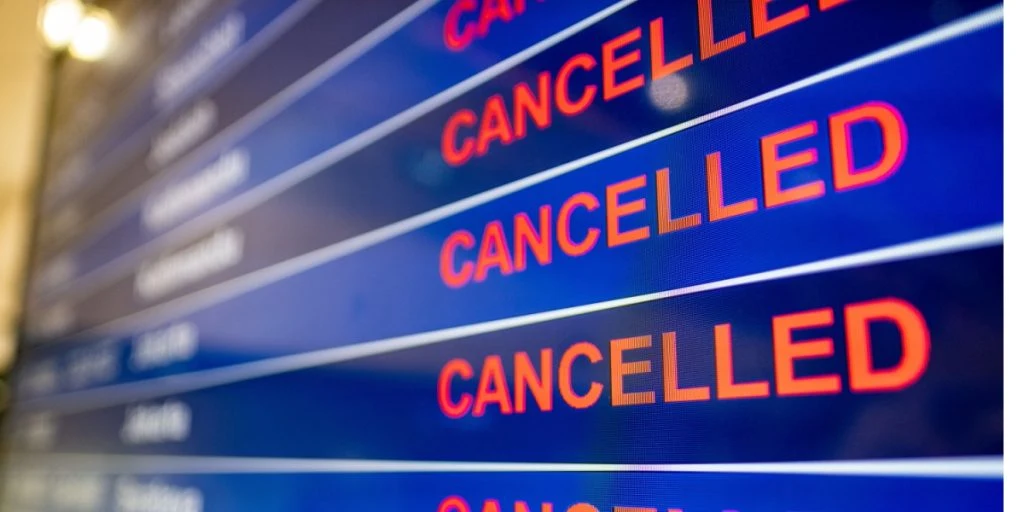
Air travel across the Middle East has been severely disrupted after a sudden escalation in regional fighting forced multiple countries to restrict or close sections of their airspace.


Airlines across Europe, Asia and the Gulf have cancelled or rerouted long-haul flights that normally pass through the region, leaving large numbers of passengers waiting in airports and hotels while authorities assess security risks.
The aviation crisis followed joint US–Israeli military strikes on Iranian targets on February 28 and subsequent Iranian retaliatory attacks on Israeli territory and US bases across the Gulf, according to IntelliNews.
Airlines responded quickly by suspending routes or diverting aircraft away from the area. Flight tracking service Flightradar24 reported, the BBC writes, that more than 4,000 flights per day were cancelled across the region at the peak of the disruption.
The closures have had a wide international impact because many intercontinental routes between Europe, Asia and Africa normally pass through Gulf airspace.


Dubai International Airport, the world’s busiest hub for international travel, handled about 95 million passengers in 2025, airport data shows. With flights halted or rerouted, passengers from dozens of countries have found themselves stuck while airlines reorganise schedules and search for safe corridors.
Travelers caught abroad
Hundreds of thousands of travellers who normally transit through Gulf airports have seen their journeys interrupted.
According to the BBC, roughly 300,000 British citizens are currently in Gulf countries, including residents, tourists and passengers connecting through regional hubs.
Travel agents say the constantly changing situation has made rebooking customers extremely complicated. Linda Hill Miller, who runs LAH Travel in Scotland, said every booking now presents different challenges depending on airlines, insurance policies and ticket types.
“It’s a very challenging and complicated situation because each individual case and booking is so different,” she told BBC.
Insurance coverage has also become uncertain because some insurers have not yet classified the crisis as an official war situation. Hill Miller described the pressure on travel agents trying to assist stranded clients.
“I’m not sleeping and constantly checking the news to try to get a handle on everything,” she said.
Governments in Germany, the United Kingdom and the Czech Republic have begun considering evacuation flights to bring vulnerable citizens home.
Russians among largest groups
While travellers from many countries are affected, Russian tourists represent one of the largest groups caught in the disruption.
Russia’s Foreign Ministry estimates that around 50,000 Russian travellers remain in Middle Eastern destinations, according to Polish outlet Wiadomosci. “According to our estimates, and I want to stress these are very approximate figures, around 50,000 Russian tourists are in the region,” ministry spokeswoman Maria Zakharova said on March 4.
The United Arab Emirates hosts the majority of them. Russia’s Ministry of Economic Development says roughly 20,000 of the approximately 23,000 Russians currently visiting Gulf countries are in the UAE, which has become one of the most popular winter destinations for Russian travelers in recent years.
Some passengers have faced additional complications. Belarusian outlet Nexta reported on their live update that about 700 Russian travellers spent several days stranded at Male airport in the Maldives while attempting to reach Dubai after passengers were reportedly unable to board a Dubai-bound Emirates flight because seats were reserved for UAE citizens.
Russian tour operators say the crisis is already generating significant expenses as they arrange accommodation, transfers and new flights for stranded customers, with industry groups estimating costs of more than RUB500mn ($5.4mn) per day.
Sources: IntelliNews, BBC, Wiadomosci, Nexta, Flightradar24.



