
 Kenneth Glad
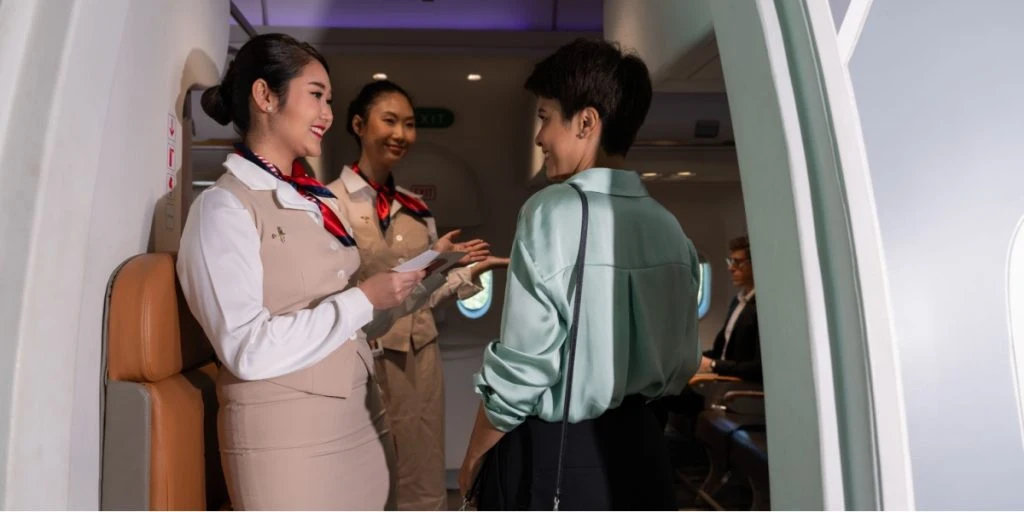
It’s a familiar part of boarding that most people ignore. But that short interaction with cabin crew serves a purpose few passengers realise.


“Hello”.
That brief exchange at the plane entrance often feels like little more than routine politeness. Most passengers are focused elsewhere, barely registering the greeting as they step onboard.
But within airline operations, that moment carries a more practical purpose tied directly to safety.
Cabin crew are trained to observe passengers from the second they board. The greeting, while friendly on the surface, gives staff a chance to quickly assess whether someone appears fit to travel.


Wizz Air flight attendant Ioana Iachim highlighted this in a widely viewed TikTok video, explaining that crew say hello “not only out of politeness, but also to check whether or not you are too drunk or sick to fly.”
Click to display external content from tiktok,
- You can always enable and disable third-party content.

You agree to display external third-party content. Personal data may be sent to the provider of the content and other third-party services.
This aligns with broader airline procedures, where identifying potential issues early is considered far safer than managing them mid-flight.
Reading the moment
Those few seconds at the door are often enough for experienced crew to pick up on subtle warning signs.
Speech, posture and general behaviour can all indicate if a passenger may need attention.
Industry practice emphasises early intervention. If someone appears unwell, heavily intoxicated or unusually distressed, crew can act before departure, when options are still available and risks are lower, writes LadBible.
Many travellers are unaware this assessment is happening at all. The interaction tends to pass unnoticed, blending into the routine of boarding.
Shared responsibility
Pilot Captain Tomar Awdhesh has described in a video on LinkedIn the same process from the cockpit perspective, noting that cabin crew are effectively carrying out a quiet scan while greeting passengers.
He said: “It means they quickly scan if someone looks unwell, overly nervous, intoxicated, or acting suspicious.”
He added: “They also scan for able-bodied passengers, people who look strong, fit, and calm. These are the individuals who might assist during an in-flight emergency, like evacuation or handling an unruly passenger.”
“If they notice a problem, they can act before takeoff to keep everyone safe.”
In operational terms, that quick hello is not just a courtesy. It functions as one of the earliest layers of onboard screening, helping crew establish a safe environment before the aircraft even leaves the gate.
Sources: LadBible, TikTok/@ioanaiachim, LinkedIn post by Captain Tomar Awdhesh



