Jens Asbjørn Bøgen

If the figures are confirmed, it would be the biggest drone attack on Russia since 2022.


Overnight into October 18, a massive swarm of long-range drones swept across the skies of the Leningrad region.
Russia’s defense ministry claimed that local units brought down 1,015 Ukrainian drones across Russian territory, Crimea, and the Black Sea.
The Ukrainian authorities have not confirmed the number, but according to the Institute for the Study of War (ISW), plenty of drones slipped through the net.
Oil burning in Putin’s home city
Over Leningrad Oblast alone, regional governor Alexander Drozdenko stated that air defense units intercepted 145 incoming craft.


It was the biggest assault on local infrastructure since 2022.
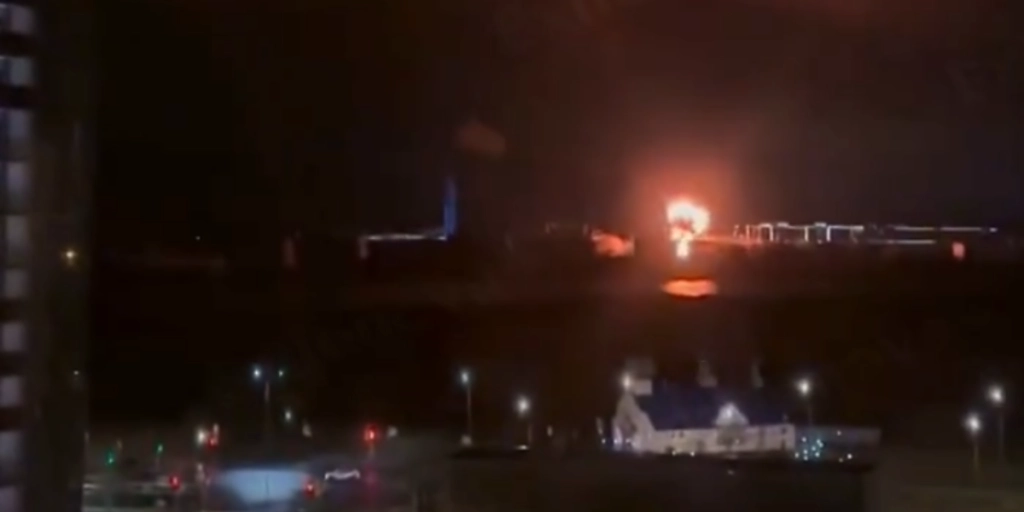
Geolocated footage published on October 18 showed bright fireballs rocking the St. Petersburg Oil Terminal, more than 850 kilometers from the Ukrainian border. St. Petersburg is the birth city of Russian leader Vladimir Putin.
Click to display external content from x,
- You can always enable and disable third-party content.

You agree to display external third-party content. Personal data may be sent to the provider of the content and other third-party services.
Across the district, video showed an Ozon retail warehouse engulfed in a massive blaze, an incident confirmed by the company’s press office.
Click to display external content from x,
- You can always enable and disable third-party content.
You agree to display external third-party content. Personal data may be sent to the provider of the content and other third-party services.
Chaos in the wires
The strikes quickly moved beyond fuel tanks and warehouses into everyday communications.
Verified online footage revealed heavy structural damage at a major data center run by VKontakte, Russia’s dominant social media network, situated roughly 854 kilometers from the frontier.
Click to display external content from x,
- You can always enable and disable third-party content.
You agree to display external third-party content. Personal data may be sent to the provider of the content and other third-party services.
VK’s press service insisted that its apps stayed online for everyone. Even so, independent Russian news outlet Meduza reported that thousands of frustrated users immediately encountered broken feeds and severe outages across the platform.
Right next door, the regional energy grid buckled. Ukrainian defense publication Militarnyi reported that explosions crippled the nearby Vostochnaya electrical substation, while Drozdenko admitted the damage left around 20,000 residents sitting in the dark.
Video also captured another strike slamming into a cable bridge along the Western High-Speed Diameter highway, which connects northern and southern St. Petersburg. Moscow clearly struggled to respond.
The ambitious raid exposed deep vulnerabilities in Russian air defense, showing that key digital and energy hubs remain exposed hundreds of miles from the front lines.