
 Kathrine Frich

The last confirmed delivery of food and medicine arrived on May 26.

When safety is just down the road, being trapped feels entirely unnatural.
Imagine looking across a river and seeing a normal world where grocery stores are full and clinics have power.
For thousands of stranded residents, that distant view is their only connection to a life they can no longer reach.
So close to home
The town of Oleshki sits just four kilometers from territory controlled by Ukraine. But crossing the Dnieper River is now impossible.


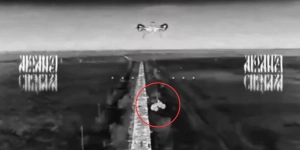
Russian forces occupy the area, and minefields block every exit. Drones watch from above, and destroyed bridges keep vehicles from getting in or out.
The last confirmed delivery of food and medicine arrived on May 26. According to Digi24 and the Kyiv Post, the remaining civilians have spent months completely cut off from the outside world.
“Just four kilometers from us there is life with food, but physically there is no way to leave the city,” local resident Alla Lîhman-Malîş wrote on Facebook.
When cash means nothing
During the summer months, local families survived entirely by eating fresh vegetables pulled from their own small gardens. That supply is drying up as the weather turns cold.
People now trade whatever old canned goods they still have left in their cupboards. Cash is completely worthless.
Tetiana Hasanenko, who leads the local military administration, explained the dire economic reality to the Suspilne network.
“No matter how much money you have, no one sells anything anymore,” she said.
Walking through danger
Medical care has completely collapsed. Local clinics now operate without electricity, basic antibiotics, or any diagnostic equipment.
Danielle Bell heads the UN monitoring mission and described a completely frozen system. She noted, “People can’t get out, food can’t get in, and the sick and wounded aren’t getting the medical care they need.”
With no official evacuation plan approved by Russian authorities, some people risk everything by attempting to leave on foot. Ukrainian official Dmytro Lubinets described the harrowing choices locals face, writing, “The worst thing is that people are already walking through minefields because they see no other way out.”
Hasanenko summed up the mood of the 3,000 to 4,000 residents still trapped inside. “People are no longer living,” Hasanenko said. “They are waiting for death.”
Sources: Digi24, Kyiv Post, Facebook, Suspilne, UN



