Jens Asbjørn Bøgen

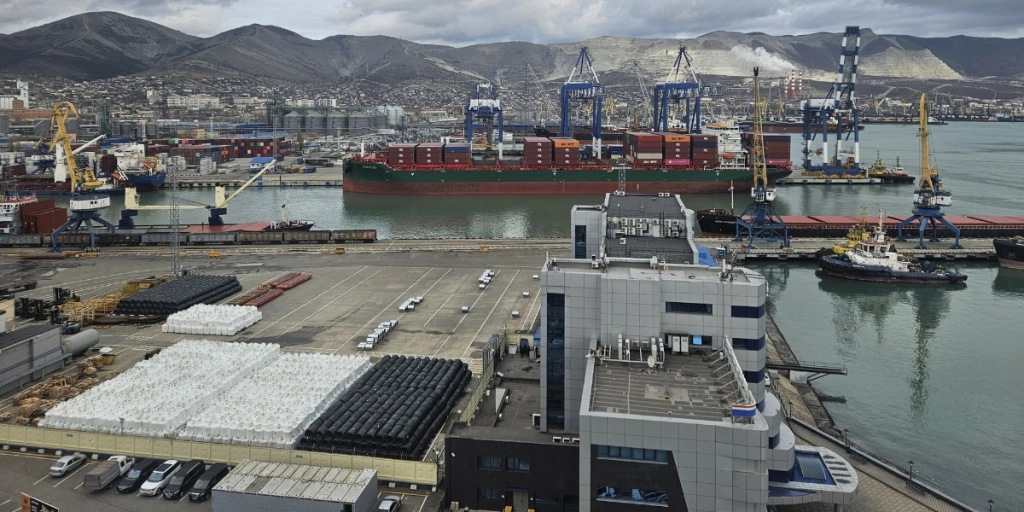
On Russia’s southern coast, docks that once moved millions of tons of grain and crude have fallen almost silent.


A region whose budget rests on seaborne trade has reached a point where its own officials are publicly asking the federal government to save it. Krasnodar Krai, home to Russia’s three main Black Sea cargo hubs, is bleeding revenue and jobs at a rate regional authorities say they can no longer absorb.
Governor Veniamin Kondratyev has formally asked Deputy Prime Minister Dmitry Patrushev for an emergency federal rescue of the ports at Novorossiysk, Taman and Tuapse, after September cargo volumes fell between 95 and 100 percent, and passenger traffic dropped 85 percent, compared with pre-attack levels. The appeal, laid out in a letter to the government, was first reported on October 21 by the Russian business daily Kommersant.
Combined monthly losses to budgets and businesses in the region exceed 200 billion rubles, or roughly $2.2 billion. Patrushev has already instructed the ministries of Transport, Finance, Agriculture and Economic Development to review the proposals, with an initial order dated October 6.
What Kondratyev is asking for
The governor’s package mirrors the support Moscow has already extended to southern Russian airports forced to close under Ukrainian drone pressure. He is seeking federal wage subsidies for idled port workers, deferrals of federal property leases and taxes, loan-interest reimbursements and state-backed war-risk reinsurance to replace commercial coverage that has become unaffordable.


Insurance has become one of the sharpest pressure points. The maximum coverage available in the Krasnodar region currently caps at about 50 million rubles, while reinsurance premiums for Black Sea facilities have risen as much as 25-fold, according to the proposals submitted alongside the governor’s letter.
The port cluster employs between 20,000 and 25,000 people, many of whom have been placed on unpaid leave or dismissed as terminals sit idle. Monthly wage subsidies at the minimum-wage level would run between 550 and 670 million rubles, with annual property-tax deferrals of around 700 million rubles and lease-payment deferrals of about 1.5 billion rubles on top.
A cumulative drone campaign
The port shutdown is the cumulative effect of a Ukrainian naval and aerial drone campaign that has escalated through 2026. On August 12, Ukraine launched a coordinated strike on Novorossiysk that halted two major grain terminals, killed at least three people including an eight-year-old child, damaged four enterprises and more than two dozen residential buildings and forced an emergency suspension of the city’s water supply. Chicago wheat futures rose about three percent on the news.
Ukrainian President Volodymyr Zelensky said at the time that Ukraine had hit the Novorossiysk naval base with drones, missiles and unmanned boats, damaging four Russian warships, including the frigates Admiral Makarov and Admiral Essen. A separate series of strikes on Tuapse’s port and oil refinery has caused more than $300 million in direct infrastructure damage, according to Ukraine’s General Staff cited by Kyiv Post.
The transport ministry’s recommendations on the bailout are due in the coming weeks.