
 Camilla Jessen
Amateur claims discovery of ‘ancient city’ off US coast.

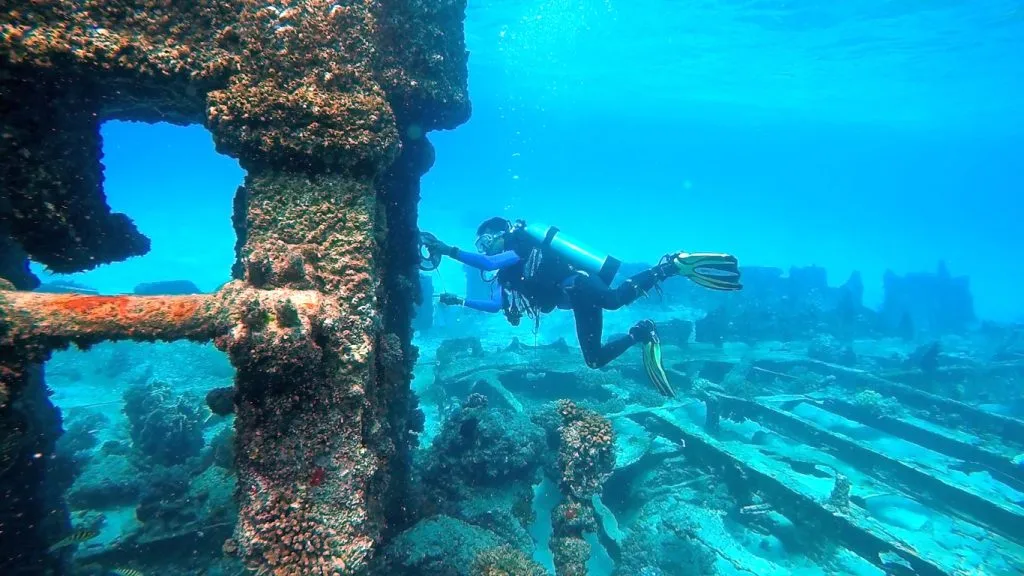
An amateur archaeologist has claimed to have uncovered the remains of an ancient underwater city in the Gulf of Mexico.
The theory, however, has been met with skepticism from experts.
George Gelé, a retired architect, says he has identified what he believes are large submerged structures off the coast of Louisiana, in an area known as Chandeleur Sound.
Gelé has made dozens of trips to the site over several decades and refers to the alleged location as “Crescentis.”


He told CBS affiliate WWL-TV: “What’s down there are hundreds of buildings that are covered with sand and silt and that are geographically related to the Great Pyramid at Giza.
“Somebody floated a billion stones down the Mississippi River and assembled them outside what would later become New Orleans.”
He believes the structures could be around 12,000 years old, dating back to the end of the last Ice Age when rising sea levels submerged coastal regions.
Sonar evidence
Gelé says sonar images show pyramid-like formations beneath the seabed, some estimated to be as tall as 280 feet (85.3 meters).
He also claims unusual electromagnetic activity occurs in the area, allegedly interfering with boat compasses.
Local shrimper Ricky Robin supported this claim, telling WWL-TV: “Everything will go out on your boat, all your electronics. Like as if you were in the Bermuda Triangle.”
Despite the claims, no findings have been published in peer-reviewed journals, and archaeologists remain unconvinced.
The presence of granite in the region has drawn attention, as it is not naturally common in Louisiana. However, experts suggest a more recent explanation.
Alternative explanation
Archaeology professor Rob Mann previously told The Advocate that the formations could be linked to artificial reef projects from the 1940s.
Such reefs are often created by placing large stones or materials on the seabed to encourage marine life.
“I think simply searching underwater at this point won’t give us any more answers,” Mann said. “When the historical archive work is done… that’s when we will know what it is.”
Sources: WWL-TV, The Advocate, Unilad



