Asger Risom
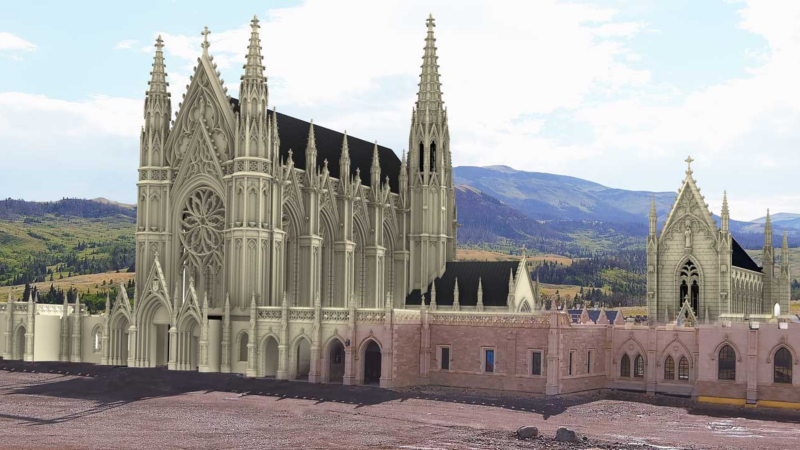
A group of Carmelite monks in Wyoming is building a Gothic monastery using CAD software, CNC stone-cutting machines, and 3D modeling technology. Blending medieval design with modern tools, the monks are carving limestone with millimeter precision as they construct their new home.


On a wide stretch of land near Meeteetse Creek in Wyoming, a group of Carmelite monks is building something that looks as if it belongs in medieval Europe — a towering Gothic monastery complete with pointed arches, vaulted ceilings, and intricate stone details.
What makes the project unusual is not just the setting. It’s how they’re building it.
Alongside traditional stone and centuries-old architectural design, the monks are using computer modeling, CNC machines, and 3D printing technology to bring their monastery to life.
A medieval vision powered by modern tools
The Discalced Carmelite monks follow vows of poverty, chastity, obedience, and manual labor. As their community grew, they needed a larger monastery and chose a remote parcel of land in Wyoming to build it.


They opted for a Gothic design — a style known for its dramatic arches, stained glass windows, ribbed vaults, spires, and elaborate stone carvings. Traditionally, constructing such a building would require teams of highly skilled stone artisans working for decades.
Instead, the monks turned to modern technology.
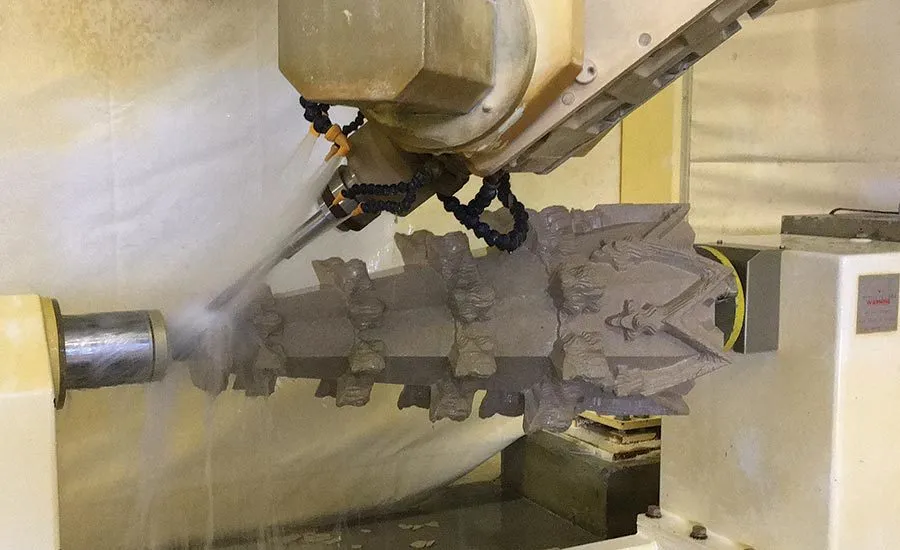
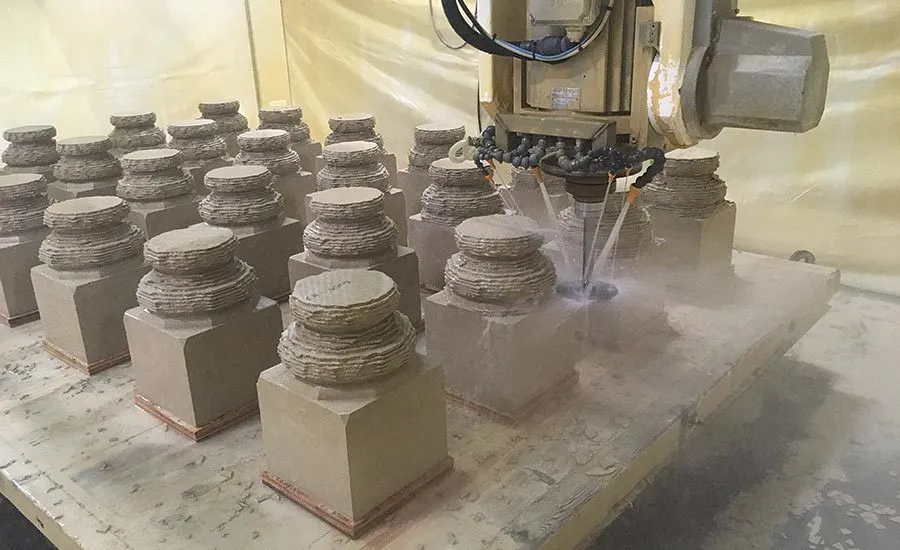
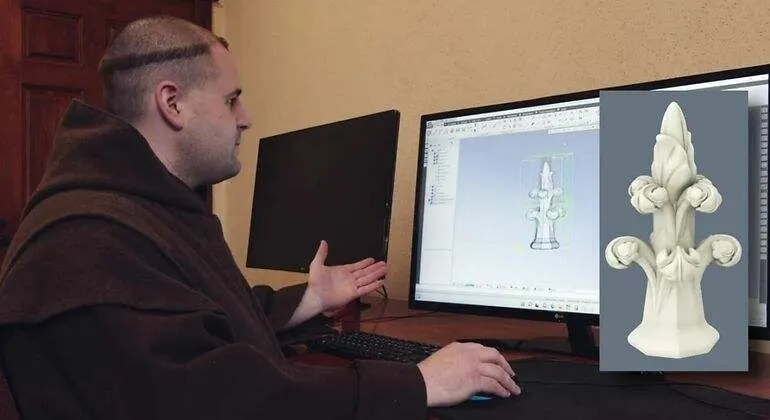
They use CAD (computer-aided design) software to model every stone and decorative element digitally before it is produced. CNC (computer numerical control) machines then cut Kansas Silverdale limestone with millimeter precision. In some cases, 3D modeling and printing techniques are used to create complex ornamental pieces before they are carved in stone.
The result is a blend of medieval craftsmanship and 21st-century engineering.
Learning to run the machines themselves
Stone carving is typically the most expensive part of a Gothic construction project. After discovering how costly it would be to outsource the work, the monks decided to take it on themselves.
That meant learning how to operate industrial stone-cutting machines, program toolpaths, and understand the full workflow from digital design to finished stone installation.
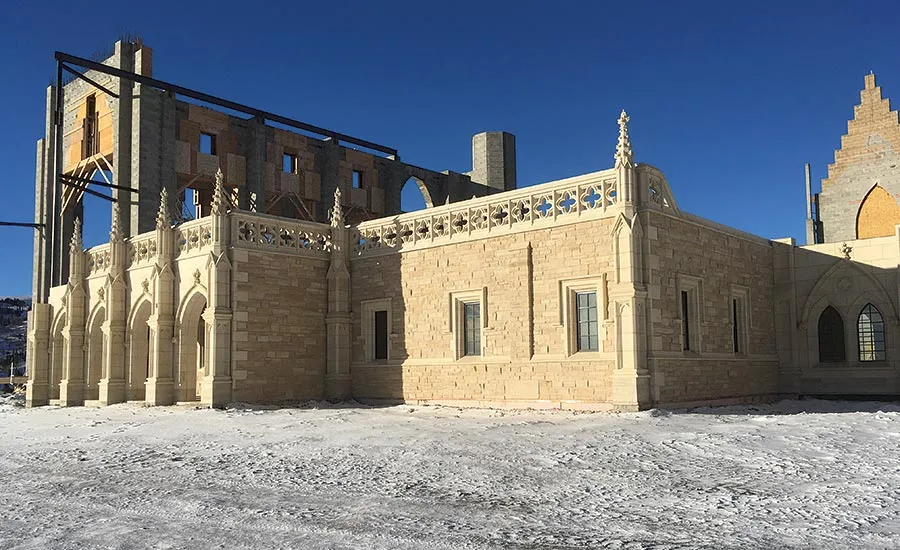
Planning began in 2010. In 2013, they purchased their first CNC stone-cutting machine. Construction began in 2014 and is still ongoing.
The learning process was not without setbacks. Early on, a coding mistake caused a CNC machine to repeatedly hammer down on several large window sills overnight, shattering heavy limestone blocks inside the machine. The error was traced to incorrect instructions in the machine’s code. Despite the rocky start, the same machine continues to carve stone for the monastery today.
Click to display external content from youtube,
– You can always enable and disable third-party content.

You agree to display external third-party content. Personal data may be sent to the provider of the content and other third-party services.
Sharing the journey
The monks document much of the process on their website and YouTube channel. They show everything from digital design plans to the cutting and installation of massive stone components.
So far, they have completed the Chapter House, a central gathering space within the monastery complex. The larger church and additional structures are still under construction and will likely take many more years to finish.
Funding a vow of poverty
Building a Gothic monastery is expensive. The monks help fund the project through several income sources, including a specialty coffee business they have operated since 2003. Their online presence, including YouTube, also contributes support.
While their lifestyle centers on tradition and religious discipline, their construction approach reflects a practical mindset: if precise, efficient tools are available, they use them.
In the Wyoming countryside, medieval architecture is rising again — not through hand chisels alone, but with robots, digital models, and a willingness to learn new skills.
Sources: Carmelite Monks of Wyoming website; Carmelite Monks YouTube channel; project documentation materials