
 Asger Risom
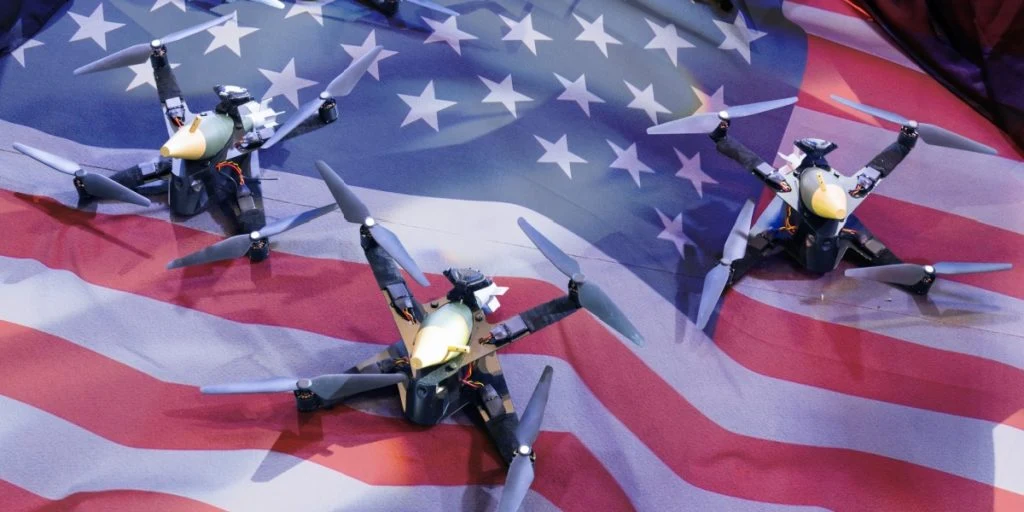
US intelligence officials are reportedly growing concerned after Cuba acquired more than 300 drones from Russia and Iran, highlighting how low-cost warfare technologies refined in Ukraine and the Middle East are now spreading closer to US territory.


US intelligence officials are reportedly growing concerned after Cuba acquired hundreds of military drones from Russia and Iran, fueling fears that technologies refined in Ukraine and the Middle East are now spreading closer to American territory.
According to Axios, Cuban officials have discussed potential scenarios involving the use of drones against US military assets and strategic targets during future confrontations with Washington.
Russia and Iran expand Cuba ties
According to US officials cited by Axios, Cuba has purchased more than 300 drones from Russia and Iran since 2023.
The drones reportedly include strike-capable systems with varying operational ranges and payload capacities, though exact models were not publicly identified.


US intelligence assessments reportedly concluded that some of the systems were deployed at strategic military locations across Cuba.
Officials cited by the outlet said Cuban representatives also recently approached Russia seeking additional drone systems and military equipment as defense cooperation between Moscow, Tehran and Havana deepens.
The report comes amid broader concerns inside Washington over the growing global proliferation of relatively cheap drone warfare technology shaped by conflicts in Ukraine and the Middle East.
The new proximity problem
What appears to concern US officials most is not Cuba’s conventional military capability, but geography.
According to Axios, intercepted intelligence suggested Cuban military officials discussed possible drone operations involving targets such as Guantanamo Bay, US naval vessels operating in the region and potentially Key West, Florida.
One senior US official reportedly summarized the concern bluntly.
“No one is worried about fighter jets from Cuba,” the official told Axios. “But it is worth pointing out how close they are — 145 kilometers.”
The rise of long-range drones has increasingly altered how militaries evaluate geographic threats.
Unlike traditional air power, modern drones can be cheaper, harder to detect and capable of launching asymmetric attacks against infrastructure, ships or military installations without requiring advanced air forces.
Drone warfare spreads globally
The situation reflects how rapidly drone warfare knowledge is spreading beyond active conflict zones.
Iranian Shahed drones and Russian FPV tactics developed during the war in Ukraine have become central to global military discussions around low-cost precision strike systems.
According to the report, US intelligence also believes Cuban officials studied Iranian methods for countering American military pressure and asymmetric warfare strategies.
The concerns reportedly became serious enough for CIA Director John Ratcliffe to travel to Cuba personally to warn officials against hostile actions targeting the United States.
Despite the warnings, American officials told Axios they do not currently view Cuba as an immediate military threat and see no signs of imminent attack planning.
A regional security shift
The development nevertheless highlights a broader strategic shift now reshaping military planning globally.
Drone technology once limited to major powers is becoming increasingly accessible to smaller states and nontraditional military actors.
For the United States, the concern is no longer solely about peer adversaries such as China or Russia operating advanced weapons systems far abroad.
It is increasingly about relatively inexpensive autonomous technologies appearing much closer to American territory.
That reality is beginning to force a reassessment of regional security assumptions that have remained largely unchanged since the Cold War.
Sources: Axios



