
 Jens Asbjørn Bøgen
If you think the whole thing sounds familiar, you’re not wrong.


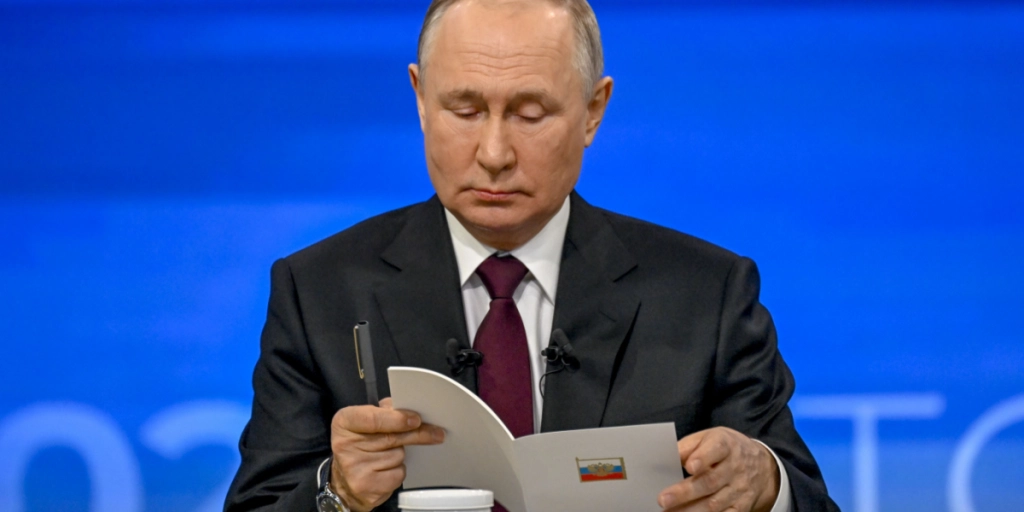
Russian President Vladimir Putin recently signed a highly controversial piece of legislation.
The new law officially gives the Kremlin leader sweeping authority to deploy troops across international borders.
According to the text, cited by the Russian state-run news agency Interfax, these sudden military deployments are meant to shield nationals living outside the country.
The bill passed through Russia’s State Duma on May 13 before quickly landing on the president’s desk for final approval on May 25.


Now, the Russian military can legally intervene if a citizen faces arrest, trial, or detention by foreign nations.
The law even covers actions taken against Russians by international courts.
Fighting perceived threats
Western officials view the timing of this dramatic legal shift with deep suspicion. For months, military commanders have warned that Moscow might attack NATO allies directly in the coming years. Those fears have grown increasingly realistic since the full-scale invasion of Ukraine in 2022.
Politicians in Moscow strongly defended the move as a necessary shield against hostile foreign governments. Russian lawmakers openly framed the legislation as part of an effort to “counter the campaign of rampant Russophobia that continues abroad.”
The Institute for the Study of War (ISW) notes that the wording of the bill seems deliberately vague, giving the Kremlin flexibility in how to invoke the law.
Similar to US act
The BBC’s Russian service has previously reported on the bill, with Gleb Bogush, an international lawyer at the University of Cologne, noting that the new Russian bill appears similar to the US American Service-Members’ Protection Act.
Under the act, the US president can use “all necessary and appropriate means” to free Americans detained or imprisoned by, on behalf of, or at the request of the International Criminal Court.
It was passed in 2002. shortly before the US invasion of Iraq-
The US has never invoked the act. Neither Russia nor the US recognizes the jurisdiction of the International Criminal Court.
Deliberately vague
To justify the aggressive policy change, officials pointed to specific diplomatic disputes. Andrey Kartapolov, the head of the State Duma Defense Committee, linked the bill to the case of a Russian archaeologist named Alexander Butyagin.
Polish authorities previously detained Butyagin for several months. His controversial arrest stemmed from illegal excavations conducted in Russian-occupied Crimea, an action that infuriated lawmakers in Moscow.
If you think the whole thing sounds familiar, you’re not wrong. It is similar to the arguments made by the Russian leadership to justify military aggression in Ukraine.
Sources: State Duma Defense Committee, Western security reports, The Kyiv Independent, Interfax, Institute for the Study of War, BBC’s Russian Service



