
 Nicolai Haugsted
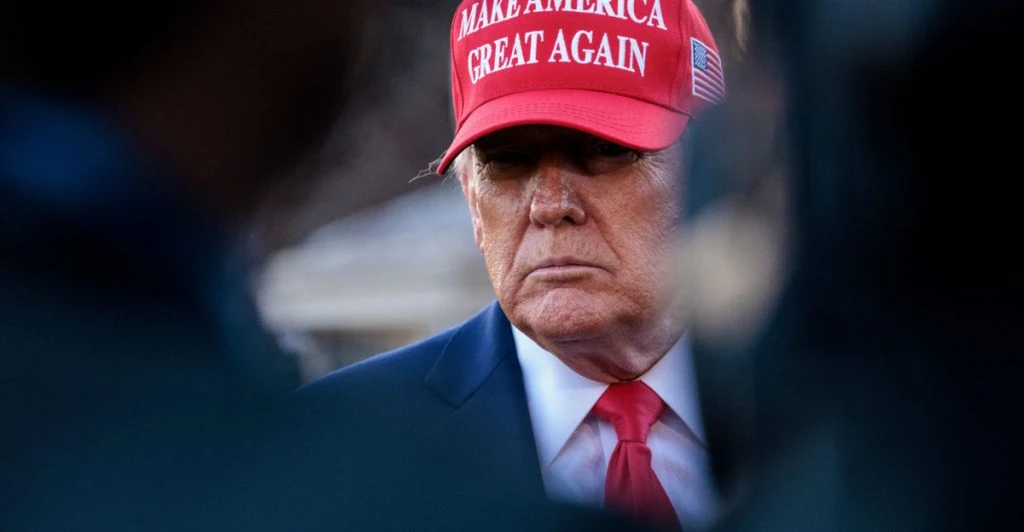
The upcoming midterms seem to lean favorably towards one political party.


Control of Congress will be decided in November, but two of the most important battles may be unfolding far from the campaign trail.
According to Reuters, A pair of election-related cases currently before the US Supreme Court could reshape voting rules and campaign financing just months before Americans head to the polls, potentially giving Republicans additional momentum in their fight to retain narrow majorities in both chambers of Congress.
Decisions are expected by the end of June.
Fresh Boost After Voting Rights Ruling
Republicans already secured a significant legal victory earlier this year when the Supreme Court weakened part of the Voting Rights Act.


Legal experts say that ruling opened opportunities for Republican-controlled states to redraw congressional districts in ways that could improve the party’s electoral prospects.
According to election analysts, redistricting efforts made possible by that decision could help Republicans gain several House seats currently held by Democrats.
Travis Crum, a law professor at Washington University in St. Louis, described the ruling as a “boon for Republicans.”
Mail Ballot Rules Under Review
Another closely watched case focuses on absentee ballots in Mississippi.
State law currently allows mailed ballots to be counted if they are postmarked by Election Day and arrive within five business days afterward.
Republican officials are seeking to overturn that system, arguing that federal election law requires ballots to be received by Election Day.
During oral arguments earlier this year, several Supreme Court justices appeared sympathetic to that position.
Outcome could extend beyond Mississippi.
More than a dozen states currently count certain ballots that arrive after Election Day provided they were mailed on time.
Democrats warn that changing those rules could affect military personnel stationed overseas, elderly voters, rural communities and citizens living abroad.
Democratic National Committee lawyers argued that eliminating such grace periods could have “disastrous consequences” for millions of voters.
Campaign Money at Center of Second Case
Another case before the court could reshape the financial side of American elections.
Vice President JD Vance and other Republicans are challenging restrictions on coordinated spending between political parties and candidates.
Current rules place limits on how much parties can spend in direct cooperation with campaigns.
Republicans argue those restrictions violate constitutional free speech protections.
Conservative justices appeared receptive to that argument during hearings.
Potential ruling in favor of Republicans could unlock substantially larger flows of campaign money.
Republicans Hold Financial Edge
Financial reports suggest Republicans may be especially well positioned to benefit from any loosening of campaign spending rules.
Three major Republican committees reportedly held roughly $251 million in cash at the end of April without debt.
Comparable Democratic organizations held about half that amount while also carrying debt.
University of Minnesota political scientist Timothy Johnson said a favorable ruling could allow coordination between party committees and candidates almost immediately.
“There certainly is an advantage, monetarily, on the Republican side in terms of the party committees,” Johnson said.
“Once that ruling comes down, there could be coordination between those committees and candidates pretty instantaneously.”
Midterm Stakes Continue Rising
Republicans enter the election cycle defending slim majorities in both the House of Representatives and the Senate.
Democrats need only modest gains to regain control of one or both chambers and create major obstacles for Trump’s legislative agenda.
Political headwinds remain for Republicans, including lower approval ratings for Trump and voter concerns over the economic effects of the Iran conflict.
Supreme Court rulings expected in the coming weeks could therefore play an outsized role in determining how competitive the battle for Congress becomes before Americans cast their ballots in November.



