
 Kenneth Glad

Officials and lawmakers are weighing choices that could shape military action, diplomacy, and international trade. The dispute has moved beyond threats alone, drawing in domestic politics and concerns over vital supply routes.
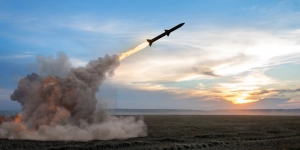

Iranian military officials have warned that war with the United States may be unavoidable if Washington continues pressing demands that Tehran views as surrender terms.
The comments, reported by O2, came as President Donald Trump criticized U.S. lawmakers who backed a House measure aimed at limiting his ability to continue military operations against Iran without congressional authorization.
That vote, reported by CBS News, showed that the conflict is now testing political unity in Washington as well as military calculations in the Middle East.
Tehran frames refusal as survival
Mohammad Jafar Assadi, a senior Iranian commander involved in coordinating the regular armed forces and the Islamic Revolutionary Guard Corps, said on state television that Iran would not accept the conditions being presented by the United States.


“The United States demands our complete surrender, and the Iranian nation will never surrender,” Assadi said, according to O2.
He added that if surrender does not happen, war awaits, while claiming that Iran has not yet shown all the capabilities it believes could help it prevail.
The message was not isolated. Hossein Mohebbi, a spokesperson for the Islamic Revolutionary Guard Corps, also warned that Iran would respond differently if hostilities resumed.
“If the enemy returns to the field of war, the type of operation, the geography of the battle, and the weapons used will be different,” he said.
Together, the statements portray Iran as a state preparing to absorb pressure rather than reduce it through concessions.
Conflict becomes a bargaining method
Foreign Affairs argued that Tehran may now see confrontation with Washington as useful, not merely dangerous. In that reading, Iran is not using negotiations only to end the crisis. It is using them to control the tempo of the crisis.
The magazine described an Iranian leadership that believes it can demand a new kind of treatment from the United States, its allies, and the wider international system.
Instead of offering large concessions to escape pressure, Tehran appears to be betting that endurance itself can create leverage.
That calculation carries obvious risks. Iran’s economy remains under strain, and ordinary citizens would likely suffer most from any deeper confrontation.
Still, Foreign Affairs argued that the government may believe the political benefit of proving resilience outweighs the domestic cost.
This is why Tehran’s rhetoric matters. The warnings from Assadi and Mohebbi are not only military signals. They also fit a diplomatic posture built around pressure, patience, and the refusal to appear weakened.
Trade routes raise the stakes
The possible consequences extend far beyond Iran and the United States.
The Strait of Hormuz remains central to the dispute because major shipments of oil, gas, and fertilizers pass through the waterway. Any serious disruption there could affect prices, supply chains, and governments far from the battlefield.
Foreign Affairs argued that Iran’s ability to threaten global economic stability gives Tehran a form of influence even when it faces heavy pressure. That does not mean escalation would benefit the Iranian public. It means the government may see strategic value in showing that it can impose costs outside its borders.
For millions of Iranians, the result could be more hardship. For global markets, the danger is uncertainty around one of the world’s most important maritime passages.
Congress pushes back on Trump
In Washington, the conflict has opened a separate fight over presidential authority.
The House approved a war powers resolution on June 3, with four Republicans joining Democrats in support.
According to CBS News, Trump called the vote aimed at ending U.S. involvement in the Iran war “unpatriotic.” The measure sought to force an end to military action unless Congress authorized it, and although it still faces major obstacles, it marked a significant challenge to Trump’s handling of the war.
Trump argued on Truth Social that lawmakers were acting during sensitive negotiations to end the conflict. He described the vote as meaningless and said those who supported it should be ashamed.

The clash shows how the Iran conflict is no longer only a foreign policy crisis. It has become a test of congressional oversight, presidential power, and political loyalty at home.
Sources: O2, CBS News, Foreign Affairs, Donald Trump post on Truth Social



