
 Nicolai Haugsted
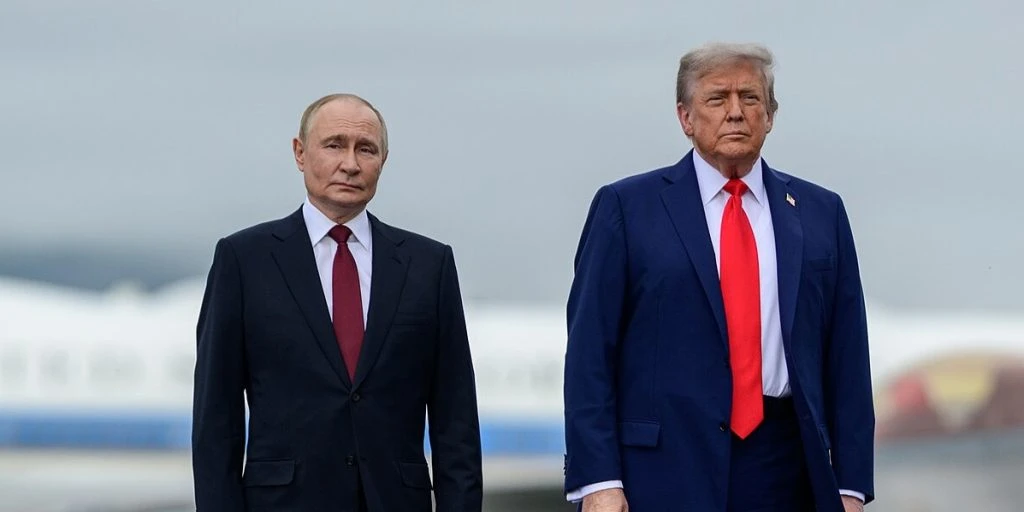
Issues between the US and Russia are escalating.


Russia’s relationship with Donald Trump has long been handled with careful words from the Kremlin.
That tone now appears to be changing.
Senior Russian officials have accused Washington of failing to follow through on understandings they say were reached between Trump and Vladimir Putin at their summit in Alaska last August, raising fresh questions about the state of U.S.-Russia diplomacy as the war in Ukraine intensifies again.
Moscow has repeatedly referred to what officials call the “spirit of Anchorage” since Trump and Putin met in Alaska.


Russian officials have never publicly detailed what they believe was agreed there, while the United States has also not spelled out any specific commitments from the summit.
The phrase has been widely read as shorthand for Moscow’s view that Trump was sympathetic to parts of Russia’s preferred path toward ending the war, including demands involving Ukraine’s eastern Donbas region.
That confidence now appears to have weakened, says Reuters.
Kremlin aide Yuri Ushakov said one side had remained committed to the understandings from Alaska, “while the other side, as it now appears, has not been fully able to do its part”.
Lavrov raises sharper accusation
The criticism grew stronger this week.
Russian Foreign Minister Sergei Lavrov suggested that the Alaska meeting may have served another purpose for Washington.
According to Lavrov, the summit may have been a U.S. “ploy to buy time to rearm the Kyiv regime”.
Deputy Foreign Minister Sergei Ryabkov also accused Washington of moving away from what he described as the “fundamental understandings” reached in Alaska.
He added that Russia still expects dialogue with the United States to continue, but said Washington’s position is now moving closer to European countries that Moscow sees as especially hostile.
“We also see Washington’s line moving closer to the most rabid anti-Russian policies pursued by the U.S.’s closest European allies – namely, the UK and France,” Ryabkov said, according to Russian state media.
Ukrainian strikes add pressure
The comments come after a series of Ukrainian drone attacks deep inside Russia, including strikes on a Moscow oil refinery last week.
Ukraine’s president, Volodymyr Zelenskiy, told Western leaders at the G7 summit that Kyiv was shifting the direction of the war. Moscow rejects that assessment and has continued its own heavy attacks.
Russian President Vladimir Putin said Tuesday that “the entire West” was working for Kyiv.
Analysts say the sharper Russian tone may reflect both military pressure and impatience with the lack of U.S.-led diplomacy.
Gerhard Mangott, an Austrian analyst who has followed Putin for years, said the Kremlin is facing a difficult moment.
“Putin needs to give a response that is visible to the population and that demonstrates that he still has cards to play,” Mangott said.
Moscow wants Washington back at the table
Russia has repeatedly rejected the idea that European governments could act as serious mediators in the war, arguing that they are too closely aligned with Ukraine.
That leaves Washington as the main outside power Moscow appears willing to engage.
Oleg Ignatov, an analyst at the International Crisis Group, said Russia has been disappointed by the lack of sustained U.S. mediation since Trump shifted much of his attention toward the war with Iran.
“There’s no structured diplomatic process, there’s no deal on the table, there’s actually nothing,” Ignatov said. “The Russians are very disappointed about this, they really want the Americans to engage.”
The latest statements suggest Moscow is trying to pressure Trump back into a central role, while also signaling that patience inside the Kremlin is running thinner than before.



