
 Kenneth Glad
Two Senate contests are intensifying disagreements over campaign finance, economic policy and the party’s future. Different alliances have formed around candidates in Michigan and Minnesota.


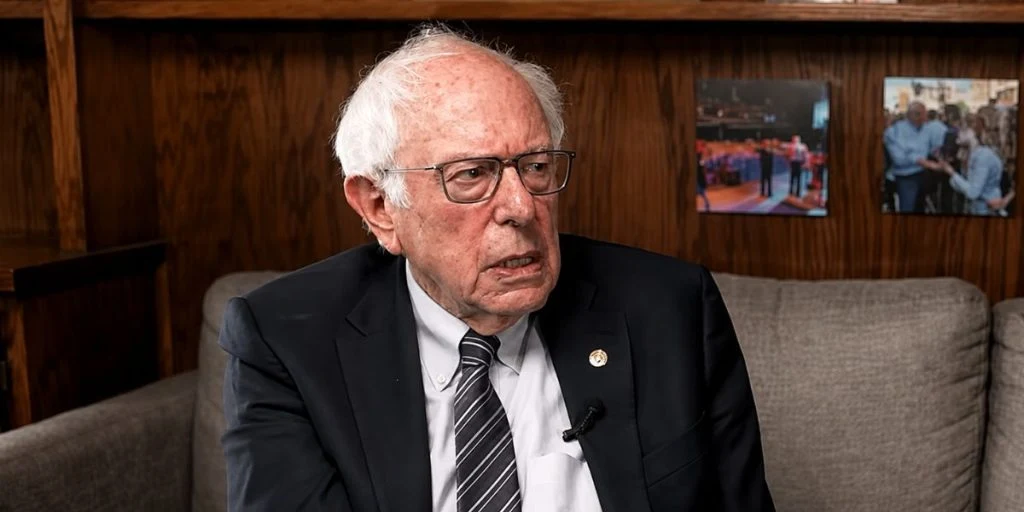
Sen. Bernie Sanders has renewed his criticism of wealthy political donors as Michigan Democrats vote Tuesday in a closely watched Senate primary between Abdul El-Sayed and Haley Stevens.
The contest has drawn national attention because of the sharp contrast between the candidates’ political coalitions, fundraising models and support from influential figures within the party.
El-Sayed, a physician and former Detroit health director, is backed by Sanders and Rep. Alexandria Ocasio-Cortez.
Stevens, a member of the US House of Representatives and former Obama administration official, has secured endorsements from Senate Democratic leader Chuck Schumer and Michigan Gov. Gretchen Whitmer.


Outside organizations spent more than $50 million supporting Stevens or opposing El-Sayed. About $30 million came from the American Israel Public Affairs Committee and affiliated groups, according to the Associated Press. The scale of that spending has made campaign finance a central issue in the race.
El-Sayed nevertheless raised more money directly than Stevens and built a volunteer-driven operation that has emphasized grassroots support. Stevens, by contrast, has benefited from a far larger outside advertising campaign as both candidates compete for the Democratic nomination.
Donor power draws fire
Sanders focused his criticism on outside political spending groups rather than the existence of a contested primary. He argued that the scale of the money entering the race had distorted the balance between the candidates and given wealthy interests an outsized role in determining the outcome.
“When you have billionaires and their super PACs, AIPAC, and other special interests, spending tens and tens of millions of dollars trying to defeat Abdul, that’s not democracy,” he said on the MeidasTouch program “On Sunday.” “That’s a corrupt campaign finance system controlled by billionaires.”
The Vermont independent has also endorsed Minnesota Lt. Gov. Peggy Flanagan, who faces Rep. Angie Craig in the August 11 primary of the Democratic-Farmer-Labor Party, Minnesota’s Democratic affiliate. That contest has attracted national attention because both candidates have significant support within different sections of the party.
Flanagan is backed by Sanders, Sen. Tina Smith and Rep. Ilhan Omar, placing her firmly within the progressive coalition. Craig has support from Nancy Pelosi, Hakeem Jeffries and Pete Buttigieg, along with other prominent figures associated with the party’s more moderate wing.
Craig developed a centrist profile after capturing and retaining a congressional district previously represented by Republicans. Flanagan, by contrast, has emphasized progressive priorities and her record in statewide office as she campaigns for the Senate nomination.
Party leaders face challenge
Asked about Democrats who want progressive candidates to conform more closely to the party establishment, Sanders rejected the premise and turned the criticism back on senior figures within the organization.
“Well, maybe the converse is true. Maybe the Democratic establishment should begin to understand they are way, way out of touch with where the American people are.”
Sanders said the party should no longer be shaped primarily by affluent contributors or a small circle of political decision-makers. He argued that Democratic leaders must build a broader coalition around workers, younger voters, communities of color and people facing financial hardship:
“I think what the Democratic Party should become is a party of working people, of young people, of people of color, of people who understand what it’s like to struggle.”
The interview also moved beyond campaign finance to health care, housing and the rapid development of artificial intelligence. Sanders argued that technological change should be managed in the public interest rather than controlled almost entirely by a small number of powerful companies.
“We’ve got to make sure it works to improve human life, not harm human life,” he said.
Sanders supports a federal moratorium on new AI data centers until stronger national safeguards are established. He also discussed creating a public fund that would give Americans a financial stake in wealth generated by the industry.
“The people themselves will have to determine what the future is, not you,” Sanders said while criticizing the influence of major technology executives.
Michigan’s result will provide the first immediate measure of whether El-Sayed’s volunteer-driven operation can overcome Stevens’ enormous outside advertising advantage. It will also show whether Sanders’ criticism of donor power is resonating strongly enough to shape the outcome of a major Democratic primary.
Sources: MeidasTouch, Associated Press



