
 Edith Hejberg

Public ties to Trump could now hurt more than help. Jacob Reynolds of MCC Brussels put it plainly: “When these things are done openly, populist and patriotic parties suffer.”


Donald Trump has long been a controversial figure among Europe’s far-right movements. While his anti-immigration stance and nationalist rhetoric once inspired many across the continent, his increasingly erratic foreign policy and confrontational tone have started to alienate former allies.
Now, his influence is seen less as a boost, and more as a political burden.
From ally to liability

Trump’s recent actions, including military operations in Venezuela, renewed interest in acquiring Greenland, and an incoherent speech at Davos, have forced European nationalists to reconsider their support.
Once vocal backers are now speaking out. Nigel Farage called Trump’s Greenland comments “very hostile,” while Italy’s Giorgia Meloni rejected his dismissive stance on Europe’s role in Afghanistan.


Shared values, strained relations

Though many far-right leaders still align with Trump ideologically, especially on immigration, border security, and cultural preservation, the practical implications of being seen as too close to him are growing.
Publicly supporting a U.S. president who threatens European sovereignty contradicts their core nationalist message.
Support turns sour in Germany and France
In Germany and France, where skepticism toward the U.S. is already high among far-right voters, Trump’s image is particularly problematic.
Only 15% of Germans now view the U.S. as a reliable partner. French leader Jordan Bardella, once cautiously supportive, now labels Trump’s threats as “blackmail” and “unacceptable.”
A political shift for Meloni

Italian Prime Minister Giorgia Meloni, previously seen as a Trump-friendly figure in Europe, has taken a notable turn. In response to Trump’s NATO remarks, she defended Italy’s military record and warned that friendship “requires respect.”
Her statement signaled a growing rift between her government and the Trump administration.
The fallout from Trump’s Venezuela move

Trump’s military intervention in Venezuela was another tipping point. European far-right leaders, who often preach non-interventionism, found themselves split.
In Germany, AfD’s Beatrix von Storch and Alice Weidel condemned the action. But party co-leader Tino Chrupalla offered a controversial defense, echoing pro-Russian rhetoric.
The Greenland controversy

Trump’s revived ambition to buy Greenland sparked fresh outrage across Europe. Leaders and commentators saw it as an affront to European autonomy.
Even AfD figure Maximilian Krah, one of the few defenders, sparked criticism for supporting U.S. claims to a Danish territory, citing resource control and geography.
America First vs. European sovereignty

At the heart of the fallout is a contradiction: Trump’s “America First” approach increasingly undermines European nationalists’ claims to independence and pride.
As Justin Logan of the Cato Institute put it, “Regardless of what the AfD or National Assembly think about migration, they do not agree with the annexation of Europe by the U.S.”
Silence speaks volumes

Some European nationalists, long aligned with Trump, are choosing silence. Slovak PM Robert Fico met Trump at Mar-a-Lago just as tensions spiked but avoided commenting on Greenland.
In France, Eric Ciotti deleted congratulatory posts from after Trump’s election, a quiet signal of political distancing.
Political center seizes the moment

Europe’s centrists have capitalized on the discomfort. German politician Manfred Weber challenged far-right lawmakers to choose between being “true Europeans” or “a colony of Washington.”
The suggestion that Trump undermines European dignity is gaining traction, and leaving far-right leaders with difficult choices.
American backing backfires
The Trump administration has openly supported far-right movements in Europe, from praising the AfD to backing Marine Le Pen despite her conviction for embezzlement.
But this endorsement now threatens to backfire, making it easier for opponents to portray these parties as pawns of Washington.
A risky connection moving forward

With elections approaching in several European countries, nationalist parties are recalibrating.
Public ties to Trump could now hurt more than help. Jacob Reynolds of MCC Brussels put it plainly: “When these things are done openly, populist and patriotic parties suffer.”
Trump’s legacy divides the far right
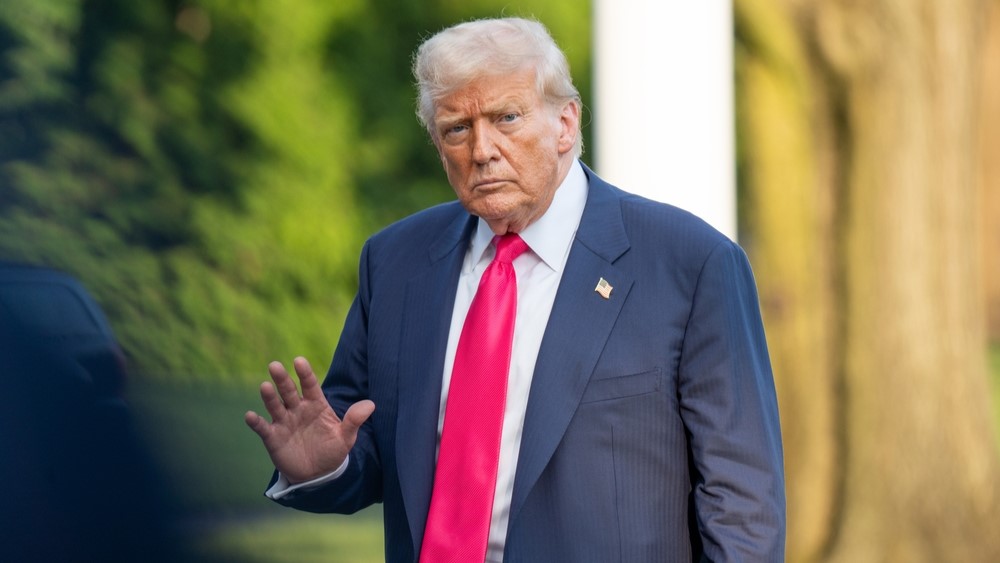
What was once a source of strength has become a source of division. As Trump’s international behavior grows more unpredictable and his rhetoric more confrontational,
Europe’s far-right finds itself in an identity crisis, caught between shared values and a growing need to assert independence from their unpredictable ally.



