Asger Risom
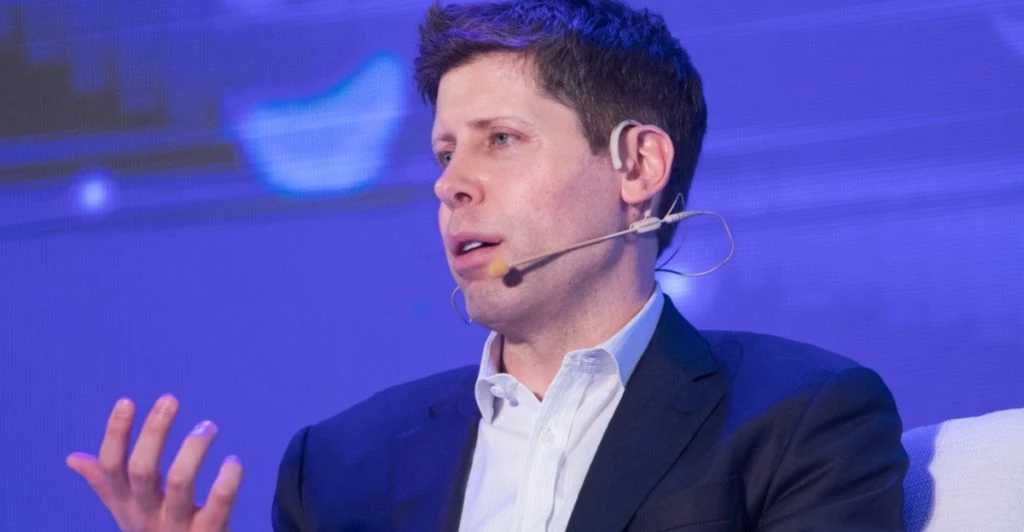
For years, Sam Altman argued that advertising distorted incentives and corrupted products.
Now, the company he leads is betting that ads are the fastest way to turn scale into cash.


OpenAI has begun rolling out advertisements inside ChatGPT, marking a significant shift for a company whose chief executive once publicly criticized ad-driven business models.
Starting this week, some U.S. users will see ads while using ChatGPT’s free version, as well as a subset of users subscribed to ChatGPT Go, OpenAI’s new $8-per-month tier. The move is designed to monetize the vast majority of users who do not pay for subscriptions.
Why OpenAI is doing this
ChatGPT has hundreds of millions of users, but only a small fraction pay. Subscriptions alone have not been enough to support the company’s rapidly rising costs, driven by computing infrastructure, model training, and aggressive expansion.
Ads offer a familiar solution: extract revenue from attention rather than access.


OpenAI said ads will be targeted based on users’ current conversations, past prompts, and interactions with previous ads. For now, the company says it will not use data from outside ChatGPT to target ads inside the service.
A trust problem
The decision revives a long-running concern about whether ads could influence how AI systems behave.
If ChatGPT is answering questions while also serving paid messages, users may question whether responses are shaped — subtly or otherwise — by advertisers. That concern has been central to criticism from rivals.
Anthropic, a competing AI lab, has openly mocked the move. Its leadership has argued that mixing ads with AI assistants risks undermining user trust, a point it highlighted in recent public statements and marketing.
Altman’s reversal
Altman has previously described ads as “gross,” arguing that they misalign incentives and encourage companies to optimize for engagement rather than truth or usefulness.
The shift suggests OpenAI now views ads as unavoidable. As the company races to scale globally, it is under pressure to prove it can generate durable revenue, especially as competition intensifies and investors scrutinize its business model.
What happens next
For now, OpenAI says ads will be limited and clearly labeled. But the broader trajectory mirrors that of earlier internet platforms, which began cautiously before expanding ad targeting and inventory.
The real test will be user reaction. ChatGPT is not a social network or a search engine — it is positioned as a neutral assistant. If users begin to suspect that answers are influenced by commercial interests, the cost could be more than reputational.
OpenAI is betting that users will accept ads as the price of free access. Whether that bet holds may determine how AI assistants evolve — and who controls them.
Sources: Business Insider, OpenAI