
 Kenneth Glad
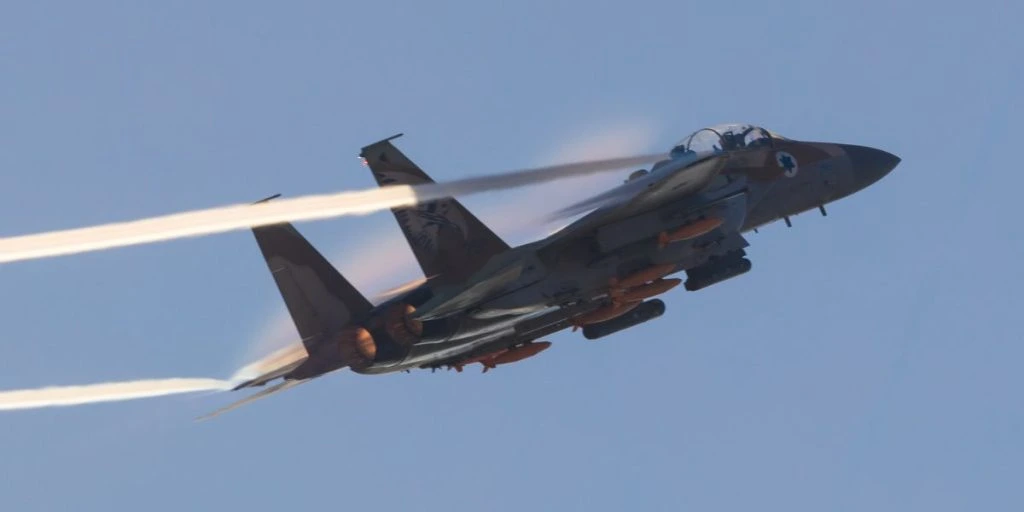
Nearly two weeks into the US-Israeli bombing campaign against Iran, the debate among policymakers is shifting. The question is no longer only how much military damage has been inflicted, but what the war may leave behind.
Across Iran, airstrikes since early March have hit missile depots, air defence systems and military research centres, according to regional security officials.
Explosions have been reported near several military facilities, including sites around Isfahan and central Iran linked to weapons development.
Yet the country’s leadership structure remains intact. And attention is increasingly turning to a single issue that could shape the conflict’s long-term consequences: Iran’s enriched uranium.
A stockpile underground
Israeli defence and intelligence officials, cited in reporting by The Guardian, say that roughly 440kg of enriched uranium remains stored deep underground at a heavily fortified nuclear site despite US strikes on Iranian nuclear infrastructure last June.


Nuclear analysts say that amount of material could theoretically supply the core fuel for several nuclear warheads if Tehran chose to pursue weaponisation.
A former Israeli defence official who worked on monitoring Iran’s nuclear program told the British newspaper that the fate of the uranium could ultimately determine whether the war improved Israel’s security or made the nuclear challenge more dangerous. In his view, a durable outcome would likely require removing the material from Iran or ensuring it is kept under strict oversight.
Researchers at the Stockholm International Peace Research Institute (SIPRI), which monitors global nuclear arsenals and proliferation risks, note that destroying facilities does not eliminate already enriched material or the scientific expertise behind a nuclear program.
Iran accumulated much of its enriched uranium during years of expanding nuclear activity after the collapse of earlier diplomatic limits on its program. Before the current war, international negotiators had explored arrangements that could move the material abroad as part of a broader agreement.
Expectations of upheaval
When the campaign began, both Israeli prime minister Benjamin Netanyahu and US President Donald Trump suggested that sustained military pressure could weaken Iran’s leadership or even trigger internal unrest.
But Israeli security officials quoted by The Guardian say there was never a detailed operational strategy for forcing regime change. Military planning focused instead on degrading Iran’s missile forces, air defences and nuclear infrastructure.
Predicting whether millions of Iranians might rise up against their government during wartime was always uncertain.
Lina Khatib, director of the SOAS Middle East Institute and a specialist in regional politics, has argued that authoritarian systems with strong security institutions rarely collapse quickly under external attack, writes New Statesman.
Despite the killing of supreme leader Ayatollah Ali Khamenei and the elevation of his son Mojtaba Khamenei, Iran’s governing apparatus has so far remained firmly in place.
After the bombing
Israeli officials say the air campaign has inflicted serious damage on parts of Iran’s military industry. Missile launchers, production facilities and sections of the defence supply chain have reportedly been destroyed.
But Iran’s scientific expertise remains. Nuclear programs rely not only on infrastructure but on engineers, laboratories and decades of accumulated knowledge.
Former Israeli military intelligence official Joab Rosenberg warned in a social media post referenced by the British outlet that a weakened Iranian regime still holding enriched uranium could eventually pursue nuclear weapons more aggressively, turning a battlefield success into a strategic setback.
Beyond Israel and Iran, the war is already affecting the wider region. Energy markets have reacted to the strikes, with oil prices rising and governments across the Middle East closely watching the conflict’s trajectory.
Military campaigns can dismantle facilities in weeks. Preventing the next stage of nuclear escalation could take far longer.
Sources: The Guardian, SIPRI, New Statesman



