
 Jens Asbjørn Bøgen
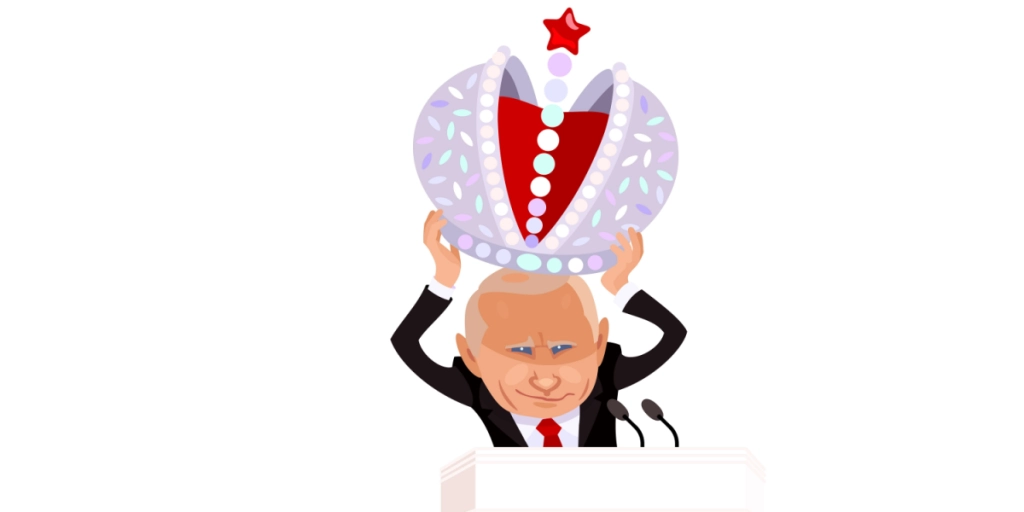
Somehow the senior priest linked the a Russian space station to the restoration of autochratic rule.


The last official tsar of Russia was Tsar Nicholas II, who abdicated on March 15, 1917, following the Russian Revolution.
It ended more than three centuries of rule by the Romanov family.
Nicholas II and his family were later executed.
Following the abdication, Russia was ruled first by a Provisional Government, then by a Bolshevik/Soviet government (led by Vladimir Lenin). When the Soviet Union was established in 1922, a one-party, totalitarian government was introduced.


When the Soviet Union dissolved in 1991, Russia introduced democracy (at least on paper).
It is safe to say that the term democracy is used in its widest possible sense, as Vladimir Putin has ensured changes to the Russian Constitution that allow him to remain in power. When Russians go to the polls to cast their ballots, they risk being watched over by armed soldiers, as evidenced in recordings from the Russian elections in 2025.
Russia may, however, be moving toward restoring one-man rule without even concealing it, as public figures are increasingly arguing for the reintroduction of monarchy.
From space station to monarchy
A senior Russian Orthodox cleric has linked the country’s future ambitions in space with a call for a return to monarchical rule, The Moscow Times reports.
The comments reflect a broader pattern of public figures questioning democratic structures and promoting centralized authority.
According to The Moscow Times, Archpriest Maxim Minyailo, a senior priest at the Church-on-the-Blood in Yekaterinburg, made the statement in response to a post by the pro-Kremlin Telegram channel “MIG Russia.”
The channel had proposed building a national orbital station as a “civilizational symbol of Russia.”
“I think the station is certainly necessary. However, as a symbol of Russia’s civilization, it is, to put it mildly, weak and lacking in concept, while it would be perfect for reviving autocratic monarchical rule,” the Church-on-the-Blood Telegram channel quotes him as saying.
Minyailo added that Russia must “come to its senses” and stop looking “outward,” suggesting that such a shift would restore the country’s standing in space exploration.
Growing rhetoric
His remarks echo statements made by nationalist philosopher Alexander Dugin in early 2024. Writing on Telegram, Dugin argued that Russia already functions as a monarchy despite its constitutional framework.
“Reality rests on those who believe in it. I do not think we have a Parliament, just as liberal democracy does not exist in Russia. What exists is a monarchy and its leader. And whatever he wants, that is how it will be,” he wrote, according to The Moscow Times.
Dugin also dismissed legislative processes, describing them as temporary displays by elites he characterized as corrupt.
Earlier calls
The idea of stronger centralized power has surfaced before. In 2016, Sergei Aksyonov, the Moscow-appointed head of Crimea, called for restoring monarchy-like governance.
Speaking on the First Crimean TV channel, he said Russia needed one-man rule “even to the point of dictatorship,” arguing that expanded authority was necessary to confront external threats.
He also stated that democracy should exist only within what he described as “certain, normal limits.”
So who knows: maybe Putin will officially become a tsar in the future.
Sources: Telegram (Church-on-the-Blood, Alexander Dugin), MIG Russia, The Moscow Times



