
 Kenneth Glad
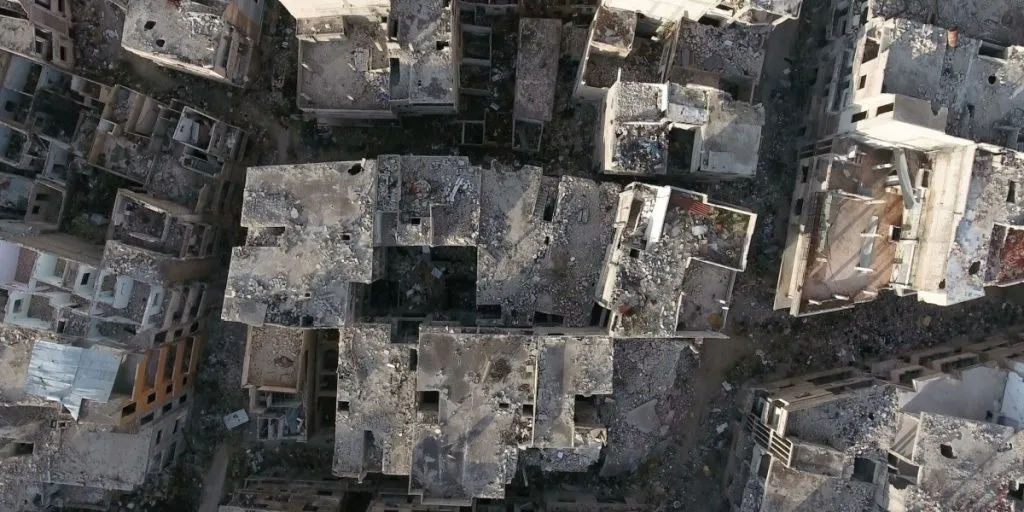
Nearly three weeks after the first strikes, fighting between Israel, the United States and Iran is no longer contained to the battlefield. Civilian casualties are climbing. Political tensions are tightening. Key trade routes are under pressure. What started as a regional confrontation now reaches far beyond it. And it’s spreading.


New figures underline the scale of the damage. The Human Rights Activists News Agency, cited by Danish newspaper Ekstra Bladet, says at least 3,186 people have been killed in Iran since 28 February, including 1,394 civilians and 210 children.
In Brussels on Friday morning, European Commission President Ursula von der Leyen warned that continued fighting could push large numbers of displaced people toward Europe. The concern is not just immediate movement, but what follows if the war drags on.
Iran’s messaging has also shifted. In comments carried by AP, general Abolfazl Shekarchi warned that civilian locations worldwide could be targeted.
“From now on, even parks, recreational areas and tourist destinations anywhere in the world will no longer be safe for you,” he said on state television.


Pressure on allies
Diplomatic pressure is building behind the scenes. During a phone call, Iran’s foreign minister Abbas Araghchi told UK Foreign Secretary Yvette Cooper that allowing US forces to use British bases would lead to “an escalation of the situation,” according to BBC reporting.
The disagreement reflects wider strain inside NATO. US President Donald Trump criticised member states for staying out of the conflict.
“NATO did not want to participate in the fight to stop a nuclear-powered Iran,” he said, adding they were “COWARDS, and we will REMEMBER it!”
Click to display external content from truthsocial,
- You can always enable and disable third-party content.

You agree to display external third-party content. Personal data may be sent to the provider of the content and other third-party services.
Click to display external content from iFrames except google ads,
- You can always enable and disable third-party content.

You agree to display external third-party content. Personal data may be sent to the provider of the content and other third-party services.
Not everyone is waiting to see what happens next. Ekstra Bladet reports that NATO has already moved personnel from Iraq to Europe as a precaution.
Reuters also reported that Ali Mohammad Naeini, spokesperson for Iran’s Revolutionary Guard, has been killed in ongoing strikes.
Oil route disruption
The economic effects are becoming harder to ignore. The Strait of Hormuz, a narrow passage between Iran and Oman, carries a large share of the world’s oil.
Now it’s nearly empty. Data reviewed by the BBC shows ship traffic has dropped by around 95 percent since early March.
The International Energy Agency warns this could become the most severe oil supply disruption in modern history. Governments are being urged to cut fuel use, including remote work and fewer flights.
There are already signs of damage elsewhere. According to Sky News‘ reporting, writes Ekstra Bladet, Iran struck Kuwait’s Mina Al-Ahmadi refinery, triggering a large fire. Air defences were also activated overnight in Saudi Arabia and the United Arab Emirates.
This conflict is no longer contained. It is hitting civilians, testing alliances and disrupting the flow of energy the global economy depends on.
Sources: Ekstra Bladet, AP, BBC, Reuters,



