
 Kenneth Glad
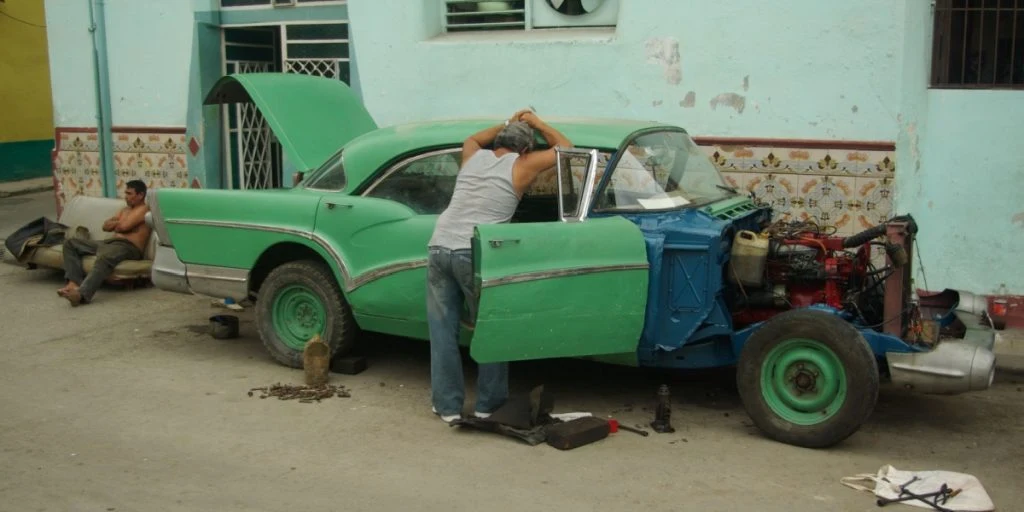
Fuel scarcity is again reshaping daily life in Cuba, where transport and electricity have grown increasingly unreliable. Across the island, people are improvising to keep moving.


In one town, that improvisation has taken the form of a smoky, slow-burning solution that echoes an earlier era of crisis.
Cuba has lived through energy shocks before, most notably the “Special Period” of the 1990s. Today’s strain stems from different causes but feels familiar: limited fuel, fragile supply chains and mounting costs.
As Reuters reports, US sanctions and pressure on shipping and suppliers have constrained oil deliveries to the island. Fuel is tightly rationed, while informal prices have surged far beyond official levels. Recent nationwide outages lasting more than a day have added to the strain.
In this environment, older ideas are resurfacing.


A workaround on wheels
In Aguacate, a town east of Havana, mechanic Juan Carlos Pino has modified his 1980 Fiat Polski to run on charcoal gas. Using salvaged parts, he built a system that, according to How News, heats charcoal to release combustible gas, which then powers the engine.
The vehicle moves with a low mechanical hum and a faint smoky smell, its external tank drawing as much attention as the car itself. Pino, who has only basic formal schooling, said the concept had been on his mind for years, influenced by family knowledge and online guides.
“In a crisis like this, it’s the best option we have,” he said. He believes similar systems could help farmers keep equipment running: “We need mobility, we need to be able to plant crops.”
Interest in such adaptations is growing. Argentine innovator Edmundo Ramos, who shares open-source designs for alternative fuel systems, told Reuters he has received increasing inquiries from Cuba as shortages deepen. “I was first contacted by an ice maker and told that he couldn’t make ice. Then I was contacted by an ice cream maker, then a store owner.”
Old ideas, new moment
The idea itself is not new. Gasifier-powered vehicles were widely used during World War II when gasoline was scarce, offering a historical parallel to Cuba’s current situation.
Locally, Pino’s car has become less of a curiosity and more of a conversation starter about necessity. Some residents express amazement, while others see a practical path forward.
“It’s amazing. It left me speechless,” said Yurisbel Fonseca.
For many, the project reflects something broader than one invention. In Cuba, where machinery is often kept alive far beyond its intended lifespan, adaptation is not exceptional but routine, a quiet form of resilience shaped by decades of constraint.
Sources: Reuters, Hot News



