
 Kathrine Frich
Europe’s security has relied heavily on the United States and the NATO alliance.


But shifting political signals from Washington are now raising doubts about how reliable that support would be in a future conflict.
Officials and analysts say the unthinkable scenario is no longer off the table.
Growing fears
European leaders are being warned to prepare for a potential conflict with Russia without American backing.
According to reporting by the Daily Mail cited by Ziare, officials and a recent UK parliamentary report suggest that the worst-case scenario may go even further.


“The withdrawal of the Americans from the European security architecture is no longer the worst-case scenario. The worst-case scenario is that the Americans not only leave, but turn against us,” a European official said.
A possible deal
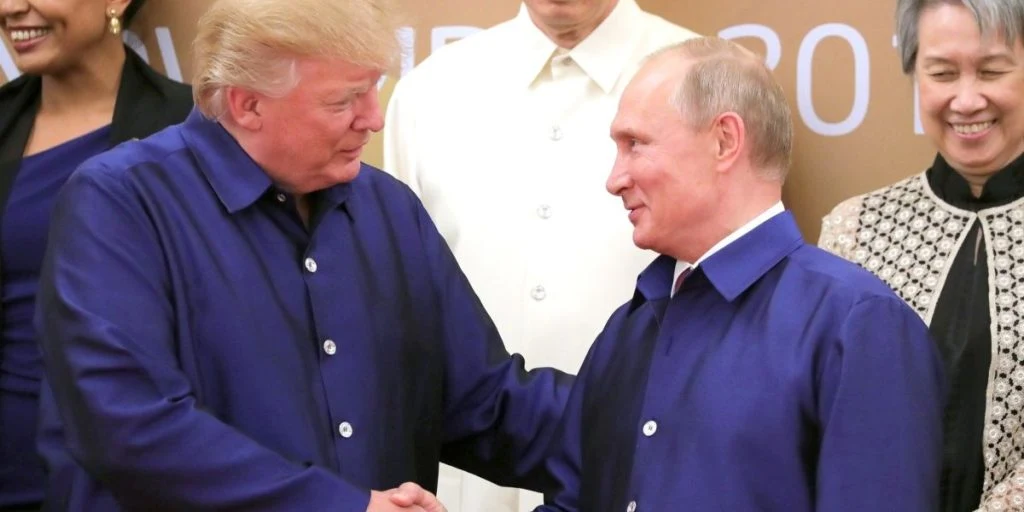
Concerns are also growing over the possibility of a “grand bargain” between US President Donald Trump and Russian leader Vladimir Putin.
Such an agreement, potentially negotiated without European involvement, is now viewed by some officials as a realistic risk.
Military sources have also warned that US support in the event of an attack on NATO’s eastern flank can no longer be taken for granted.
Shifting priorities
The uncertainty is being compounded by changes in US military focus.
The Pentagon is reportedly considering redirecting weapons originally intended for Ukraine to the Middle East, where the conflict with Iran is placing heavy demands on resources.
Although NATO officials say deliveries to Ukraine continue, the debate highlights concerns over stretched capabilities.
Russia’s advantage
Meanwhile, Moscow appears to be benefiting from the broader geopolitical situation.
According to the Kyiv School of Economics, Russia is earning around £570 million per day from oil and gas exports, driven by rising global demand and shifts in sanctions policy.
At the same time, US military operations in Iran have intensified, with thousands of strikes aimed at limiting Tehran’s regional influence.
Transatlantic tensions
Political rhetoric from Washington has further unsettled European allies.
At a recent cabinet meeting, Trump suggested the US might not always stand by its partners, saying: “We were always there when they needed us. I don’t know if that’s the case anymore.”
He also criticised the UK’s military capabilities, adding strain to an already tense relationship.
Sources: Daily Mail, Ziare, Kyiv School of Economics



