
 August M

Tensions between global powers are increasingly being reflected in state media narratives. In Russia, some broadcasters are now portraying current conflicts in sweeping ideological and even religious terms.
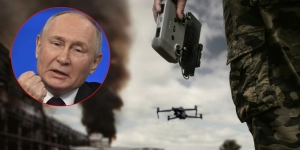
The language used signals a shift that goes beyond conventional military or political framing.
According to The Express, pro-Kremlin television host Vladimir Solovyov described the ongoing situation as a broader existential struggle. “Do we understand that the war is holy in its nature? Do we understand that all our secular concepts are a thing of the past?” he said on air.
He also suggested the United States could take aggressive military steps, including targeting infrastructure. “They say [the Americans] we will destroy all the bridges, we will destroy all the power plants.”
Expanding narrative
Solovyov framed the conflict as extending beyond Ukraine, arguing it represents a longer-term confrontation with Washington.


“It’s not about defeating Ukraine here and now, it’s about defeating America, the way it will be in the coming months and years,” he said.
He further claimed that the US could escalate tensions through indirect means, stating it would “wage a proxy war against us [Russia] through Ukraine.”
Nuclear fears raised
In his remarks, Solovyov also speculated about the potential use of nuclear weapons, suggesting that escalating tensions could lead to extreme outcomes.
“It’s clear that as soon as this week, we may witness America use nuclear weapons,” he said.
Such statements reflect growing alarmist rhetoric in segments of Russian media, particularly amid ongoing geopolitical strain.
Internal debate
At the same time, other voices on Russian television have acknowledged challenges in the war effort.
Colonel Mikhail Khodarenok, a retired military commander, told viewers that current strategy has not delivered success.
He also raised the possibility of escalating tactics, including the use of what he described as “special weapons.”
“For me that the time has come when the use of special weapons should not be considered an out-of-the-ordinary occurrence,” he said.
Rising tensions
The remarks come against a backdrop of heightened global uncertainty, including conflict dynamics involving Iran and Ukraine.
Observers say such rhetoric may reflect both internal pressures and attempts to shape public perception of the war.
While official policy may differ from televised commentary, the language used underscores how narratives around the conflict continue to intensify.
Sources: The Express



