
 August M
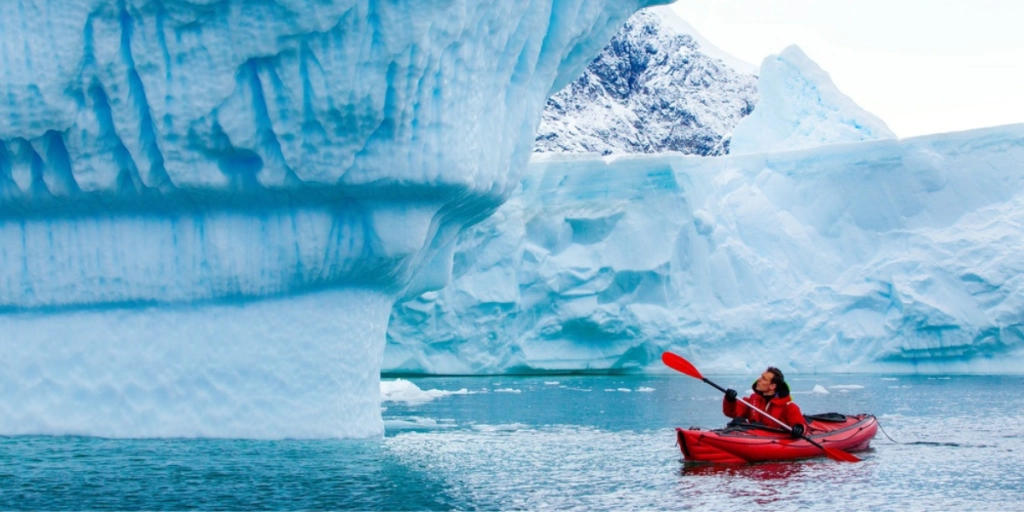
Antarctica is showing signs of growth, but scientists warn the development may be short-lived.


New findings suggest a shift in the balance between snowfall and melting, offering a more complex picture of climate change.
According to TV2 News, citing a study published in Nature Communications and supported by Denmark’s DMI, the continent’s total ice mass has increased since 2020.
A fragile balance
Researchers say the gain is being driven by heavier snowfall, which is currently offsetting ice loss into the ocean.
Warmer air can hold more moisture, leading to increased precipitation over the vast ice sheet.


Ruth Mottram from DMI said: “It’s a delicate balance. The snowfall is currently offsetting the loss, but we are balancing on a knife’s edge.”
She warned that even small shifts in atmospheric or ocean conditions could quickly reverse the trend.
How it happens
The study relies on satellite measurements tracking changes in Earth’s gravity, allowing scientists to monitor ice mass over time.
These observations were combined with climate models and global weather data to estimate how much ice is gained through snow and lost through melting.
Climate scientist Abraham Torres explained: “Satellite data shows that the sea ice around Antarctica has decreased significantly.”
He added: “We have used satellite data of sea ice in the model and can see an increase in especially winter snowfall, as there is more local evaporation from the open ocean.”
Global impact
Despite the recent increase, scientists stress that the long-term outlook remains unchanged.
The additional snowfall does not stop ongoing sea level rise, as melting ice continues to affect oceans worldwide.
Changes in Antarctica’s ice mass can influence ocean currents and storm systems, with uneven effects across different regions.
According to DMI, meltwater from Antarctica is expected to contribute significantly to rising sea levels in countries such as Denmark.
No long-term relief
Experts emphasise that the current growth should not be seen as a reversal of climate trends.
Instead, it reflects a temporary shift within a highly sensitive system.
Small variations in temperature or ocean conditions could quickly tip Antarctica back toward net ice loss.
Sources: TV2 News, DMI, Nature Communications



