
 Asger Risom
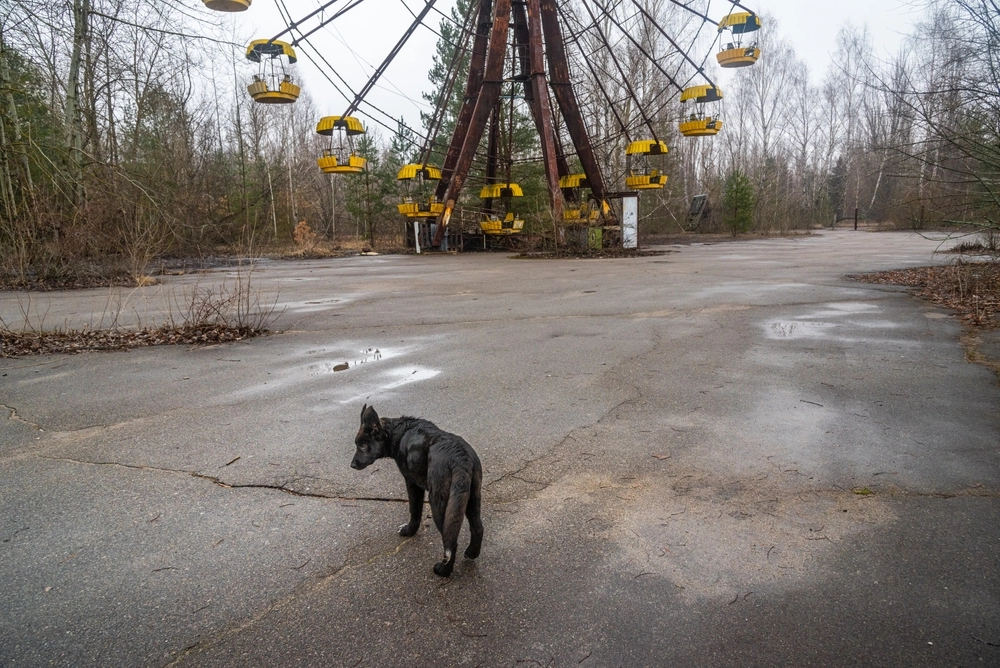
Forty years after the Chernobyl disaster, wildlife has returned in large numbers—suggesting that the absence of humans may have a greater impact on ecosystems than radiation itself.


Four decades after the world’s worst nuclear disaster, the area around Chernobyl remains largely uninhabited by people.
But it is no longer empty.
Nature without people
Following the 1986 explosion, a 2,600 sq km exclusion zone was established, forcing more than 100,000 people to leave their homes. The area was sealed off due to dangerous radiation levels.
According to research, that absence of human activity has since transformed the region into an unintended wildlife refuge.


Without farming, industry or hunting, ecosystems have been allowed to recover in ways rarely seen elsewhere in Europe.
Wildlife returns
Populations of wolves, foxes, wild boar and elk have grown significantly across the zone. Species once absent from the region, including brown bears and European bison, have also reappeared.
Other animals have been deliberately reintroduced. Przewalski’s horses, brought into the area in the late 1990s, now number more than 150 in parts of the zone.
Birdlife has also rebounded, with species such as black storks, white-tailed eagles and the rare greater spotted eagle returning to nest in the area.
Radiation vs humans
Scientists say the key factor behind this recovery is not the radiation—but the lack of people.
Studies show that, despite the long-term environmental damage caused by the disaster, the absence of agriculture, development and hunting has had a stronger positive effect on wildlife populations.
In some areas, animal numbers are comparable to—or even higher than—those in protected nature reserves unaffected by radiation.
Signs of adaptation
There is also evidence that some species are adapting to the radioactive environment.
Tree frogs in the zone, for example, have developed darker pigmentation, which researchers believe may help protect against radiation.
Studies on wolves suggest possible biological adaptations that could reduce long-term health risks such as cancer.
Even plants and fungi appear to be evolving, with some showing improved resistance to radiation and the ability to repair damaged DNA.
Not without consequences
Despite these signs of resilience, the ecosystem is not unaffected.
Radiation has been linked to reduced reproduction rates and genetic mutations in some species. Certain areas, such as the so-called “Red Forest,” were heavily damaged in the immediate aftermath of the disaster.
The recovery is uneven, and scientists stress that the situation should not be seen as a positive outcome of the catastrophe.
A complex legacy
Chernobyl is now one of Europe’s largest natural laboratories, offering insight into how ecosystems respond when human pressure disappears.
Similar patterns have been observed in other exclusion zones, including around the Fukushima nuclear site in Japan.
While the return of wildlife highlights nature’s capacity to recover, researchers caution that it comes at a cost—and that the lesson is not that disasters are beneficial, but that human absence can dramatically reshape the natural world.
Sources: ScienceDirect



