
 Jens Asbjørn Bøgen

Do you think he would stage a false-flag terrorist attack to pave the way for further tightening of control?

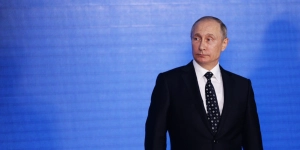
“Risks of terrorist threats are growing.”
That was the dire warning from Russian President Vladimir Putin during a government meeting on ensuring the security of the upcoming elections, the Russian news agency TASS reports.
But as the Russian leadership faces increasing domestic pressure because of high inflation, tax increases to support the war effort in Ukraine, declining support for Putin in polls, deeper Ukrainian strikes inside Russian territory, and a war now in its fifth year, Putin’s remarks beg the question:
Could the Kremlin be planning a terrorist attack against its own population?


“Blowing Up Russia”
In 2002, the book Blowing Up Russia, written by the late Russian former officer of the Russian Federal Security Service (FSB), Alexander Litvinenko, and the Russian-American historian Yuri Felshtinsky, alleged that Putin secured his rise to power through a false-flag terrorist operation in Russia.
The book centers on a series of explosions in four apartment blocks in three Russian cities, killing more than 300 people and injuring more than 1,000. The explosions occurred in September 1999, and the month before that, Putin became prime minister of Russia.
In July 1998, he was appointed director of the FSB.
In a 2009 interview, Felshtinsky said that during his research on the bombings, he discovered that it was actually the FSB that had carried out the attacks.
Putin used the bombings as a pretext to launch the Second Chechen War.
The Crocus City Hall attack
On March 22, 2024, 151 people were killed when the Crocus City Hall music venue near Moscow was attacked by armed men.
ISIS claimed responsibility, but Putin attempted to link the attack to Ukraine, alleging it had been planned by Ukrainian intelligence.
In the aftermath of the attack, anti-immigrant sentiment spread across Russia, and the NGO North Caspian Institute later suggested that both the media coverage and the attack itself had increased such sentiment among Russians.
A member of the Russian State Duma even called for a complete ban on immigration.
However, a number of Russian and strategic communications specialists have since suggested that the terrorist attack was, if not entirely staged, then at least partially orchestrated by the Russian government. Some pointed to the fact that warnings from Western countries were disregarded, suggesting the Kremlin knew about the attack in advance but did not attempt to stop it.
Risk of a false-flag nuclear event
In February 2026, the Institute for the Study of War warned that the Kremlin might be planning a false-flag operation involving a radiological or nuclear event and then blaming Ukraine.
The logic would be for Russia to convince the West to discontinue its support for Ukraine.
The internet crackdown
The Kremlin has blocked internet access for weeks, with Moscow experiencing a three-week blackout in March and other parts of the country subjected to regular shutdowns.
On April 14, Reuters reported that the Kremlin argued the shutdowns were temporary and necessary due to the risk of Ukrainian drones using active connections to reach their targets.
The Kremlin has also blocked WhatsApp, and access to the popular Telegram app is being throttled, with authorities promoting the state-owned messaging app MAX as an alternative.
Critics argue that MAX will increase censorship by Russian authorities and intensify the crackdown on free speech.
Putin under pressure
Putin has been in power in Russia for more than a quarter of a century, using the state apparatus to consolidate power and eliminate political opponents.
But as the war in Ukraine drags on, with Russian forces struggling and even losing ground in several areas, public discontent is growing. The leader of the Communist Party in Russia has even warned of a possible new revolution.
So could Putin grow increasingly wary of a potential coup and resort to attacking his own population in order to stay in power?
Sources: TASS, Radio Liberty, Propastop, Institute for the Study of War, Reuters



