
 Asger Risom

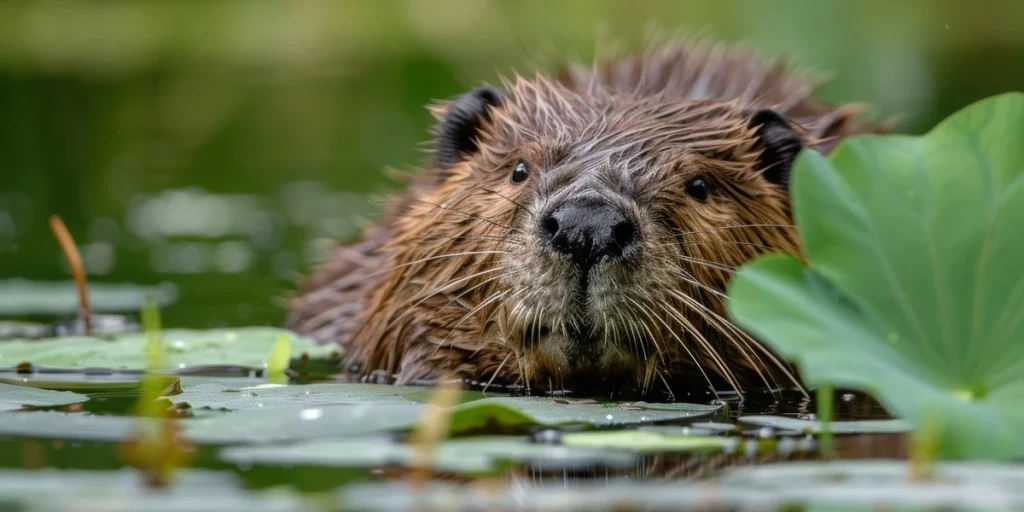
Instead of pouring millions of dollars into concrete dams, communities are increasingly turning to beavers to fix their broken flood infrastructure. Through rewilding projects in places like London and Dorset, these natural engineers are building self-repairing dams that absorb storm surges and filter polluted runoff. It is a highly effective, biological solution that proves nature is often much better at managing water than modern civil engineering.

Modern civil engineering is obsessed with concrete. When a river threatens to flood a town, the default human response is to bury the banks in cement and build a massive underground drainage system. The problem is that these expensive networks often fail the second a severe storm overwhelms their rigid capacity.
Instead of pouring more concrete, local governments across England are trying something completely different. They are parking the heavy machinery and handing the job over to a 40-pound semi-aquatic rodent. It turns out beavers are infinitely better at managing water than we are.
By simply releasing these animals back into local waterways, communities are getting a free, self-repairing flood management system. We are finally admitting that a mammal with a penchant for chewing on logs has a better grasp of hydrology than a human with a blueprint.
How a rodent stops a flood
Beavers are entirely unique because they are one of the only animals on Earth that intentionally alter their surrounding environment. When you drop them into a local river, they immediately start chewing down trees and building natural dams. These wooden blockades slow down the flow of rushing water and push it out into the surrounding soil.


This process naturally creates massive sponge-like wetlands that can absorb incredible amounts of excess rainwater. When a severe storm hits an area, the beaver dams act like physical brakes that prevent sudden surges from rushing downstream. Instead of washing out local roads and flooding basements, the water is safely trapped and filtered in the new wetland.
The best part is that this infrastructure requires absolutely no human maintenance. If a storm damages a concrete dam, a city has to spend a fortune sending out repair crews to fix it. If a storm washes out a beaver dam, the animals just rebuild it the very next day using local sticks and mud.
A furry new workforce
To see this in action, you just have to look at how local ecosystems are being actively managed across the UK. In London, officials recently brought beavers back to Ealing to protect a local train station from chronic seasonal flooding, a project highlighted by CBS News. The site had previously relied on rigid man-made drainage systems that frequently failed during heavy rains.
Meanwhile, in a similar infrastructure experiment, the National Trust introduced a family of beavers to an enclosed nature reserve in Dorset. As detailed by The Guardian, within just a few weeks of their release, the rodents had already built a functioning dam and started transforming the landscape. They completely reshaped the flow of the local water system without using a single piece of heavy machinery.
It is a brilliant financial move for communities struggling to maintain aging drainage infrastructure. You do not have to pay a beaver a salary, and they work around the clock for the cost of a few tree bark snacks. The initial results are so promising that urban planners everywhere are studying how to import their own furry engineers.
Click to display external content from iFrames except google ads,
- You can always enable and disable third-party content.

You agree to display external third-party content. Personal data may be sent to the provider of the content and other third-party services.
A biological water filter
Flood prevention is only half of the equation when it comes to the benefits of urban rewilding. The wetlands created by these animals also serve as massive, natural water filtration systems for highly polluted city rivers. As urban runoff flows through the dense network of sticks and mud, heavy metals and agricultural chemicals are naturally trapped in the sediment.
This biological filtering process dramatically improves the overall water quality for miles downstream. The newly formed ponds also create a thriving micro-ecosystem that immediately attracts birds, amphibians, and native fish back to the area. By fixing the water flow, the beavers accidentally resurrect the entire local food chain.
We spent the 16th century aggressively trapping these animals and the last many years paving over their natural habitats. Now, we are desperately trying to undo that damage by putting them back to work. It is a humbling reminder that sometimes the most advanced technological solution is just stepping back and letting an animal chew on a log.



