
 Mikkel Christensen
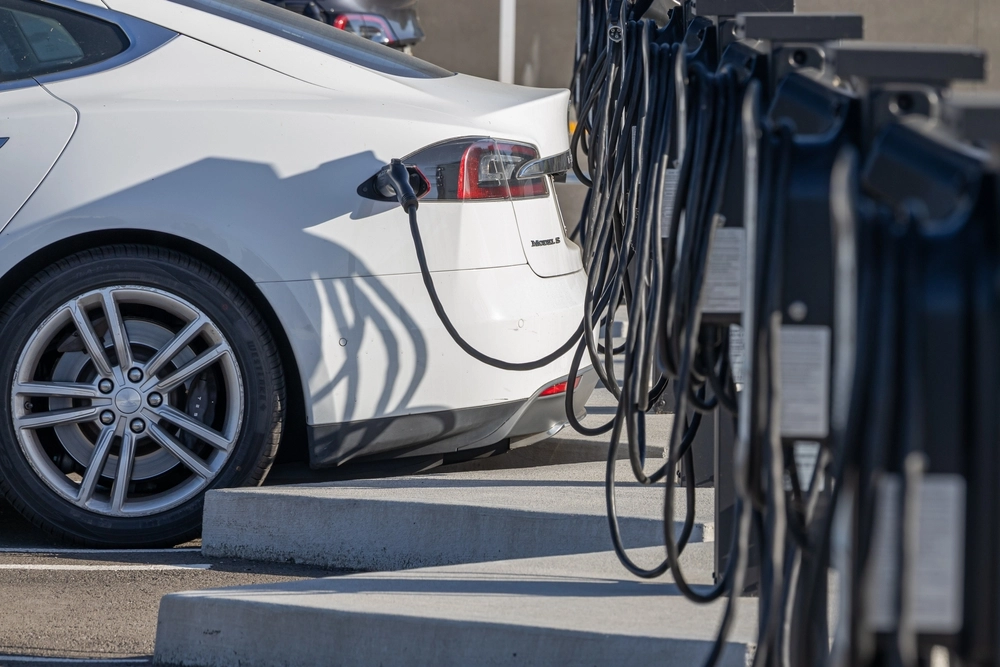
Cheap electric cars are no longer limited to short commutes and entry-level performance.


Cheap electric cars are no longer limited to short commutes and entry-level performance.
A growing number of budget-friendly EVs now offer more than 250 miles of range, with some crossing the 300-mile mark as competition in the market accelerates.
Longer range for less
According to EV Charging Stations, the 2027 Chevrolet Bolt is currently among the cheapest EVs available in the US while still delivering more than 260 miles of estimated range.
The updated Bolt starts below $30,000 and highlights how automakers are increasingly focusing on affordability alongside battery improvements.


Nissan’s redesigned Leaf has also emerged as one of the lowest-priced long-range EVs, offering more than 300 miles of range in its latest configuration.
Tesla still competitive
Tesla’s Model 3 remains one of the strongest range-focused options under $40,000 before incentives.
The rear-wheel-drive version now delivers more than 320 miles of estimated driving range while continuing to benefit from Tesla’s charging network and software ecosystem.
Industry analysts say range, charging convenience and pricing remain key factors for mainstream buyers considering a switch to electric vehicles.
SUVs dominate the list
Electric SUVs continue gaining popularity as manufacturers move away from smaller compact sedans.
Models including the Chevrolet Equinox EV, Hyundai Ioniq 5 and Subaru Uncharted are helping push longer-range EVs into more affordable price brackets.
Several newer models also support faster charging technology than earlier generations of electric cars.
Pressure on automakers
Global competition in the EV sector has intensified as companies race to lower prices and improve battery efficiency.
Chinese automakers such as BYD are continuing to expand internationally, placing additional pressure on US, Japanese and European manufacturers to deliver cheaper long-range alternatives.
Lower battery costs and advances in lithium iron phosphate technology are also helping reduce production expenses.
Challenges remain
Despite major improvements, some affordability concerns remain for buyers.
Charging infrastructure still varies significantly depending on region, while insurance costs and battery replacement concerns continue to influence some consumers.
Policy changes tied to tariffs and EV tax credits could also affect pricing in the coming years.
What comes next
Automakers are expected to focus even more heavily on affordable long-range EVs over the next few years as demand grows worldwide.
For many buyers, the latest generation of cheaper electric cars may finally offer enough range and practicality to replace traditional gas-powered vehicles.
Sources: EV Charging Stations, Chevrolet, Nissan, Tesla



