
 Kenneth Glad
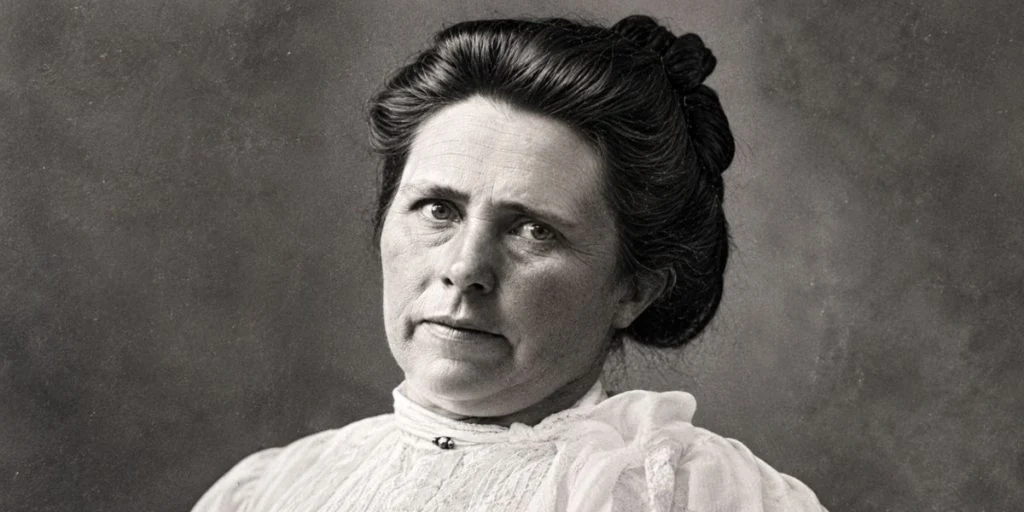
The discovery of buried victims transformed a rural fire investigation into a far-reaching criminal case. Yet the identity of one person found in the ruins has never been conclusively established.


On April 28, 1908, fire destroyed Belle Gunness’ farmhouse near La Porte, a city in the US state of Indiana. Searchers recovered three children and a headless adult woman from the ruins.
The woman was initially presumed to be Gunness, a Norwegian immigrant who owned the farm.
Questions soon arose because the corpse appeared smaller than witnesses remembered her, while the missing head made identification more difficult.
Andrew Helgelien was a financially secure Norwegian immigrant and farmer from Aberdeen, South Dakota, who had corresponded with Belle Gunness after seeing one of her matrimonial advertisements. He travelled to her Indiana farm in January 1908, reportedly bringing a large sum of money, but disappeared soon afterward.


When Andrew failed to return home or contact his family, his brother, Asle Helgelien, became suspicious and travelled from South Dakota to La Porte in search of answers.
According to the La Porte County Historical Society Museum, Asle’s inquiries helped focus attention on parts of the property where the ground appeared to have been disturbed, leading investigators toward the buried remains later identified as Andrew’s.
Visitors stopped returning
Remains identified as Andrew’s were recovered from a buried sack. Investigators continued excavating and found additional victims beneath areas including the garden and hog lot.
Local historical records state that at least 13 bodies were discovered, although the number of deaths attributed to Gunness remains disputed. Fragmentation and decomposition complicated efforts to identify those recovered.
Gunness had advertised in Norwegian-language newspapers for financially secure men willing to share her life and property. One notice, according to All That’s Interesting, published in the Minneapolis Tidende described a “Comely widow” seeking “a gentleman equally well provided, with view of joining fortunes.”
People writes that some correspondents were encouraged to arrive with cash. Several men who visited the farm later disappeared, though not every correspondent can be confirmed as a victim.
Her past also attracted attention. According to PBS, her first husband died while two life insurance policies were temporarily in force. Her second husband suffered a fatal head injury that she blamed on a falling meat grinder. Neither death led to a murder charge against her.
The identity question
Former farmhand Ray Lamphere became a central suspect after the farmhouse fire. He was tried over the blaze and ultimately convicted of arson rather than murder. Lamphere had previously worked for Gunness but was dismissed after their relationship deteriorated, making him an early focus of the investigation.
After Lamphere died in prison in December 1909, the Rev. E. A. Schell made public what he described as a confession the former farmhand had given shortly after his arrest. According to Historical Crime Detective, the account was released on January 14, 1910.
Lamphere allegedly admitted helping Gunness bury one victim and claimed he had watched her strike another man with a hatchet before using chloroform. He was also said to have confessed to drugging members of the Gunness household before the fire.
In the same account, Lamphere reportedly accused Elizabeth Smith, a woman he had spent part of the night with, of helping him and setting the farmhouse ablaze. No evidence was found to support the allegation, and Smith was never prosecuted.
Attorney Ralph Smith later said he did not believe she had accompanied Lamphere that night. The posthumous confession became an important part of the case’s history, but it did not establish whether Gunness died in the fire or escaped.
Sources: La Porte County Historical Society Museum, People, All That’s Interesting, Historical Crime Detective



