
 Kenneth Glad
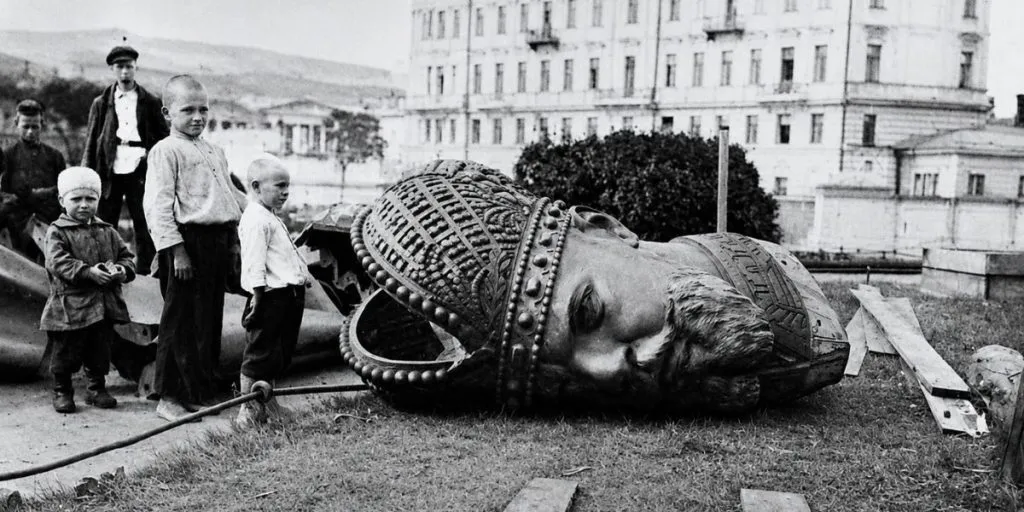
An established social order was dismantled through revolt, confiscation and repression. Survivors faced exile abroad or silence at home.

When the Bolsheviks consolidated power after the 1917 Revolution, they adopted a term that summed up the fate of Russia’s old elite: “Former people.”
It referred to aristocrats, senior officials and others associated with the imperial order who were no longer considered part of the new socialist society.
The label was the end result of a process that had begun well before Lenin’s government took power. Decades of inequality, the legacy of serfdom, military defeat and economic collapse combined to destroy a social class that had dominated Russia for centuries.
According to Historienet, more than 80 percent of the Russian population belonged to the peasantry before the revolution, while a small noble class controlled vast estates, political influence and extraordinary wealth. At the very top stood an elite circle of aristocratic families whose fortunes had accumulated over generations.


Many noble households maintained multiple palaces, country estates and large domestic staffs. Their lifestyle contrasted sharply with that of ordinary rural families, whose livelihoods depended on harvests and whose economic opportunities remained extremely limited.
The divide had deep roots
The wealth of many aristocratic families rested on a system that had shaped Russian society since the sixteenth century. Under serfdom, millions of peasants were tied to land owned by noble landlords and had little control over where they lived or worked.
Although Tsar Alexander II abolished serfdom in 1861, emancipation did not erase rural hardship. Many former serfs remained burdened by financial obligations connected to the land they cultivated, while land ownership itself changed only gradually.
As industrialization slowly expanded, social divisions remained visible in both the countryside and the cities. Russia entered the twentieth century with a rapidly growing population, uneven economic development and increasing political unrest.
The failed revolution of 1905 exposed those tensions. Demonstrations, strikes and violence revealed widespread dissatisfaction with imperial rule, yet many members of the aristocracy underestimated how deeply resentment had spread beyond the cities.
The collapse accelerated
The First World War pushed the empire into crisis. Military defeats, food shortages and inflation undermined confidence in the government, while soldiers increasingly deserted the front.
When Tsar Nicholas II abdicated in 1917, authority weakened across much of the country. In rural districts, peasants began occupying estates and claiming land that had long belonged to noble families.
According to Historienet, attacks varied from place to place. Some estates were simply seized, while others were looted or burned. In certain areas, violence turned deadly as landowners, relatives or servants became targets of revenge.
These uprisings were largely local in origin and should not be confused with the systematic repression introduced later by the Bolshevik government. Many villagers acted independently, driven by disputes over land, wartime hardship and memories of generations of inequality.
Revolution became policy
After the October Revolution, the new authorities moved beyond spontaneous rural unrest. Aristocratic estates were confiscated, banks came under state control and private wealth increasingly disappeared into government hands.
Historienet writes that many families attempted to hide paintings, jewelry and other valuables before searches took place, but confiscations left countless former nobles without savings or property.
The Bolshevik leadership also sought to remove the aristocracy’s remaining social status. Former nobles could receive the lowest food rations and were assigned degrading public work, including clearing snow, cleaning public toilets and burying victims of disease.
The Red Terror, launched in 1918, intensified arrests and executions against suspected political opponents and people identified as class enemies. Members of the Romanov dynasty were killed, while many less prominent aristocrats were imprisoned or sent to labor camps.
One example cited by Historienet is the Sheremetev family, among Imperial Russia’s wealthiest noble houses. Within a short period, relatives who had once occupied the highest levels of society experienced confiscation, imprisonment, exile and severe hardship.
Lives rebuilt abroad
Large numbers of aristocrats escaped Russia during the civil war. Historienet describes exile communities developing in Paris, Berlin, Copenhagen, Constantinople and Harbin, where former members of the nobility attempted to rebuild their lives.
Many sold possessions they had managed to carry abroad. Others found work in music, fashion, literature and other professions that bore little resemblance to their former status.
Not everyone escaped. Those who remained in the Soviet Union continued to face discrimination after Joseph Stalin came to power. Aristocratic ancestry could restrict access to education, employment, food rationing and residence in major cities.
Publicly, noble titles disappeared from everyday life. Families often avoided discussing their background, fearing that open acknowledgement of their ancestry could bring unwanted official attention.
Only during the political reforms of the 1980s did many descendants begin speaking openly about confiscation, persecution and exile. By then, the aristocracy no longer existed as a recognized social class, although its history continued to shape the memories of families inside Russia and across the wider émigré community.
Source: Historienet



