
 Kenneth Glad
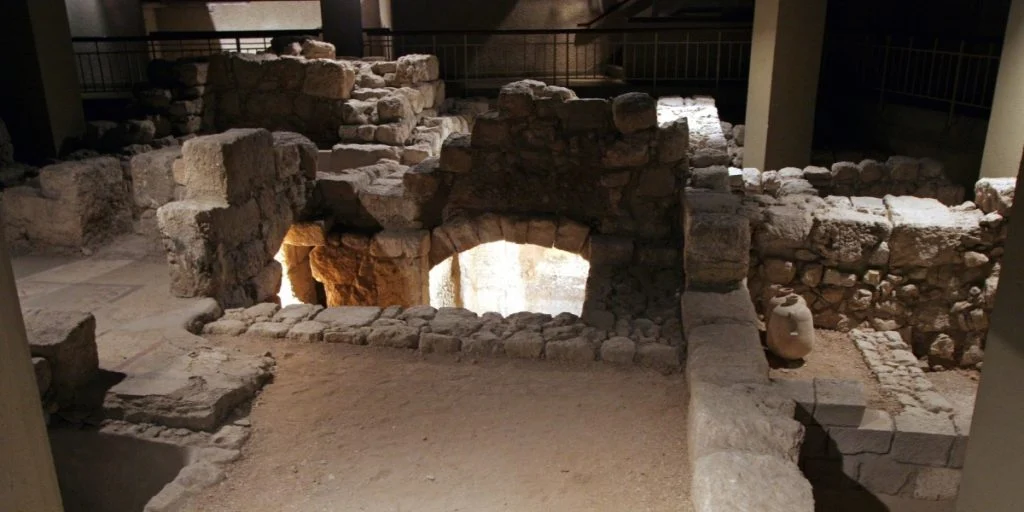
Archaeologists digging beneath one of Christianity’s most visited churches are uncovering details that sharpen the historical picture without settling the central question. What is emerging is not a single answer, but a more complicated story about how the site took shape.

Pollen, roots and soil layers buried under stone have revealed signs of olive trees and grapevines beneath the Church of the Holy Sepulchre. The discovery is drawing fresh scrutiny to a site long linked to the burial of Jesus—though it answers less than it raises.
Popular Mechanics reports that archaeologists uncovered evidence of a cultivated area dating back roughly 2,000 years. The Gospel of John describes Jesus being laid in a tomb in a garden, a detail researchers say is now reflected in the physical record, even if not uniquely.
The church remains the most widely accepted location in Christian tradition, but other sites, including the Garden Tomb, continue to feature in scholarly debate.
Constantine’s decision
The site’s prominence did not emerge by chance. In the fourth century, Emperor Constantine ordered a church to be built over a place already revered by early Christians.


By selecting one tomb and enclosing it within a shrine, he effectively fixed that location in religious history. Pilgrimage followed, and the identification endured.
Recent excavations have revealed structural remains from that period, including a circular marble base beneath the shrine and coins dating to the same era.
These finds help narrow down when the site was formally established as a place of worship.
Not just a tomb
The ground beneath the church tells a less tidy story. It was not always sacred space.
Prof Francesca Romana Stasolla of Sapienza University of Rome told The Times of Israel: “The quarry was operational during the Iron Age,” with pottery and tools pointing to early industrial use.
Later, the area appears to have shifted function. Tombs were cut into the rock, while other sections were adapted for cultivation. According to Popular Mechanics, low stone walls and soil layers suggest managed agricultural plots rather than wild growth.
Stasolla said: “Low stone walls were erected, and the space between them was filled with dirt,” adding: “The archaeobotanical findings have been especially interesting for us… The Gospel mentions a green area between the Calvary and the tomb, and we identified these cultivated fields.”
Work still ongoing
Excavations began in 2022 after years of disagreement between religious authorities had delayed restoration work. Progress is slow, and deliberately so.
Teams rotate in and out. Some areas remain untouched.
Stasolla described the process: “If we were talking about a puzzle, we could say we are only excavating one piece at a time, but eventually, we will have a complete multimedia reconstruction of the full picture.”
Even with more data, the central question is unlikely to disappear. The evidence adds detail to how the site was used – quarry, burial ground, cultivated land – but stops short of proving whose tomb it was.
Sources: Popular Mechanics, The Times of Israel



