
 Kenneth Glad
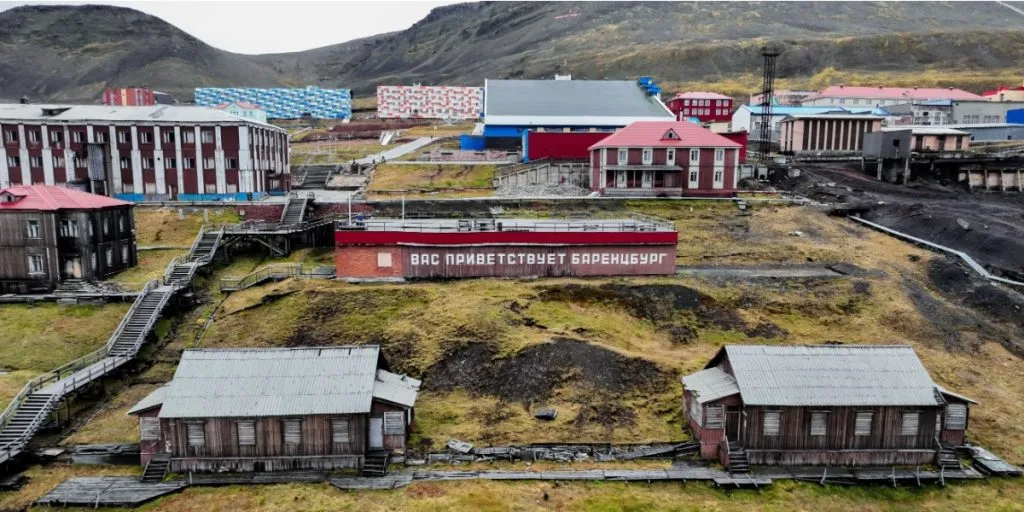
The Arctic is no longer a distant frontier. As ice recedes, competition over routes and resources is quietly intensifying, drawing global attention northward. One small settlement is now impossible to ignore.


Across the Arctic, governments are recalibrating priorities. Reuters has reported that Russia is investing heavily in the Northern Sea Route, aiming to turn it into a viable shipping corridor between Europe and Asia, while the BBC has highlighted expanding military and infrastructure activity across the region.
Svalbard sits in a uniquely fragile position. Though under Norwegian sovereignty, the 1920 treaty allows foreign commercial activity, creating a legal grey zone where cooperation and rivalry overlap.
The small town of Barentsburg embodies that tension. The Times notes that the settlement runs on Russian currency, governance and supply networks, tying it closely to Moscow. Unlike Pyramiden, which was abandoned after its mine closed, Barentsburg continues to function. Profit is no longer the point.
Signals and pressure
That shift is visible in small but deliberate actions. Over time, these moves add up.


Norway insists on administrative control. Russia increasingly behaves as if its foothold is permanent.
Bart van der Wal of the Clingendael Institute told The Times: “Russia increasingly challenges Norwegian authority and pushes the limits of what it is legally allowed to do on the islands.”
Public displays tied to Victory Day and the arrival of vehicles resembling official Russian units have drawn scrutiny.
“The Arctic is Russia’s cathedral — something that can be built to last generations,” he said. “To guard this precious cathedral, Russia is rapidly expanding its military presence in the Arctic, with Svalbard located right at this gateway.”
At sea, the change is even clearer: Ships now connect Barentsburg directly to Murmansk, bypassing Norwegian routes altogether.
Life under structure
Daily life reflects that same logic of control. Work, housing and access to goods are closely tied to the state-owned company Arktikugol.
“I pay my rent to the person who pays my salary,” said Martinique du Toit. “If you don’t work for the company, it’s almost impossible to survive.”
Rather than isolated shortages, residents describe something more systemic: A settlement where everything, from supplies to salaries, flows through a single pipeline.
Former resident Valeriya Burlacenko-Mihalskaia suggested that such conditions can discourage people from speaking openly.
Still, the place exerts a strange pull. “We are free souls here, but you have to be a little crazy to live in the Arctic,” said Wolfgang Lempe.
Barentsburg is small, cold and remote. But if control of the Arctic comes down to who shows up and stays, this town is already part of the answer.
Sources: The Times, Reuters, BBC



