
 Lauge Risom Koch

A new peace report warns that global politics is increasingly shaped by leaders willing to use military force despite the damage done to international order.

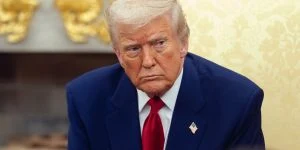
A new peace study has raised concerns about what researchers describe as the return of “warlord politics,” arguing that powerful leaders are increasingly relying on military force to pursue national interests while weakening international norms.
The findings paint a bleak picture of the global security landscape, with experts warning that international law and multilateral institutions are under growing pressure.
Growing concerns
According to Onet, citing reporting by Deutsche Welle, the 2026 Peace Report examines what researchers call the resurgence of political leaders who prioritize power, influence and military force over international legal frameworks.
Presenting the report in Berlin, conflict researcher Conrad Schetter of the International Center for Conflict Studies in Bonn argued that some contemporary leaders are undermining the international order.


Among those mentioned were Russian President Vladimir Putin, US President Donald Trump and Israeli Prime Minister Benjamin Netanyahu.
“We don’t want to equate anything, but we do see certain patterns,” Ursula Schroeder of the Institute for Peace Research and Security Policy at the University of Hamburg said.
Force over diplomacy
The report argues that violence is increasingly being treated as a normal instrument of politics.
According to Onet, citing Deutsche Welle, researchers believe this trend is reflected in attempts by states to limit the sovereignty of others while expanding their own influence and strategic interests.
The study also points to the role of regional powers, including Saudi Arabia, Qatar and the United Arab Emirates, in conflicts across countries such as Libya and Somalia.
Researchers contend that geopolitical and economic interests are increasingly shaping foreign policy decisions.
International order
Nicole Deitelhoff of the Leibniz Institute for Peace and Conflict Research warned that these developments are contributing to the erosion of international institutions, particularly the United Nations.
According to Onet, which references Deutsche Welle’s coverage of the report, the authors urge Germany and European countries to strengthen support for international law, humanitarian assistance and development cooperation.
The researchers criticized reductions in development and humanitarian aid, arguing that such cuts risk worsening instability, hunger, disease and armed conflict.
They warned that withdrawing support could fuel further crises rather than resolve them.
Germany’s role
The report also examines Germany’s position on the international stage and argues that Berlin has lost credibility in some areas of foreign policy.
According to Onet, citing Deutsche Welle, researchers pointed to Germany’s unsuccessful bid for a non-permanent seat on the UN Security Council as evidence of declining international trust.
The study also questioned Chancellor Friedrich Merz’s responses to several international crises, including US actions involving Venezuela and military operations against Iran.
Researchers concluded that Germany should work to rebuild trust through support for international law, cooperation and renewed efforts to strengthen arms control agreements.
They argued that confidence-building measures remain essential for reducing tensions and preserving long-term peace.
Sources: Onet, Deutsche Welle, International Center for Conflict Studies, Institute for Peace Research and Security Policy, Leibniz Institute for Peace and Conflict Research



