
 Kenneth Glad
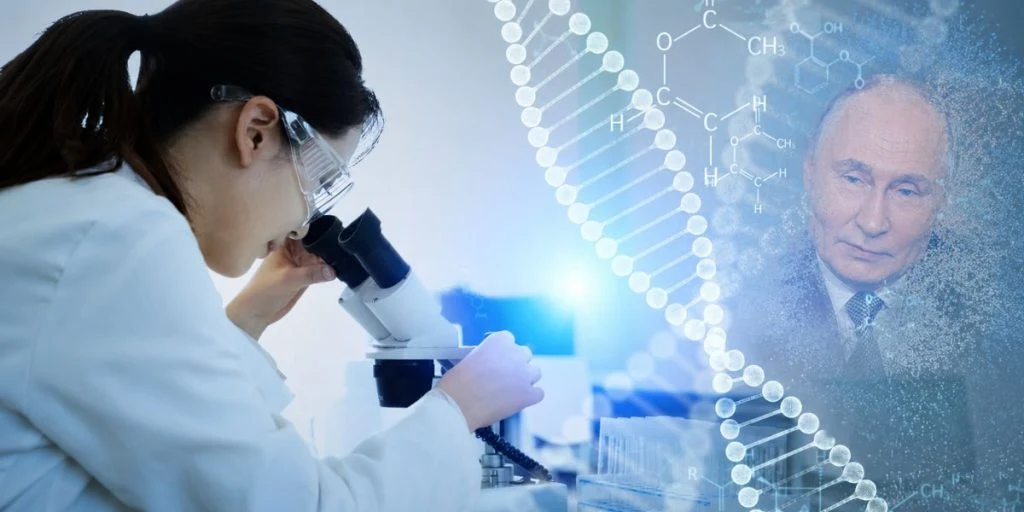
An overheard conversation between Vladimir Putin and Xi Jinping has renewed attention on Russia’s investment in research aimed at extending healthy human life. The exchange brought together Putin’s public interest in longevity and a government-backed programme exploring experimental treatments, organ transplantation and regenerative medicine.


The conversation took place during a high-profile gathering of leaders marking a major military commemoration in the Chinese capital.
Putin and Xi were walking beside North Korean leader Kim Jong-un during a military parade in Beijing in September 2025 when part of their conversation was captured on a live broadcast.
Kim appeared to listen but was not heard taking part. Putin’s own words were also inaudible, with an interpreter rendering his comments in Chinese.
The interpreter said advances in biotechnology and repeated organ transplantation could allow people to remain younger and “perhaps even achieve immortality.”


A voice later referred to predictions that humans might one day live to 150. The Associated Press reported that it was unclear who completed the full remark.
Putin subsequently acknowledged that longevity had been discussed, adding to interest in Russia’s wider scientific ambitions.
Russia backs research
The Wall Street Journal described the initiative as a roughly $26 billion national push involving bioprinting, gene therapy and xenotransplantation.
Bioprinting uses living cells to produce biological tissues and structures. Russian researchers have claimed success in printing human cartilage and a mouse thyroid gland, although the Journal noted that little of the programme’s work had appeared in leading international peer-reviewed publications.
Researchers are also exploring organs or tissues grown in genetically modified miniature pigs. Xenotransplantation could eventually address shortages of donor organs, but rejection, infection risks and long-term safety remain major obstacles.
The Moscow Times reported that Russian officials announced an experimental gene-therapy drug in April 2026. The treatment is intended to block a receptor associated with age-related cellular changes, but it has not been shown to slow human ageing.
Personal claims questioned
The Daily Express has separately linked Putin to deer-blood treatments and genetically modified strawberries containing elevated levels of quercetin.
Those claims belong to a different category from the documented state research. No public clinical evidence shows that either practice would extend Putin’s life, raise testosterone or produce the other benefits attributed to them.
Russia’s longevity programme is real, but claims that it proves Putin is pursuing personal immortality remain speculative.
Sources: Associated Press, The Wall Street Journal, The Moscow Times, The Daily Express.



