Kenneth Glad
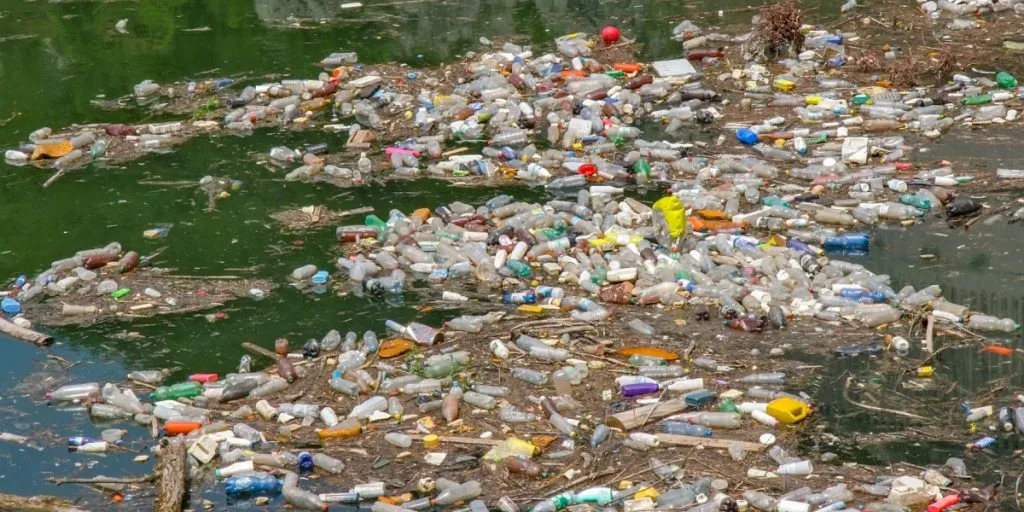
Each winter, swollen rivers across the Balkans carry more than water downstream. As floods recede, they leave behind dense accumulations of waste that expose long-standing failures in regulation and cooperation.


On a cold morning this month, with temperatures hovering just above freezing, excavators crept along the Drina near the eastern Bosnian town of Višegrad. Drivers paused to watch as waterlogged piles were hauled onto the bank. No one nearby seemed surprised.
What seasonal floods reveal each year is less a sudden crisis than a long-exposed weakness. Across the Balkans, rivers collect what politics, regulation and enforcement fail to stop.
The Višegrad bottleneck
Near Višegrad, debris repeatedly gathers behind barriers protecting a hydroelectric plant, forming a dense mass that stretches across the river. Euronews reports waste arriving from illegal dumps upstream in Bosnia as well as from Serbia and Montenegro.
“This is a clear example of the lack of political will and inactivity of all relevant institutions,” said Dejan Furtula, who runs the Višegrad-based Eko Centar. “They meet year after year and make promises, but as we can see, these scenes repeat themselves.”


Once removed, the waste is transported to a local landfill. Furtula said the site often burns slowly, a practice he argues shifts pollution rather than solving it, dispersing contaminants into air and soil around the town instead of the river itself.
Balkan Insight (BIRN) has documented similar scenes far beyond the Drina. In a 2024 investigation, the outlet mapped 120 illegal landfill sites across Albania, Bosnia and Herzegovina, Kosovo and North Macedonia, based on citizen submissions.
In Kosovo’s east, BIRN reporters visited rivers that locals say once supported fishing and swimming. “People feel helpless,” Furtula told BIRN separately, reflecting on years of failed clean-ups. Whether official figures capture the full scale remains disputed, activists added, especially in remote areas rarely inspected.
Fragmented authority
Environmental groups warn that river pollution is structurally hard to regulate in the post-Yugoslav space. Responsibility is divided among layers of government that often overlap or leave gaps, while rivers cut through borders without regard for jurisdiction.
BIRN reported that some municipalities operate unlicensed dumps themselves. In North Macedonia, only one landfill meets legal standards, and experts there acknowledge that limited waste collection leaves room for informal disposal to flourish.
Bosnia, Serbia and Montenegro have discussed joint solutions since at least a 2019 ministerial meeting at Višegrad, but no lasting mechanism followed. Environmental compliance is a core requirement for European Union accession, a fact officials regularly acknowledge.
For campaigners, the rivers have become the clearest evidence. Djordje Stefanovic of the Dinarica Association told BIRN that waste visible during high water proves the problem is constant, not accidental. What remains unanswered, he said, is who will finally act upstream.
Sources: Euronews, Balkan Insight (BIRN)