
 Asger Risom
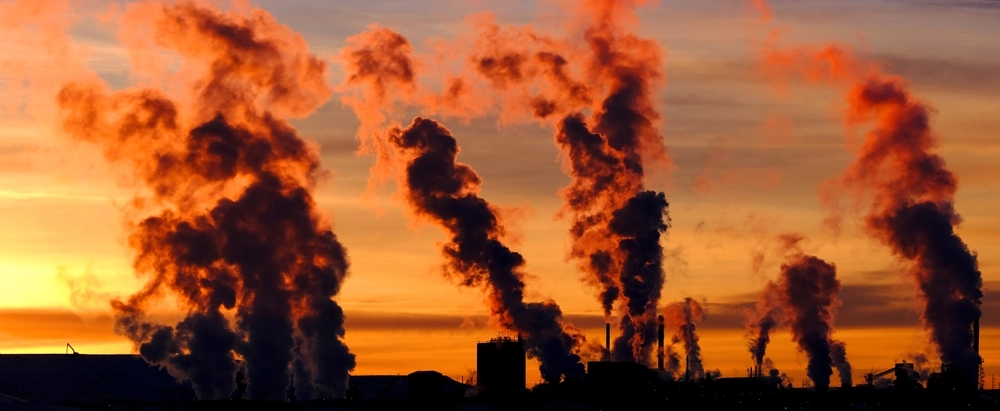
Modern warfare systems — from long-range bombers to AI-driven targeting — are driving a surge in emissions, with over 5 million tonnes of CO2 released in just two weeks of the US-Iran conflict.


The war involving the United States, Israel and Iran is generating a sharp increase in carbon emissions — but the source is not just destruction. It is the technology that enables modern warfare.
An early analysis cited by The Guardian estimates that more than 5 million tonnes of CO2 equivalent were emitted in the first 14 days of the conflict. The figure reflects how contemporary military systems — from long-range bombers to precision-guided munitions — translate directly into energy consumption and emissions at scale.
The environmental impact is built into the architecture of modern combat.
Long-range systems multiply fuel demand
One of the largest contributors is fuel consumption driven by advanced military logistics.


Modern air operations rely on long-range strike capabilities, with heavy bombers flying intercontinental missions supported by aerial refueling, surveillance aircraft, and coordination systems. These operations require complex fuel chains that extend far beyond the immediate conflict zone.
According to the analysis, aircraft, ships and support systems consumed up to 270 million litres of fuel in just two weeks.
This reflects a core feature of modern warfare: reach. The ability to strike from distance increases operational flexibility, but it also multiplies the energy cost of each mission.
Precision weapons, high volume deployment
Modern conflicts are defined by precision — but also by volume.
Thousands of targets were reportedly struck in the early phase of the war, using a mix of missiles, drones, and guided munitions. Each system carries its own production footprint, and each deployment adds to cumulative emissions.
Even interceptor systems — designed to stop incoming threats — contribute to the total, as layered air defense networks fire repeatedly to neutralize missiles and drones.
The result is a feedback loop: more advanced systems enable higher tempo operations, which in turn increase overall resource consumption.
Infrastructure as a high-emission target
Another key factor is the type of targets being hit.
Strikes on fuel depots, refineries, and storage facilities release large amounts of stored hydrocarbons in short periods. Fires at these sites effectively convert infrastructure into concentrated emission sources.
In Tehran, attacks on fuel storage triggered prolonged fires, with millions of barrels of oil burned. These events represent a different category of emissions — not from consumption, but from uncontrolled release.
From a systems perspective, this turns energy infrastructure into both a strategic target and an environmental multiplier.
Data-driven warfare increases operational tempo
Modern military operations are increasingly driven by data and automation.
Surveillance systems, satellite networks, and AI-assisted analysis allow forces to identify targets faster and coordinate strikes more efficiently. That increases operational tempo — the rate at which actions are carried out.
Higher tempo means more sorties, more launches, and more system usage within shorter timeframes.
While these technologies improve precision and coordination, they also compress activity into shorter periods, concentrating emissions rather than reducing them.
Embedded emissions in military systems
Beyond immediate operations, there is also the question of embedded carbon.
Aircraft, naval vessels, missile systems and drones all carry emissions tied to their production, maintenance, and eventual destruction. When these systems are lost or expended, those embedded emissions become part of the conflict’s overall footprint.
In the early phase of the war, losses of aircraft, ships, and launch systems added a measurable layer to total emissions, separate from fuel and infrastructure damage.
A system-level impact
Taken together, these factors show that emissions are not incidental to modern warfare — they are systemic.
The combination of:
- long-range logistics
- high-frequency precision strikes
- energy infrastructure targeting
- data-driven coordination
creates an environment where emissions scale rapidly, even over short periods.
The estimated 5 million tonnes of CO2 equivalent generated in just two weeks reflects how these systems interact.
As military technologies continue to evolve toward greater speed, range, and automation, their environmental footprint is likely to follow the same trajectory.
Sources: Digi24, The Guardian, Institute for Climate and Community



