
 Kenneth Glad

Diplomatic efforts at the United Nations have run into fresh obstacles amid rising international tensions. Key global players remain divided over how to respond to the unfolding situation.
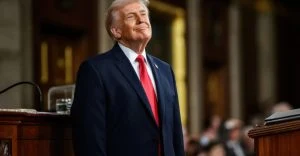

A last-ditch attempt to ease a growing maritime crisis failed at the United Nations on Tuesday, just as Washington’s deadline for Iran edged closer.
The breakdown leaves one of the world’s most sensitive trade routes exposed, with no clear international response in place.
Russia and China blocked the Security Council resolution despite it attracting strong backing, according to the Daily Express.
The proposal had been scaled back repeatedly in an effort to avoid exactly that outcome.


Ultimatum raises stakes
Hours before the vote, U.S. President Donald Trump issued a stark warning to Tehran. The “entire country can be taken out in one night,” he said, adding that a “whole civilization will die tonight” if Iran does not reopen the strait.
That threat lands at a critical moment. The Strait of Hormuz is not just another shipping lane. It is a narrow corridor through which a large share of the world’s oil supply moves, making any disruption immediately visible in global prices.
Reports indicate Iran has expanded its strikes beyond the immediate conflict zone, targeting civilian infrastructure across several countries, further unsettling regional stability.
Scaled-back plan fails
Diplomatic efforts had already shifted course well before the vote. What began as a push for collective action to guarantee passage gradually turned into a more cautious appeal for coordination and defensive measures.
The final text avoided direct mandates and instead urged countries to work together to protect shipping.
It “strongly encourages states interested in the use of commercial maritime routes in the Strait of Hormuz to coordinate efforts, defensive in nature, commensurate with the circumstances, to contribute to ensuring the safety and security of navigation across the Strait of Hormuz.”
Even in that limited form, the proposal could not bridge the divide. The result was not just a failed resolution, but another signal of how little room there is for compromise when major powers are directly at odds.
Fault lines exposed
Russia and China have argued, writes the British newspaper, that stopping military operations should take priority, placing responsibility for the crisis on the United States and its allies. Gulf states see it differently, viewing the disruption as a direct economic and security threat.
Bahrain, which brought the proposal forward, had pushed for stronger international coordination to protect vessels moving through the strait.
A previous U.N. measure in March condemned Iran’s actions but avoided enforcement mechanisms. Tuesday’s vote followed the same trajectory: agreement on concern, but not on action.
With the deadline looming and no unified strategy in place, the risk now is not just continued disruption, but miscalculation.
Sources: The Daily Express



